WHO Urges Science-Led Action and ‘One Health’ Approach to Tackle Emerging Global Health Risks
The World Health Organization calls for science-led action and a stronger One Health approach to address evolving global health risks and improve resilience.
 Akanksha jain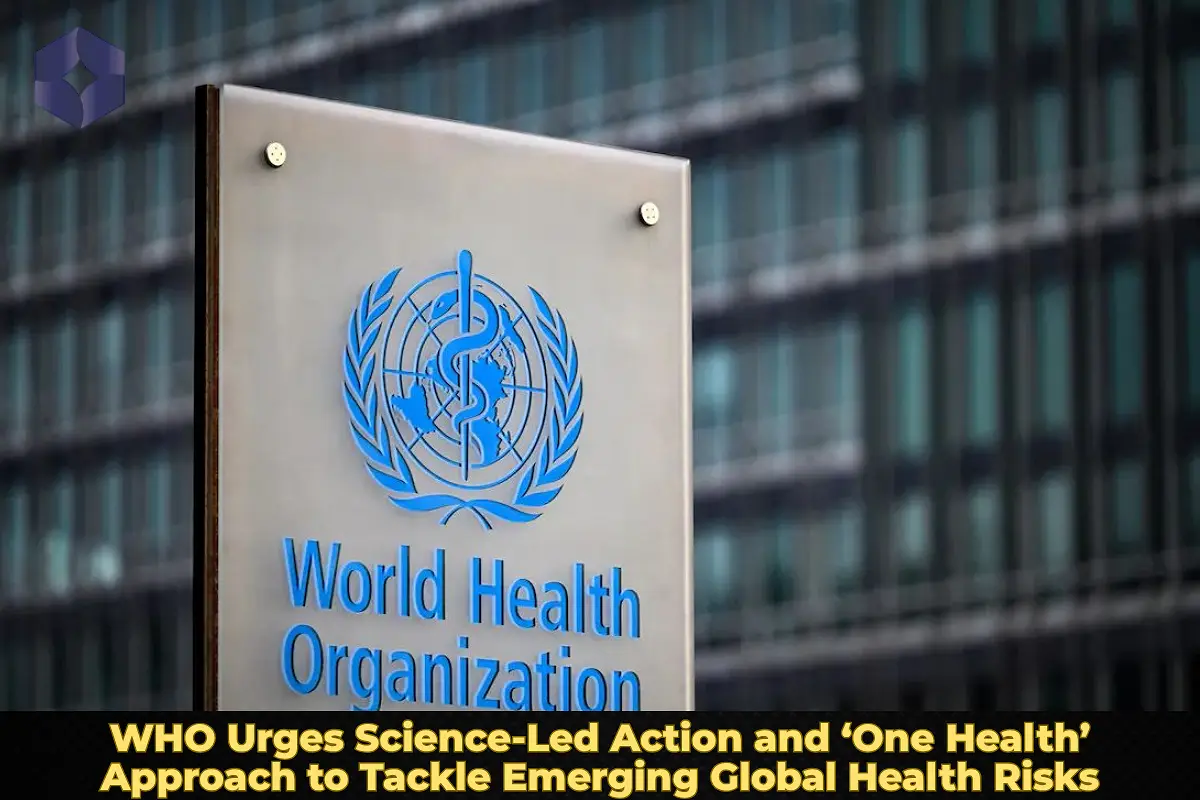
WHO Urges Science-Led Action and ‘One Health’ Approach to Tackle Emerging Global Health Risks
The World Health Organization (WHO) in April 2026 called for urgent science-led action and the adoption of a stronger “One Health” approach to address evolving global health risks, warning that interconnected threats involving humans, animals, and the environment are increasing in frequency and complexity worldwide.
The appeal comes amid growing concerns about emerging infectious diseases, climate-related health impacts, antimicrobial resistance, and environmental degradation, which experts say require coordinated, cross-sectoral responses to protect global populations effectively.
Rising Complexity of Global Health Threats
WHO officials emphasized that modern health challenges are no longer confined to a single domain, with many risks arising at the intersection of human health, animal health, and environmental factors. This interconnectedness has heightened the potential for rapid disease transmission and widespread health crises.
Recent outbreaks of zoonotic diseases—those transmitted between animals and humans—have underscored the need for integrated surveillance and response systems. Climate change has further compounded these challenges by altering ecosystems, expanding the range of disease vectors, and increasing the likelihood of health emergencies.
Experts warn that without proactive measures, such risks could place significant strain on healthcare systems and economies.
What Is the One Health Approach?
The One Health approach is a collaborative, multisectoral strategy that recognizes the interdependence of human, animal, and environmental health. It promotes coordinated efforts among governments, healthcare providers, veterinarians, environmental scientists, and other stakeholders to prevent and manage health threats.
Under this framework, disease surveillance, prevention, and response strategies are designed to address risks at their source, rather than reacting after outbreaks occur. This includes monitoring animal populations, protecting ecosystems, and improving public health infrastructure.
WHO officials stressed that adopting this approach can significantly enhance global preparedness and resilience.
Call for Science-Based Policy Making
Central to WHO’s message is the importance of grounding health policies in scientific evidence. The organization urged governments to invest in research, data collection, and innovation to inform decision-making and ensure effective responses to emerging threats.
Science-led action has been critical in managing recent global health crises, from vaccine development to diagnostic advancements. However, the WHO warned that misinformation and inconsistent policy implementation continue to undermine progress.
Strengthening trust in science and ensuring the widespread dissemination of accurate information are key priorities highlighted in the call to action.
Addressing Antimicrobial Resistance
Antimicrobial resistance (AMR) was identified as one of the most pressing global health threats requiring a One Health approach. The misuse and overuse of antibiotics in both human medicine and animal agriculture have accelerated the development of resistant pathogens.
WHO called for stricter regulations, improved stewardship programs, and increased awareness to curb the spread of AMR. Coordinated action across sectors is essential to ensure the continued effectiveness of life-saving treatments.
Experts note that failure to address AMR could lead to a future where common infections become difficult or impossible to treat.
Impact of Climate Change on Health
The organization also highlighted the growing impact of climate change on global health, including heat-related illnesses, food and water insecurity, and the spread of vector-borne diseases such as malaria and dengue.
Environmental changes are altering habitats and increasing human exposure to new pathogens, making it more important than ever to integrate environmental considerations into health planning. WHO urged countries to align health policies with climate action strategies to mitigate these risks.
Experts stress that addressing environmental factors is a critical component of long-term health security.
Strengthening Surveillance and Preparedness
WHO called for enhanced global surveillance systems to detect and respond to health threats at an early stage. This includes improving data sharing, investing in laboratory capacity, and strengthening public health infrastructure.
Early detection and rapid response are essential for preventing localized outbreaks from escalating into global crises. The organization emphasized the need for international cooperation and transparency in reporting health data.
Countries are being encouraged to build resilient systems capable of withstanding future shocks.
Role of International Collaboration
Global cooperation remains a cornerstone of effective health risk management, according to the WHO. The organization urged nations to work together in sharing knowledge, resources, and technologies to address common challenges.
Partnerships between governments, international organizations, and the private sector can accelerate innovation and improve access to healthcare solutions. WHO highlighted the importance of equitable distribution of resources, particularly in low- and middle-income countries.
Experts believe that collective action is essential for achieving sustainable health outcomes.
Challenges to Implementation
Despite the benefits of the One Health approach, implementing it at scale presents several challenges. These include limited funding, fragmented governance structures, and varying levels of capacity across countries.
WHO acknowledged that overcoming these barriers will require sustained political commitment and investment. Integrating policies across sectors and aligning priorities will be critical for success.
Stakeholders are being urged to adopt long-term strategies that prioritize health security and resilience.
Future Outlook
Looking ahead, WHO is expected to continue advocating for science-based policies and integrated health approaches as part of its broader mission to improve global health outcomes. The organization plans to work closely with member states to support the implementation of One Health strategies.
Advances in technology, data analytics, and research are expected to play a key role in strengthening global health systems. However, experts caution that progress will depend on sustained collaboration and commitment at all levels.
The evolving nature of global health risks underscores the need for continuous adaptation and innovation.
Conclusion
The WHO’s call for science-led action and a stronger One Health approach highlights the urgency of addressing interconnected health risks through coordinated, evidence-based strategies to safeguard global health in an increasingly complex world.