William Foege, Epidemiologist Who Helped Lead Global Smallpox Eradication, Dies
William Foege, the epidemiologist instrumental in the global eradication of smallpox, has died. He played a central role in shaping modern public health strategies and vaccination campaigns worldwide.
 Akanksha jain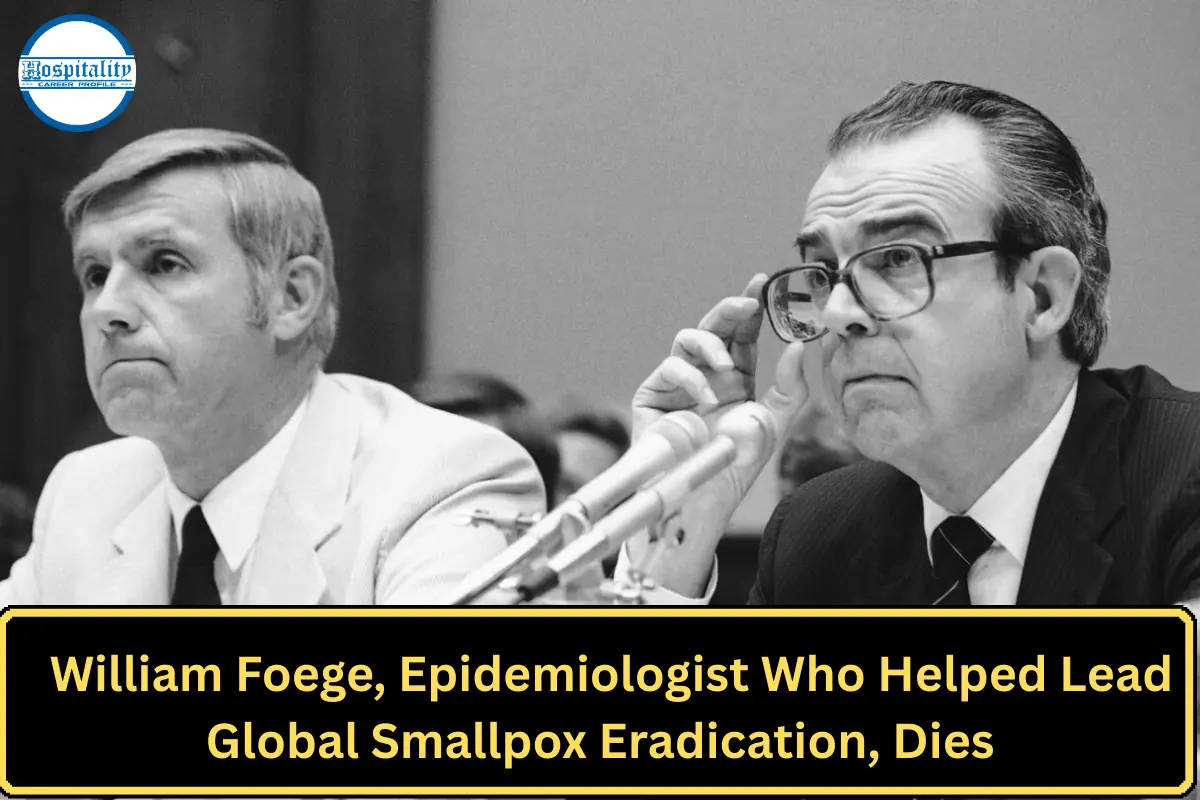
William Foege, Architect of Smallpox Eradication Strategy, Passes Away
William Foege, the renowned epidemiologist credited with helping to lead the successful global campaign to eradicate smallpox, has died. His work transformed public health strategy and remains one of the most significant achievements in medical history.
Foege’s leadership and innovative thinking were instrumental in the worldwide effort that ultimately eliminated smallpox, a disease that had claimed millions of lives over centuries. His contributions helped shape the modern framework of outbreak response and immunization programs.
Pioneering the Surveillance and Containment Strategy
One of Foege’s most influential contributions was refining the “surveillance and containment” approach to disease control. Rather than attempting mass vaccination in every region, the strategy focused on identifying outbreaks quickly and vaccinating those most at risk in surrounding communities.
This targeted approach proved highly effective in resource-limited settings and became a cornerstone of the global eradication campaign.
Role in the Global Fight Against Smallpox
International Collaboration
Foege worked alongside international health organizations and national governments to coordinate eradication efforts. The campaign required unprecedented global cooperation, logistical coordination, and rapid response mechanisms.
Through disciplined monitoring and rapid containment measures, health teams were able to interrupt transmission chains and progressively eliminate the virus from affected regions.
A Historic Public Health Milestone
The eradication of smallpox remains the only human infectious disease to have been completely eliminated worldwide. The success of the campaign stands as a landmark achievement in global health, demonstrating that coordinated vaccination strategies can defeat even the most devastating pathogens.
Shaping Modern Epidemiology
Beyond smallpox, Foege influenced broader public health policy and epidemiological thinking. His emphasis on data-driven decision-making, field-based surveillance, and community engagement reshaped how health crises are managed.
His methods have since been adapted in responses to other infectious disease outbreaks, contributing to global preparedness frameworks.
Legacy in Public Health Leadership
Throughout his career, Foege served in key public health leadership roles and mentored generations of epidemiologists. His philosophy emphasized practical solutions, equity in healthcare access, and collaboration across borders.
Colleagues remember him not only for his scientific contributions but also for his commitment to humanitarian values and global cooperation.
Enduring Impact on Global Health
The smallpox eradication campaign demonstrated the power of vaccination and strategic public health planning. Foege’s work continues to inspire efforts to combat other infectious diseases through coordinated global action.
His legacy endures in immunization programs, disease surveillance systems, and public health education worldwide.
Conclusion
William Foege’s role in the eradication of smallpox represents one of the greatest triumphs in medical history. His innovative strategies and leadership changed the course of global health and saved countless lives.
As the world continues to confront new public health challenges, his contributions remain a guiding example of what science, collaboration, and determination can achieve.