Amazon to Offer Eli Lilly Weight Loss Pill via US Kiosks with Same-Day Delivery
Amazon will stock Eli Lilly’s new weight loss pill at US kiosks, enabling same-day delivery and expanding access to obesity treatments.
 Akanksha jain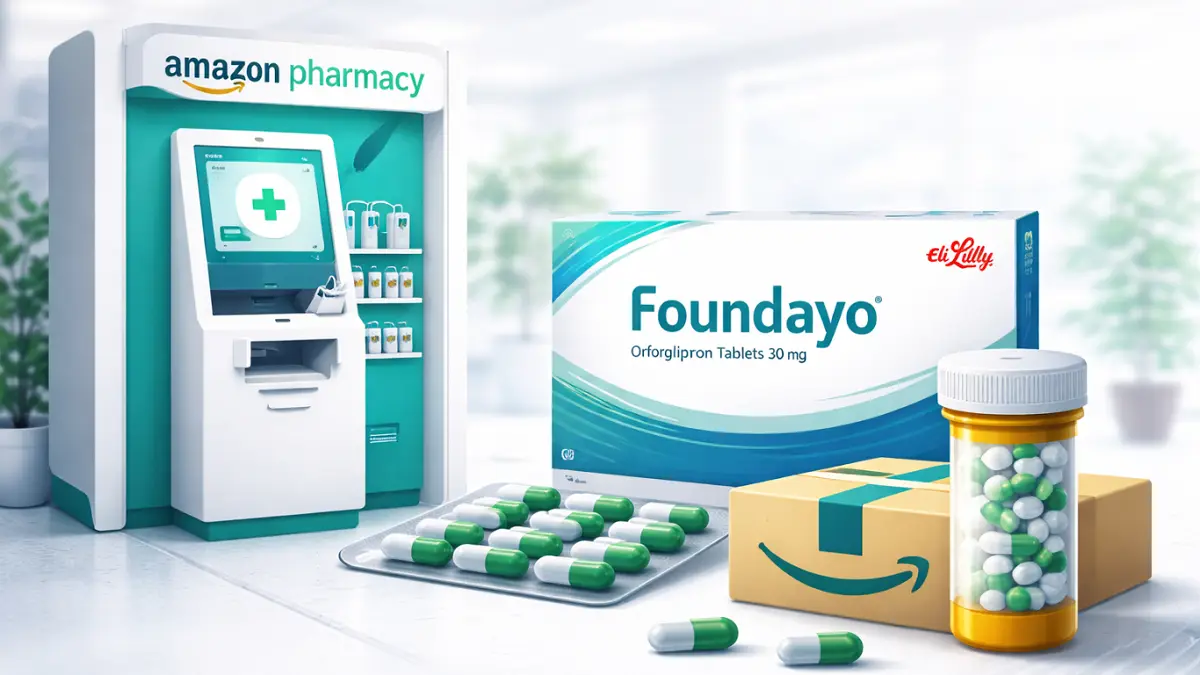
Amazon is set to stock Eli Lilly’s newly developed weight loss pill at kiosks across the United States, offering same-day delivery to improve access to obesity treatments, according to recent developments reported in the pharmaceutical sector. The move marks a significant expansion of retail-based healthcare delivery models in the country.
The initiative combines pharmaceutical distribution with rapid delivery infrastructure, aiming to address growing demand for weight management therapies. The rollout will allow patients to obtain prescribed medication more quickly, particularly in urban areas where same-day logistics can be efficiently implemented.
Expansion of Access to Obesity Treatments
The inclusion of Eli Lilly’s weight loss pill in Amazon’s kiosk-based distribution network is expected to enhance accessibility for patients seeking obesity management options. Demand for such treatments has risen sharply in recent years, driven by increasing awareness of obesity-related health risks and the availability of new pharmacological therapies.
By positioning the medication within easily accessible kiosks, the initiative aims to reduce delays associated with traditional pharmacy channels. Patients with valid prescriptions will be able to access the drug through a streamlined ordering and delivery system.
The approach reflects a broader shift toward decentralized healthcare delivery, where medications are made available closer to patients through non-traditional retail platforms.
Integration of Pharma Supply with Rapid Delivery
Amazon’s entry into pharmaceutical distribution continues to evolve with this latest development. The company’s logistics capabilities are being leveraged to enable same-day delivery of prescription medications, aligning with consumer expectations for faster service.
The kiosk model serves as a distribution point, bridging the gap between centralized storage and last-mile delivery. This integration allows for efficient inventory management while maintaining speed in fulfillment.
Industry observers note that such models could redefine how patients access routine medications, particularly in areas with limited pharmacy density or high demand.
Rising Demand for Weight Management Therapies
The introduction of Eli Lilly’s pill into this distribution network comes amid strong demand for weight loss medications globally. These treatments are increasingly being used as part of broader strategies to manage obesity and related conditions such as diabetes and cardiovascular disease.
Pharmaceutical companies have been investing heavily in this segment, with several new therapies entering the market in recent years. The availability of oral formulations, in particular, is seen as a key factor in improving patient adherence compared to injectable alternatives.
As demand grows, ensuring timely access to such medications has become a priority for both healthcare providers and distributors.
Shift Toward Retail-Based Healthcare Delivery
The move highlights the expanding role of retail and technology companies in healthcare delivery. By integrating pharmaceutical access into its existing infrastructure, Amazon is positioning itself as a key player in the evolving healthcare ecosystem.
The use of kiosks represents a hybrid model that combines physical access points with digital ordering systems. This approach allows patients to engage with healthcare services more flexibly and conveniently.
Such developments are part of a wider trend in which healthcare services are increasingly delivered outside traditional clinical settings, including through online platforms and retail locations.
Implications for the Pharmaceutical Supply Chain
The initiative may have broader implications for the pharmaceutical supply chain, particularly in terms of distribution efficiency and patient access. Faster delivery timelines could reduce gaps in treatment and improve continuity of care for patients requiring ongoing medication.
At the same time, the model raises considerations around regulatory compliance, prescription verification, and patient safety, which will need to be carefully managed as the system expands.
The collaboration between a major pharmaceutical manufacturer and a global technology company underscores the growing convergence of healthcare and digital commerce, with potential to reshape how medicines are distributed and accessed in the future.