Voter Roll Revision Emerges as Key Political Flashpoint Ahead of Bengal Elections
Voter roll revision in West Bengal has become a major political issue ahead of elections, with parties raising concerns over transparency, inclusion, and electoral fairness.
 SANJANA DUTTA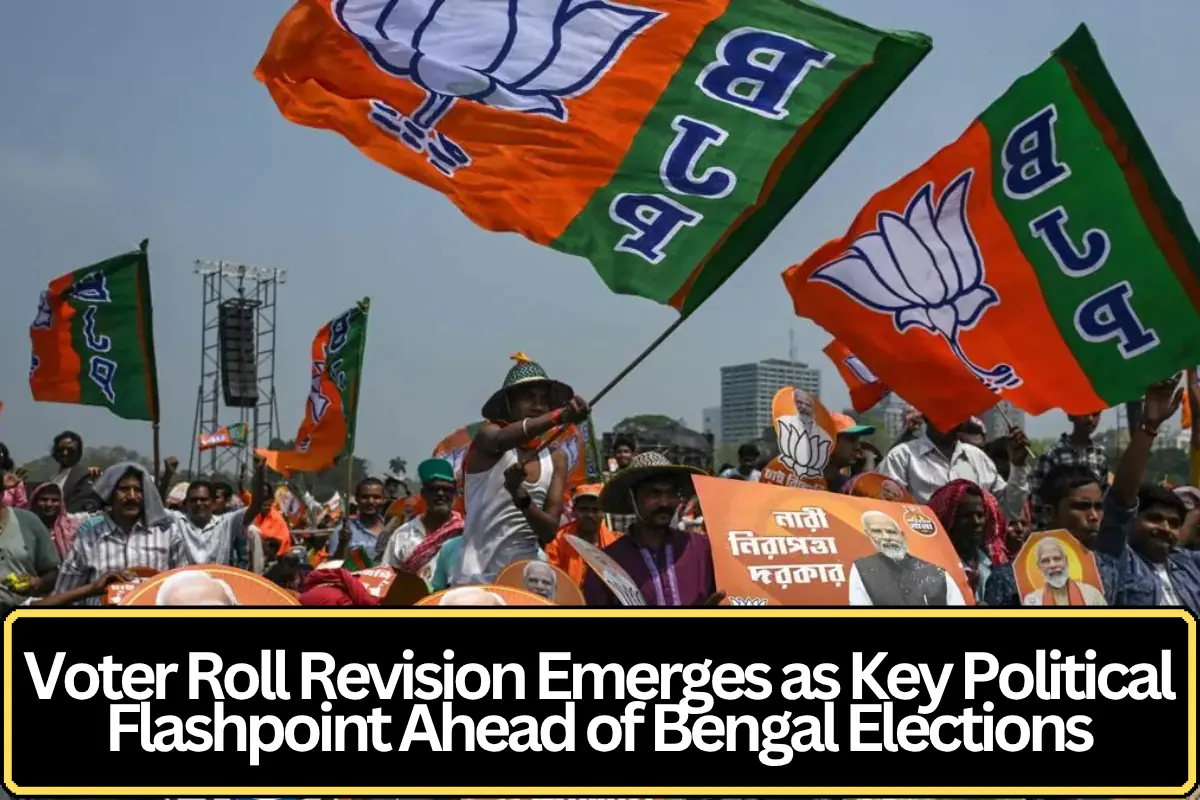
Voter Roll Revision Sparks Political Tensions in West Bengal
The revision of voter rolls in West Bengal has emerged as a major political flashpoint ahead of upcoming elections, with political parties raising concerns over transparency, accuracy, and potential electoral impact. The process, overseen by election authorities, is intended to update and verify voter data, but it has quickly become a contentious issue in the state’s charged political environment.
The debate centers on allegations from opposition parties that the revision exercise could lead to the exclusion of legitimate voters, while the ruling establishment has defended the process as necessary to ensure free and fair elections. The issue has intensified political rhetoric and is shaping the narrative in the run-up to polls.
Concerns Over Inclusion and Exclusion
Opposition leaders have expressed apprehension that the voter roll revision may disproportionately affect certain communities, potentially leading to disenfranchisement. They have called for greater transparency in the verification process and demanded safeguards to ensure that eligible voters are not removed from the electoral list.
Several political groups have also raised questions about the methodology being used to verify voter identities and addresses. Concerns have been voiced over the possibility of administrative errors and the lack of clarity regarding grievance redress mechanisms for those affected.
The issue has prompted calls for increased oversight and monitoring by independent observers to maintain the integrity of the process.
Government and Election Authorities Respond
Election authorities have maintained that the revision process is a routine and essential exercise aimed at maintaining the accuracy of electoral rolls. Officials have emphasized that such updates are conducted periodically across the country to remove duplicate or outdated entries and to include newly eligible voters.
The state government has backed the process, stating that it is being carried out in accordance with established guidelines and legal provisions. Authorities have also highlighted measures in place to address grievances, including opportunities for individuals to verify their details and file objections if necessary.
Officials insist that the process is being conducted in a transparent and systematic manner, with checks and balances to minimize errors.
Political Fallout and Campaign Narratives
The voter roll issue has quickly become a focal point in political campaigns, with parties using it to mobilize support and highlight concerns about electoral fairness. Opposition parties have framed the issue as a potential threat to democratic participation, while the ruling party has accused critics of politicizing a standard administrative process.
The controversy has added to the already intense political climate in West Bengal, where elections are often marked by high stakes and strong competition. Analysts note that such issues can significantly influence voter sentiment and campaign strategies.
Public rallies, statements, and social media campaigns have increasingly focused on the voter roll revision, reflecting its growing importance in the electoral discourse.
Role of the Election Commission
The Election Commission plays a central role in overseeing the voter roll revision process, ensuring compliance with legal and procedural standards. The commission has reiterated its commitment to conducting elections that are free, fair, and inclusive.
Officials have encouraged citizens to participate actively in the revision process by verifying their details and reporting discrepancies. They have also emphasized the availability of multiple channels for submitting corrections and objections.
The commission’s handling of the situation will be closely watched, as it seeks to maintain public confidence in the electoral system.
Impact on Electoral Preparedness
The controversy surrounding voter rolls comes at a critical time, as political parties ramp up preparations for the elections. Accurate electoral rolls are essential for ensuring smooth polling operations and preventing disputes on election day.
Any perceived irregularities in the voter list could lead to legal challenges and further political tensions, potentially affecting the overall electoral process. As a result, both authorities and political stakeholders are under pressure to address concerns promptly.
The situation underscores the importance of administrative efficiency and transparency in election management.
Historical Context of Electoral Issues in Bengal
West Bengal has a history of politically charged elections, with disputes over voter lists and polling practices occasionally surfacing in the past. Such issues have often been linked to broader concerns about governance, accountability, and democratic processes.
The current debate reflects these longstanding dynamics, highlighting the sensitivity of electoral mechanisms in a highly competitive political landscape. Ensuring the credibility of voter rolls is seen as a crucial factor in maintaining trust in the system.
Observers note that the outcome of this controversy could have implications beyond the immediate election cycle, influencing future electoral practices in the state.
Public Reaction and Civic Engagement
The voter roll revision has also sparked discussions among civil society groups and citizens, many of whom are calling for greater awareness and participation in the process. Efforts are being made to educate voters about how to check their status and ensure their inclusion in the electoral list.
Some organizations have launched campaigns to assist individuals in navigating the verification process, particularly in rural and underserved areas. These initiatives aim to reduce the risk of disenfranchisement and promote informed participation.
The level of public engagement will play a key role in determining the effectiveness and acceptance of the revision exercise.
Challenges Ahead
Despite assurances from authorities, challenges remain in balancing administrative efficiency with political sensitivity. Ensuring that the process is both accurate and perceived as fair will be critical in avoiding further विवाद and maintaining stability.
The complexity of managing large-scale voter data, combined with heightened political scrutiny, adds to the difficulty of the task. Authorities must also address misinformation and build public trust through clear communication.
Failure to effectively manage these challenges could have broader implications for electoral credibility and governance in the state.
Conclusion
The voter roll revision in West Bengal has evolved into a significant political issue, reflecting deeper concerns about electoral fairness and democratic participation.
Current Status
The revision process is ongoing, with election authorities continuing verification efforts while political debate and public scrutiny intensify ahead of the elections.