Single-Dose Dengue Vaccine from Butantan Shows Durable Protection in Phase 3 Trial
A single-dose dengue vaccine developed by Brazil’s Butantan Institute has demonstrated durable protection in a Phase 3 clinical trial, offering new potential for global dengue prevention strategies.
 Akanksha jain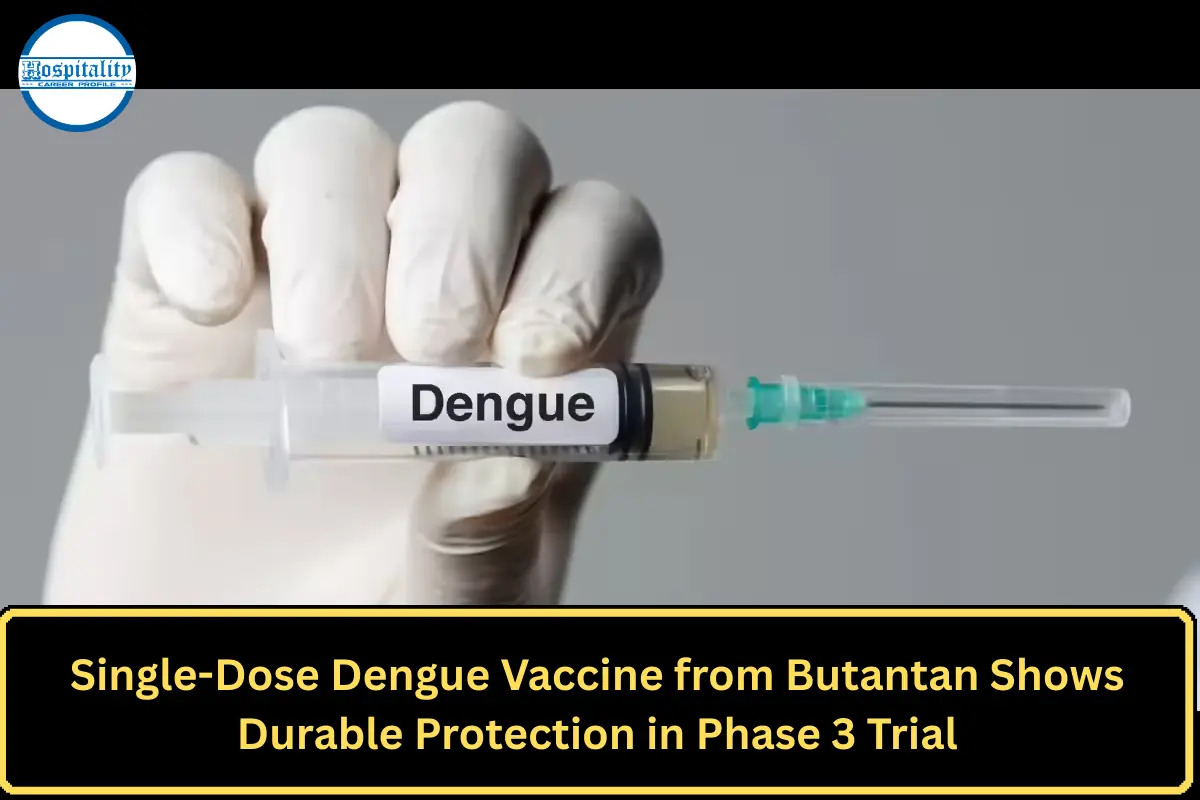
Butantan’s Single-Dose Dengue Vaccine Demonstrates Long-Term Protection in Phase 3 Trial
A single-dose dengue vaccine developed by Brazil’s Butantan Institute has demonstrated durable protection in a Phase 3 clinical trial, researchers reported in 2026, marking a significant step forward in global efforts to control the mosquito-borne disease. The study evaluated the vaccine’s safety and effectiveness in preventing dengue infections and found that a single immunization could provide sustained protection against the virus, offering a potentially simpler and more scalable vaccination strategy for countries affected by dengue outbreaks.
The results come as dengue cases continue to rise worldwide, driven by expanding mosquito habitats, climate change, and increased urbanization. Health experts say an effective and easy-to-administer vaccine could play an important role in reducing disease burden, particularly in regions where dengue transmission is widespread.
Clinical Trial Shows Strong and Durable Protection
The Phase 3 clinical trial involved thousands of participants across multiple regions with high dengue transmission. Researchers monitored participants over an extended period to assess the vaccine’s effectiveness against symptomatic dengue infection and evaluate how long the immune protection lasted after a single dose.
According to the findings, the vaccine provided consistent protection against dengue infections across multiple dengue virus serotypes, which are known to complicate vaccine development. Dengue virus exists in four closely related variants, and immunity to one does not always guarantee protection against the others.
The study indicated that the single-dose vaccine generated a strong immune response capable of protecting participants over an extended period. Researchers also reported that the vaccine maintained an acceptable safety profile, with no major safety concerns identified during the trial.
These findings are considered significant because many dengue vaccine candidates have required multiple doses to achieve effective immunity. A single-dose regimen could simplify vaccination campaigns and improve accessibility in resource-limited settings.
Dengue Remains a Growing Global Health Challenge
Dengue fever is one of the most widespread mosquito-borne viral diseases, affecting millions of people each year in tropical and subtropical regions. The disease is transmitted primarily by Aedes mosquitoes and can cause symptoms ranging from mild fever to severe complications, including dengue hemorrhagic fever and dengue shock syndrome.
Public health authorities estimate that hundreds of millions of dengue infections occur annually worldwide, with many cases going unreported due to mild symptoms or limited diagnostic resources. Severe dengue cases can require hospitalization and place significant strain on healthcare systems, particularly during seasonal outbreaks.
Countries in Latin America, Southeast Asia, and parts of Africa have experienced increasing dengue activity in recent years. Climate variability and changing environmental conditions have expanded the range of mosquito populations that transmit the virus.
As a result, health agencies have emphasized the need for effective vaccines and improved prevention strategies to reduce the global impact of dengue.
Advantages of a Single-Dose Vaccination Strategy
One of the most important aspects of the Butantan vaccine candidate is its single-dose design. Traditional vaccination schedules that require multiple injections can present logistical challenges for public health programs, particularly in areas with limited healthcare infrastructure.
A single-dose vaccine could simplify mass immunization campaigns by reducing the number of clinic visits required for full protection. This approach can also improve vaccination coverage by minimizing the risk that individuals fail to complete multi-dose schedules.
Public health experts say simplified vaccination programs are particularly important in regions where dengue transmission occurs across large geographic areas. Ensuring that populations receive full vaccine protection in a single visit could enhance the effectiveness of national dengue control strategies.
Researchers involved in the trial noted that the ability to provide strong and durable protection with a single dose may make the vaccine a valuable tool for public health authorities.
Immune Response Across Multiple Dengue Virus Types
Dengue virus consists of four serotypes, and individuals infected with one serotype may later become infected with another. In some cases, secondary infections can increase the risk of severe disease due to immune system responses.
This complexity has made dengue vaccine development particularly challenging. Vaccines must generate balanced immune responses against all four virus variants to provide broad protection without increasing the risk of severe outcomes.
The Phase 3 trial findings suggest that the Butantan vaccine is capable of generating protective immunity across these serotypes. Researchers observed immune responses consistent with protection against multiple dengue virus strains.
Such broad protection is considered essential for a successful dengue vaccine, as outbreaks often involve different serotypes circulating simultaneously in affected regions.
Safety Profile Evaluated During the Study
Safety assessments were a key component of the clinical trial. Participants were monitored for potential adverse reactions following vaccination, including both immediate reactions and longer-term health effects.
The trial data indicated that the vaccine maintained a favorable safety profile, with most reported side effects categorized as mild or moderate. These reactions included typical vaccine-related responses such as temporary soreness at the injection site or mild fever.
Researchers said no unexpected safety signals emerged during the study period, supporting further evaluation of the vaccine as a potential tool for large-scale immunization programs.
Regulatory authorities will review the full trial results before determining whether the vaccine can be approved for public use.
Potential Impact on Global Dengue Control Efforts
If approved, the single-dose dengue vaccine could become an important component of global disease prevention strategies. Vaccination programs could complement existing dengue control measures such as mosquito surveillance, vector control initiatives, and public health awareness campaigns.
In many countries, dengue outbreaks place significant pressure on hospitals and healthcare systems during peak transmission seasons. An effective vaccine could help reduce the number of infections and hospitalizations associated with the disease.
Public health experts have emphasized that vaccination alone cannot eliminate dengue transmission, but it can significantly reduce the severity and frequency of outbreaks when combined with other prevention strategies.
The development of new vaccine technologies also reflects broader progress in infectious disease research aimed at improving preparedness for emerging health threats.
Next Steps in Regulatory Review and Deployment
Following the successful Phase 3 trial, researchers are expected to submit detailed clinical data to regulatory authorities for evaluation. Approval processes typically involve comprehensive reviews of safety, effectiveness, and manufacturing standards before a vaccine can be authorized for public use.
Health authorities will also assess how the vaccine might be integrated into existing immunization programs and public health strategies. Factors such as cost, production capacity, and distribution logistics will influence how quickly the vaccine could become available in regions affected by dengue.
Researchers say further monitoring will continue to evaluate the vaccine’s long-term protection and effectiveness across different populations.
The Phase 3 results represent an important milestone in dengue vaccine development, suggesting that a single-dose immunization strategy may offer a practical and durable tool for reducing the global burden of dengue infection.