Cancer Drug Makers Seek Up to 50% Price Increase Amid Surge in Platinum Costs
Cancer drug manufacturers are seeking up to a 50% price increase as rising platinum costs threaten production viability and supply stability.
 Akanksha jain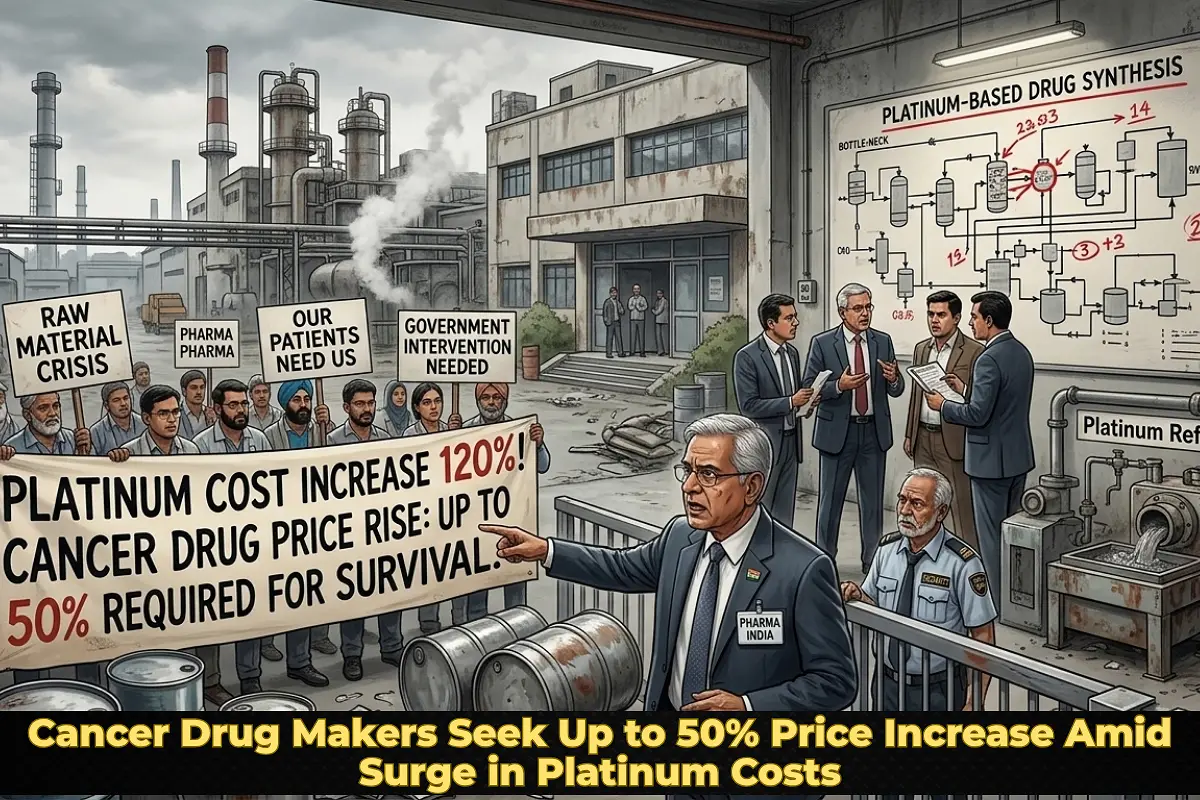
Cancer Drug Makers Seek Up to 50% Price Increase Amid Surge in Platinum Costs
Cancer drug manufacturers are seeking price increases of up to 50% in April 2026 as a sharp rise in platinum prices threatens the economic viability of producing key chemotherapy medicines, industry executives said, raising concerns over potential cost burdens for patients and healthcare systems.
The request comes as platinum, a critical raw material used in widely prescribed chemotherapy drugs such as cisplatin, carboplatin, and oxaliplatin, has witnessed significant price volatility in global markets. Manufacturers say the surge has sharply increased production costs, making current pricing unsustainable.
Rising Input Costs Pressure Manufacturers
Platinum-based compounds form the backbone of several life-saving cancer treatments, particularly for lung, ovarian, colorectal, and testicular cancers. The recent spike in platinum prices has disrupted cost structures for pharmaceutical companies that rely heavily on the metal for active pharmaceutical ingredients.
Industry stakeholders report that raw material costs have risen to levels that significantly erode profit margins, particularly for generic drug manufacturers operating under price controls or competitive tender systems. Companies argue that without price revisions, continued production may become financially unviable.
The situation has prompted manufacturers to approach regulators and policymakers for urgent intervention.
Call for Price Revision
Drug makers are seeking approval for price increases of up to 50% to offset the impact of rising platinum costs. Industry representatives say the proposed hike is necessary to ensure an uninterrupted. supply of essential oncology medicines.
They emphasize that the request is driven by cost pressures rather than profit motives, noting that maintaining stable production is critical for patient care. Manufacturers warn that failure to address pricing concerns could lead to supply shortages in the near future.
Stakeholders have called for a balanced approach that considers both industry sustainability and patient affordability.
Impact on Patients and Healthcare Systems
Any increase in cancer drug prices is likely to have a significant impact on patients, particularly in countries where out-of-pocket healthcare expenses remain high. Oncology treatments are already among the most expensive medical interventions, and additional cost burdens could limit access to essential therapies.
Healthcare providers and patient advocacy groups have expressed concern about the potential impact on treatment affordability. They are urging authorities to carefully evaluate the proposed price hikes and explore mechanisms to mitigate the financial burden on patients.
Experts highlight the need for targeted subsidies or reimbursement strategies to ensure continued access to critical treatments.
Global Supply Chain Challenges
The surge in platinum prices is partly attributed to global supply constraints, geopolitical factors, and increased industrial demand for the metal in sectors such as automotive and clean energy. These factors have contributed to price volatility, affecting industries that rely on platinum as a key input.
Pharmaceutical manufacturers are particularly vulnerable to such fluctuations, as they have limited ability to substitute platinum in established chemotherapy formulations. The lack of alternatives underscores the importance of a stable raw material supply for drug production.
Industry analysts note that supply chain disruptions have become a recurring challenge for the pharmaceutical sector in recent years.
Regulatory Considerations
Regulatory authorities are now faced with the challenge of balancing competing priorities, including ensuring drug affordability, maintaining supply stability, and supporting domestic manufacturing. Approving price increases could help sustain production, but may also raise concerns about patient access.
Experts suggest that regulators may consider temporary price adjustments, cost-sharing mechanisms, or policy interventions to address the issue. Transparent dialogue between industry stakeholders and policymakers is seen as essential for finding a sustainable solution.
Authorities are expected to review the proposals in the coming weeks.
Industry Perspective
Pharmaceutical companies argue that the current situation highlights the vulnerability of drug pricing models to fluctuations in raw material costs. They are calling for more flexible pricing frameworks that can adapt to changing market conditions.
Some industry leaders have also suggested the need for strategic reserves or long-term supply agreements for critical materials such as platinum to reduce exposure to price volatility. Such measures could help stabilize production costs and ensure a consistent supply.
Stakeholders emphasize that proactive planning is essential to mitigate future risks.
Potential Alternatives and Innovation
Researchers and industry experts are exploring alternative compounds and treatment approaches that could reduce reliance on platinum-based drugs. However, developing and validating new therapies is a complex and time-consuming process, limiting the availability of immediate solutions.
Advances in targeted therapies and immunotherapy may gradually reduce dependence on traditional chemotherapy agents, but platinum-based drugs remain a cornerstone of cancer treatment for many conditions.
Experts note that innovation will play a key role in addressing long-term challenges in oncology drug development.
Market and Investor Reaction
The developments have drawn attention from investors and market analysts, who are closely monitoring the potential impact on pharmaceutical companies and healthcare systems. Rising input costs and pricing pressures could influence profitability and market dynamics in the oncology segment.
Companies with diversified portfolios and strong pricing power may be better positioned to navigate the challenges, while smaller manufacturers could face greater financial strain. The situation underscores the importance of resilience and adaptability in the pharmaceutical industry.
Analysts expect continued volatility in the near term as stakeholders respond to evolving market conditions.
Future Outlook
Looking ahead, the outcome of discussions between drug manufacturers and regulators will be critical in determining the trajectory of cancer drug pricing and supply stability. Ensuring a balance between affordability and sustainability will remain a key challenge.
Industry experts believe that collaborative efforts involving governments, manufacturers, and healthcare providers will be necessary to address the issue effectively. Long-term strategies to manage raw material risks and support innovation are also expected to gain importance.
The situation highlights broader challenges facing the global pharmaceutical industry in managing cost pressures while maintaining access to essential medicines.
Conclusion
Cancer drug makers’ push for price increases reflects mounting pressure from rising platinum costs, with regulators now tasked with ensuring both affordability and uninterrupted supply of critical oncology treatments.