China’s $51T Savings Boost Bonds to Top Global Returns: Bloomberg
China’s $51 trillion savings surplus drives strong demand for bonds, making yuan debt the best-performing major fixed-income asset amid global volatility.
 Tripti Srivastava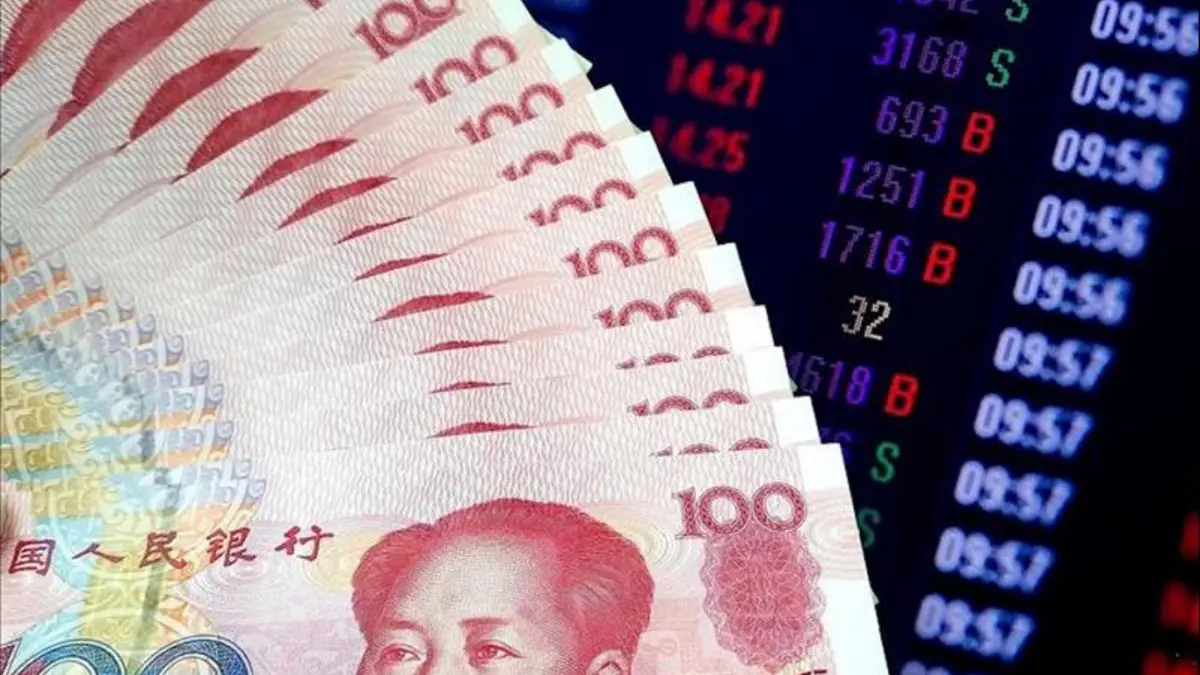
China’s massive $51 trillion savings pool is driving strong demand for domestic and offshore debt, helping yuan-denominated bonds outperform global peers with returns of about 1.1% this year, according to Bloomberg. The surge in liquidity has reinforced China’s position as a defensive asset market amid volatility linked to the Iran conflict.
China Bonds Lead Global Fixed-Income Returns
A basket of high-grade Chinese bonds, including government and corporate debt denominated in yuan, has emerged as the top performer among major Bloomberg fixed-income aggregate indexes in 2026, delivering returns of approximately 1.1%.
Dollar-denominated bonds from high-quality Chinese borrowers have done better than similar US investment-grade credit and US Treasuries over the same period, showing that global investors now prefer Chinese assets.
This relative outperformance marks a reversal of historical trends, where Chinese bonds often traded at higher yields than their US counterparts due to perceived risk premiums.
The primary driver of this performance is China’s vast savings glut, with bank deposits totalling about $51 trillion — exceeding the combined deposits held across the United States, the European Union, and Japan.
With domestic credit demand remaining weak, Chinese banks have limited opportunities to expand lending. As a result, financial institutions are reallocating excess liquidity into high-quality bonds, creating sustained demand and supporting prices.
Economists note that this surplus liquidity continuously recycles into investment-grade credit, reinforcing the resilience of China’s fixed-income market even amid global uncertainty.
Additionally, regulators have encouraged banks to reduce exposure to US Treasuries, prompting a shift toward both yuan-denominated bonds and dollar bonds issued by Chinese entities offering relatively higher yields.
Investor Demand Strengthens Amid Global Volatility
China’s bond market has gained traction as a defensive investment amid heightened geopolitical tensions, particularly linked to the Iran conflict, which has increased volatility across global financial markets.
Compared with other major oil-importing economies, China’s exposure to rising energy prices is mitigated by its large strategic reserves and ongoing expansion in renewable energy, which supports macroeconomic stability.
Investors are increasingly seeing Chinese investment-grade debt as part of a broader portfolio of defensive assets, with long-term institutional investors treating it as a structural diversification tool rather than a short-term tactical trade.
This growing recognition is also supported by relatively low inflation in China and the presence of state-backed issuers, which contribute to stability in both onshore and offshore bond markets.
Recent issuance trends underscore the strength of demand for Chinese debt. A financial unit of Aluminium Corp. of China issued an $800 million three-year dollar bond at a spread of just 22 basis points over US Treasuries, significantly below global norms.
On average, Chinese investment-grade dollar bonds are trading at spreads of about 53 basis points, roughly 25 basis points tighter than US high-grade corporate bonds, according to Bloomberg indexes.
This represents a notable shift from the past decade, when Chinese bonds typically traded at wider spreads compared to US peers, reflecting investor concerns over credit risk.
The narrowing spread indicates increased confidence in Chinese issuers and stronger demand from both domestic and international investors.
Market Context and Structural Shift
The strong performance of Chinese bonds comes after years of negative sentiment linked to the country’s high-yield property sector, which has faced significant stress due to declining real estate values and rising mortgage pressures.
Despite these challenges, the investment-grade segment of the market has stayed strong, helped by state-backed issuers, stable liquidity conditions, and continued trade surpluses that provide plenty of dollar liquidity.
China’s relatively low correlation with global financial markets also enhances its appeal as a diversification asset, particularly during periods when global assets tend to move in tandem.
Market participants note that bond performance will remain sensitive to external factors, including the duration of geopolitical tensions and shifts in global inflation dynamics, which could influence yield levels and investor demand.
However, the current environment of abundant liquidity, subdued inflation, and strong institutional demand continues to underpin China’s position as a key player in global fixed-income markets.