China Conducts Quiet Political Purge Amid Global Focus on Middle East Conflict
China is reportedly carrying out a sweeping political purge while global attention remains fixed on the Middle East conflict, raising concerns over internal power consolidation.
 SANJANA DUTTA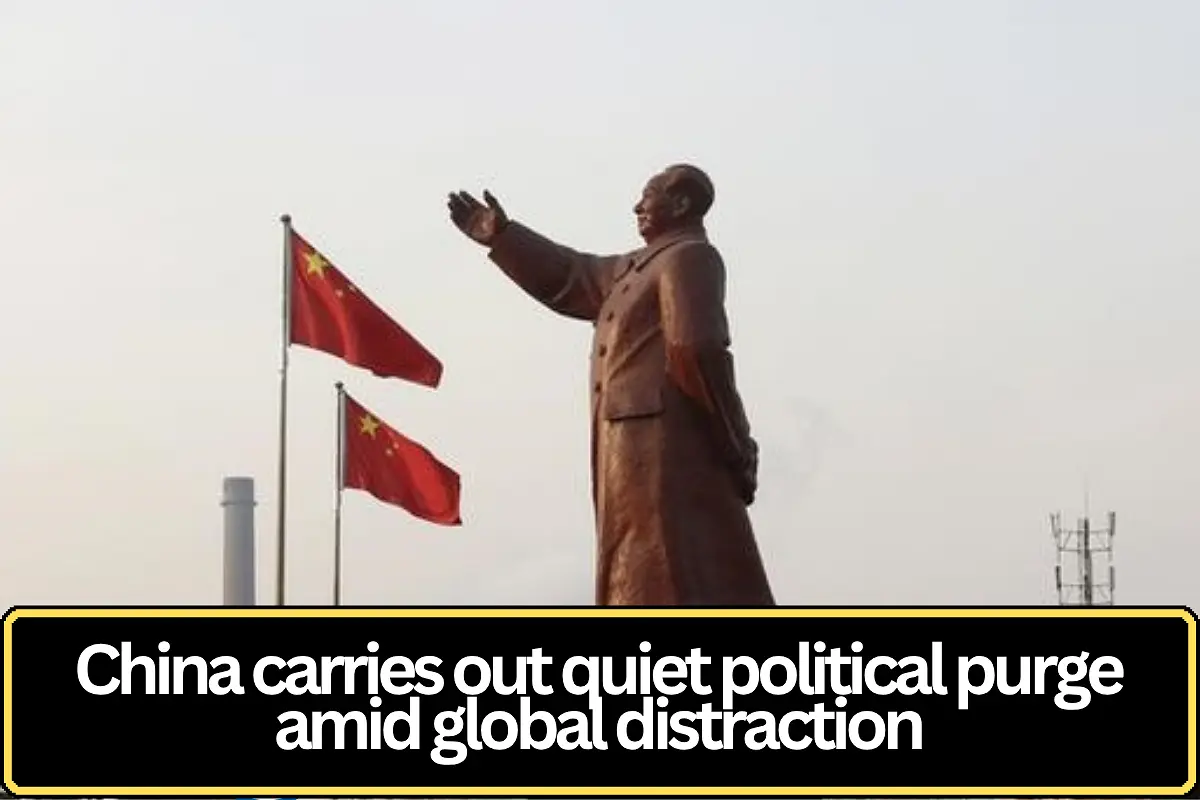
China Conducts Quiet Political Purge Amid Global Focus on Middle East Conflict
BEIJING, April 4, 2026 — China is reportedly executing a sweeping political purge targeting key officials and institutions, even as global attention remains focused on escalating tensions in the Middle East, according to emerging reports and political analysis.
The developments suggest a strategic effort by the Chinese leadership to consolidate power internally while international scrutiny is largely diverted by ongoing geopolitical crises elsewhere. The reported actions involve disciplinary measures, removals, and investigations affecting a range of political, military, and administrative figures.
Purges Carried Out Under Anti-Corruption Framework
The ongoing campaign is being framed as part of China’s long-standing anti-corruption drive, a hallmark of governance under President Xi Jinping. However, analysts suggest that the scale and timing of the current measures indicate a broader political objective beyond routine disciplinary enforcement.
Authorities have reportedly initiated investigations into multiple senior officials, accusing them of corruption, disloyalty, or violations of party discipline. While official statements emphasize maintaining integrity within the Communist Party, critics argue that such campaigns often serve to eliminate dissent and reinforce centralized authority.
The anti-corruption framework has historically been used to reshape political alignments within the party, allowing leadership to remove rivals and ensure loyalty among key decision-makers. The current wave appears to follow a similar pattern, though with heightened intensity.
Strategic Timing Amid Global Distractions
The timing of the purge is drawing particular attention from observers, as it coincides with heightened instability in the Middle East, including ongoing conflict involving Iran and broader regional tensions. With international media and diplomatic focus directed toward these developments, China’s internal political shifts have received comparatively limited coverage.
Experts note that this diversion of global attention may provide a conducive environment for implementing significant domestic changes with minimal external pressure. By acting during a period of geopolitical distraction, Chinese authorities may be seeking to minimize international reaction and scrutiny.
Such timing underscores the interconnected nature of global politics, where developments in one region can influence strategic decisions in another. In this case, the Middle East crisis appears to have created an opportunity for internal consolidation within China.
Impact on Governance and Policy Direction
The reported purge is expected to have implications for China’s governance structure and policy direction. The removal or sidelining of officials can lead to shifts in administrative priorities, decision-making processes, and institutional dynamics.
Analysts suggest that the consolidation of power may enable more decisive implementation of policies, particularly in areas such as economic reform, national security, and technological development. However, it could also reduce internal debate and limit the diversity of perspectives within the leadership.
The centralization of authority has been a defining feature of China’s political landscape in recent years, with the leadership emphasizing unity and discipline within the party. The current developments appear to reinforce this trajectory.
Concerns Over Transparency and Accountability
The opaque nature of China’s political system makes it difficult to assess the full scope and impact of the purge. Information is often tightly controlled, with limited public disclosure regarding investigations and outcomes.
This lack of transparency has raised concerns among international observers and human rights organizations, who argue that the absence of independent oversight can lead to abuses of power. They emphasize the importance of accountability and due process in maintaining public trust and institutional integrity.
At the same time, Chinese authorities maintain that strict disciplinary measures are necessary to uphold governance standards and prevent corruption. They argue that such actions contribute to long-term stability and development.
Regional and Global Implications
China’s internal political developments are likely to have broader implications for regional and global dynamics. As one of the world’s largest economies and a major geopolitical actor, shifts in its leadership structure can influence international relations and economic trends.
The consolidation of power may strengthen China’s ability to pursue its strategic objectives on the global stage, including initiatives related to trade, infrastructure, and technological innovation. However, it may also heighten concerns among other countries regarding political centralization and decision-making processes.
In the context of ongoing global tensions, including the Middle East conflict, China’s actions could shape its role in international diplomacy and crisis management. A more centralized leadership may adopt a more assertive or coordinated approach to global issues.
Domestic Reactions and Public Perception
Within China, public reactions to political purges are often influenced by official narratives and media coverage. State-controlled outlets typically present such campaigns as necessary measures to combat corruption and ensure effective governance.
While some segments of the population may view these actions as positive steps toward accountability, others may be more cautious, particularly given the limited availability of independent information. The broader impact on public perception remains difficult to gauge due to restrictions on open political discourse.
The government’s emphasis on stability and order continues to shape the narrative surrounding these developments, reinforcing the importance of discipline and unity within the political system.
Comparison with Previous Campaigns
The current purge bears similarities to earlier anti-corruption campaigns that have reshaped China’s political landscape over the past decade. Previous efforts have resulted in the removal of numerous high-ranking officials and have significantly altered power structures within the Communist Party.
However, analysts note that the present campaign appears more expansive, potentially targeting a wider range of sectors and individuals. This suggests an ongoing evolution in the approach to governance and political management.
The continuity of such campaigns highlights the leadership’s commitment to maintaining control and addressing perceived threats to stability. It also reflects the complex interplay between governance, politics, and institutional reform in China.
Future Outlook
Looking ahead, the trajectory of China’s political landscape will depend on the outcomes of the current purge and the broader context in which it unfolds. The consolidation of power may lead to greater policy coherence, but it could also present challenges related to accountability and inclusiveness.
Internationally, China’s actions will continue to be closely monitored, particularly as global attention shifts back from the Middle East to other regions. The extent to which these developments influence China’s foreign policy and economic strategies remains to be seen.
As geopolitical dynamics evolve, the interplay between domestic and international factors will play a crucial role in shaping China’s position on the global stage.
Conclusion
China’s reported political purge, carried out amid global distraction caused by the Middle East conflict, highlights a strategic effort to consolidate power and reinforce governance structures.
Current Status
The situation remains ongoing, with further developments expected as authorities continue their investigations and internal restructuring efforts.