Defense Contractors in the Spotlight as Middle East Tensions Raise Questions About Military Industry Profits
Rising tensions involving Iran, the United States, and Israel have renewed attention on major defense contractors and the role of the global military industry during periods of geopolitical conflict.
 SANJANA DUTTA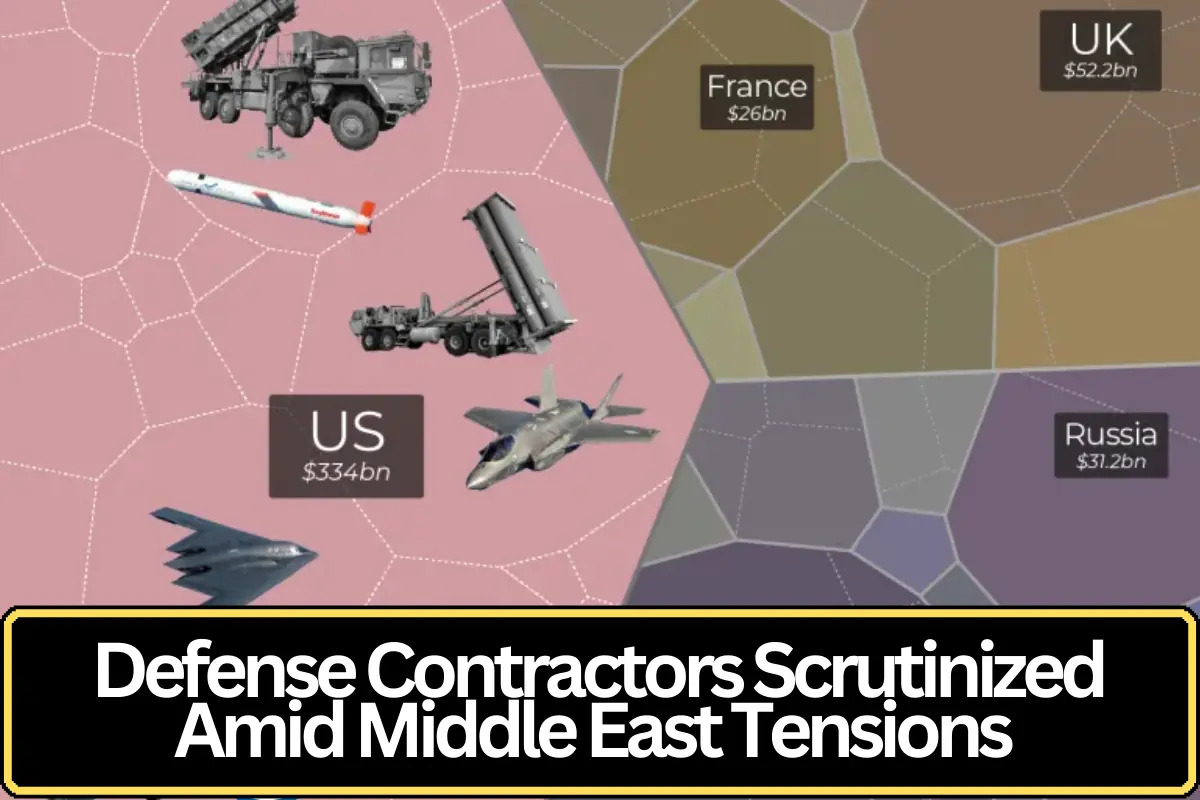
Growing Attention on the Defense Industry During Regional Tensions
Geopolitical tensions in the Middle East often bring renewed attention to the global defense industry. As security concerns increase and governments expand military preparedness, defense contractors frequently experience rising demand for weapons systems, surveillance technologies, and logistical support. The current focus on regional tensions involving Iran, the United States, and Israel has once again highlighted the role of military manufacturers in modern geopolitical conflicts.
Defense companies play a crucial role in supplying advanced equipment and technology that governments rely on for national security. These companies design and manufacture aircraft, missile defense systems, cyber‑security platforms, communications infrastructure, and a wide range of other military capabilities. Their operations are closely tied to government defense budgets, international alliances, and strategic priorities.
As regional tensions escalate, analysts, policymakers, and the public often examine how military spending affects the defense industry and the broader global economy. Discussions surrounding defense contracts frequently raise questions about transparency, accountability, and the economic incentives associated with prolonged security challenges.
The Structure of the Global Defense Industry
The global defense industry is one of the most technologically advanced sectors of the international economy. It includes companies that specialize in aerospace engineering, naval shipbuilding, missile systems, intelligence technology, and cyber defense. Many of these firms maintain close relationships with government agencies responsible for national security and defense planning.
Defense contractors typically operate through long‑term contracts with governments. These agreements can involve research and development, production of military equipment, and ongoing maintenance or operational support. Because defense technologies are highly specialized and require extensive expertise, the industry is dominated by a relatively small number of major corporations.
These companies often collaborate with universities, research institutions, and smaller technology firms to develop innovative solutions for modern security challenges. The resulting technologies can range from next‑generation fighter aircraft to advanced radar systems capable of detecting potential threats over long distances.
As geopolitical tensions evolve, defense contractors adapt their strategies to meet changing government priorities and emerging security needs.
Defense Spending and Government Policy
Government defense spending plays a central role in shaping the fortunes of defense contractors. When geopolitical tensions rise, governments frequently increase their military budgets in order to strengthen security capabilities and deter potential threats.
These budget increases can translate into new procurement contracts for military equipment, modernization programs for existing systems, and expanded research initiatives. Defense companies often compete for these contracts through bidding processes that evaluate technological capability, cost efficiency, and strategic value.
In countries such as the United States and Israel, defense industries are deeply integrated into national security planning. Military procurement programs support domestic technological development while ensuring that armed forces have access to advanced equipment.
The relationship between government policy and defense industry activity is therefore complex, involving economic, strategic, and political considerations.
Major Defense Contractors and Their Capabilities
Several large corporations dominate the global defense market. These companies are responsible for developing many of the technologies used by modern military forces.
Major defense firms produce fighter jets, missile defense systems, precision‑guided weapons, satellites, surveillance platforms, and cybersecurity tools. Some companies specialize in aerospace engineering, while others focus on land‑based systems or naval technology.
In addition to manufacturing physical equipment, defense contractors increasingly provide digital solutions that support military operations. Artificial intelligence, data analytics, and advanced communication networks are becoming essential components of modern defense strategies.
The capabilities offered by these companies allow governments to maintain strategic advantages in an increasingly complex security environment.
Israel’s Defense Technology Sector
Israel has developed one of the most sophisticated defense technology sectors in the world. The country’s security environment and technological expertise have contributed to the growth of a highly innovative defense industry.
Israeli companies are known for developing advanced missile defense systems, unmanned aerial vehicles, cyber‑security technologies, and intelligence platforms. These innovations are often exported to international partners, strengthening Israel’s role as a major supplier of defense technology.
The Israeli defense sector also benefits from strong collaboration between government agencies, research institutions, and private technology companies. This ecosystem encourages rapid innovation and enables the development of cutting‑edge military solutions.
As regional security challenges evolve, Israeli defense companies continue to expand their technological capabilities and global partnerships.
The United States and the World’s Largest Defense Market
The United States operates the largest defense market in the world. American defense contractors produce a wide range of military equipment used by both the United States armed forces and allied nations.
These companies play a central role in developing advanced aerospace technologies, stealth aircraft, missile defense systems, naval vessels, and intelligence platforms. The scale of the U.S. defense budget allows for extensive research and development programs that drive technological innovation.
American defense firms also participate in international partnerships that support joint military operations and security cooperation. These collaborations strengthen alliances and help maintain interoperability between allied forces.
As global security dynamics shift, the United States defense industry continues to adapt to emerging technological and strategic challenges.
Economic Impact of the Defense Industry
The defense industry contributes significantly to national economies through employment, technological innovation, and industrial development. Defense contractors employ thousands of engineers, scientists, technicians, and manufacturing specialists.
Large defense projects often involve extensive supply chains that include smaller companies responsible for producing components, materials, and specialized equipment. As a result, defense spending can have broad economic effects beyond the primary contractors.
Research and development programs within the defense sector frequently lead to technological breakthroughs that later benefit civilian industries. Innovations in aerospace engineering, satellite technology, and cybersecurity have often originated from military research initiatives.
Despite these economic benefits, debates continue regarding the appropriate balance between defense spending and investment in other areas such as education, healthcare, and infrastructure.
Ethical Debates Surrounding Military Industry Profits
The financial performance of defense companies during periods of geopolitical tension often raises ethical questions. Critics argue that corporations should not profit from conflict or instability, while supporters contend that defense industries provide essential tools for national security.
This debate highlights the complex relationship between private industry and government defense policy. Military equipment and technological innovation are necessary for national protection, yet the commercial nature of defense manufacturing introduces economic incentives that sometimes generate controversy.
Transparency in government procurement processes is therefore considered an important factor in maintaining public trust. Clear regulations and oversight mechanisms can help ensure that defense contracts are awarded fairly and that public resources are used responsibly.
Public discussions about these issues are likely to continue as global security challenges evolve.
The Role of Innovation in Modern Defense
Technological innovation has become one of the defining characteristics of the modern defense industry. Emerging technologies such as artificial intelligence, autonomous systems, and advanced sensors are transforming the nature of military operations.
Defense contractors invest heavily in research programs designed to develop next‑generation capabilities. These efforts include improving missile defense systems, enhancing cyber‑security tools, and designing aircraft capable of operating in increasingly complex environments.
The pace of technological change has also intensified competition among defense companies, encouraging them to pursue groundbreaking innovations that can provide strategic advantages to their government partners.
In many cases, collaboration between private industry and public institutions plays a key role in advancing these technologies.
Global Security and the Future of the Defense Industry
The future of the defense industry will likely be shaped by evolving geopolitical dynamics, technological innovation, and changing security priorities. As international tensions fluctuate, governments will continue to evaluate how best to allocate resources for national defense.
Defense contractors will remain essential partners in developing the equipment and technologies required to address emerging threats. At the same time, public scrutiny of defense spending and industry practices is expected to remain strong.
Balancing security needs with ethical considerations and economic priorities will continue to be an important challenge for policymakers and industry leaders alike.
As the global security environment evolves, the role of defense contractors in shaping military capabilities and technological progress will remain a central feature of international affairs.