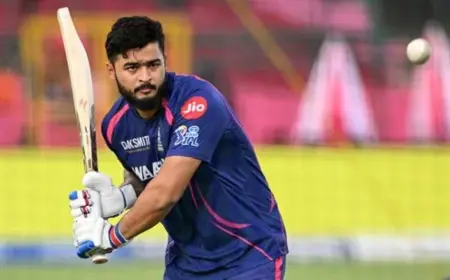
Delhi Capitals Chase 176 to Beat RCB by Six Wickets in Bengaluru
Delhi Capitals defeated Royal Challengers Bengaluru by six wickets in IPL 2026, chasing 176 with contributions from KL Rahul, Tristan Stubbs and David Miller.
 Jyoti Kushwaha
 Bengaluru, April 18 — Delhi Capitals defeated Royal Challengers Bengaluru by six wickets in an IPL 2026 match at the M Chinnaswamy Stadium, successfully chasing 176 with one ball remaining. Contributions from KL Rahul, Tristan Stubbs and David Miller guided DC to 179 for four on a slow surface.
Delhi Capitals Complete Chase in Final Over
Chasing 176, Delhi Capitals reached the target in 19.5 overs, finishing at 179 for four. The match was decided in the final over, where DC required 15 runs. David Miller, who remained unbeaten on 22 off 10 balls, struck two sixes off Romario Shepherd to seal the result.
The finish marked a turnaround for Miller, who had faced criticism earlier in the tournament after failing to close out a previous chase. This time, he stayed till the end and ensured Delhi crossed the line with a composed late effort.
Tristan Stubbs also played a key role, remaining unbeaten on 60 off 47 balls, anchoring the innings through the middle and supporting the late acceleration.
Rahul and Stubbs Stabilise After Early Collapse
Delhi Capitals lost three wickets early in the powerplay and were reduced to 18 for three in 2.5 overs. KL Rahul then steadied the innings, scoring 57 off 34 balls to rebuild the chase.
Rahul counter-attacked after the early setbacks, targeting Josh Hazlewood with aggressive stroke play, including two sixes and three fours. He reached his half-century in 30 balls before being dismissed by Krunal Pandya, caught by Virat Kohli at long-on.
Rahul and Stubbs added 69 runs for the fourth wicket, providing stability and restoring momentum to the chase. Their partnership ensured that Delhi remained within reach of the target despite the early damage.
Stubbs then combined with Axar Patel for a 47-run stand before Axar retired hurt after scoring 26. At 134 for four in 15.5 overs, Delhi required 45 runs from 25 balls, a target that was achieved through controlled finishing.
RCB Post 175 After Slowing in Second Half
Royal Challengers Bengaluru posted 175 for eight after being asked to bat first. Phil Salt led the innings with 63 runs, while Virat Kohli contributed 19 in a 52-run opening partnership.
RCB made a strong start, reaching 59 for one at the end of the powerplay, with Salt taking an aggressive approach, particularly against Auqib Nabi. He brought up his half-century in 30 balls and added 47 runs with Devdutt Padikkal.
However, the innings lost momentum in the middle overs. Kuldeep Yadav dismissed Salt, caught by Stubbs, leaving RCB at 105 for three. Subsequent wickets further slowed the scoring rate.
Rajat Patidar and Tim David added some runs, but both were dismissed before accelerating significantly. RCB were 99 for two at the halfway mark but managed only 76 runs in the final 10 overs, finishing below the 200-run mark despite a strong platform.
Bhuvneshwar Leads Early Breakthroughs
Delhi Capitals’ bowling effort was led by Bhuvneshwar Kumar, who returned figures of 3 for 26. He removed Pathum Nissanka, Karun Nair and Sameer Rizvi, providing crucial breakthroughs that limited RCB’s progress.
The early wickets prevented RCB from fully capitalising on their start, while the middle and death overs saw a controlled approach from Delhi’s bowlers.
Axar Patel and Mukesh Kumar also contributed with key dismissals, ensuring that RCB’s innings did not accelerate in the later stages.
Delhi Capitals Secure Key Points
The victory adds important points for Delhi Capitals in the IPL 2026 standings, highlighting their ability to recover from early setbacks in a chase. The innings was built through a combination of consolidation and timely acceleration.
For Royal Challengers Bengaluru, the result reflected missed opportunities after a strong start with the bat. The inability to maintain scoring momentum in the second half proved decisive.
The match showcased a balanced chase from Delhi, with contributions across phases, culminating in a controlled finish in the final over.