Explosions Rock Dubai, Bahrain, Jordan and Kuwait as War Spreads Across the Middle East
Explosions reported in Dubai, Bahrain, Jordan and Kuwait signal a dangerous expansion of the Middle East conflict, raising fears of a broader regional war.
 SANJANA DUTTA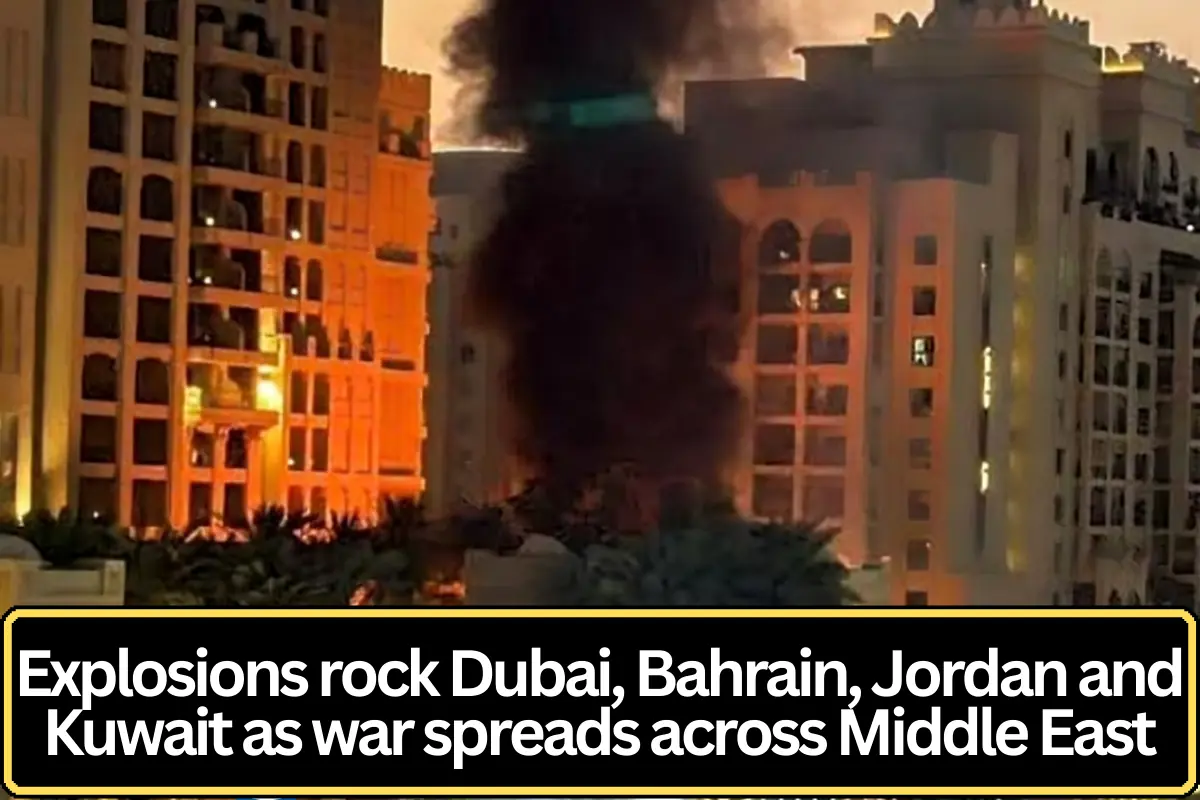
Regional Conflict Expands as Explosions Shake Key Gulf and Levant States
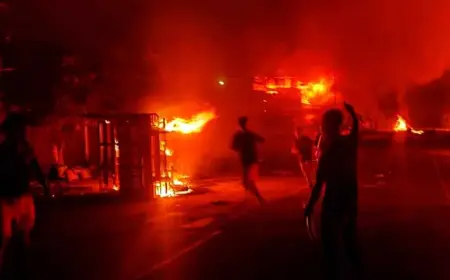
The ongoing Middle East conflict has entered a dangerous new phase as explosions were reported. The incidents mark a significant widening of hostilities, intensifying fears that what began as a concentrated confrontation has now evolved into a broader regional crisis.
Authorities across the affected areas activated emergency response systems following reports of loud blasts, aerial activity, and heightened military movement. While official details remain limited, security analysts warn that the geographical spread of explosions indicates a strategic shift in the conflict’s scope.
Dubai: Shockwaves in a Global Financial Hub
Immediate Aftermath and Emergency Measures
In Dubai, one of the most prominent cities in the jumeriah, residents reported hearing powerful explosions followed by visible smoke in certain districts. Authorities quickly moved to reassure the public, emphasizing that emergency services were deployed and critical infrastructure remained operational.
Airspace monitoring intensified, and temporary restrictions were introduced as a precautionary measure. Given Dubai’s status as a global financial and transportation hub, any security disturbance carries international implications. Airports, ports, and business centers were placed on heightened alert, though essential operations continued with reinforced security.
Economic and Strategic Importance
Dubai’s strategic role in global commerce makes it a highly sensitive location. It serves as a central transit point linking Asia, Europe, and Africa. Even limited disruptions can ripple through international supply chains, financial markets, and tourism flows.
The explosions have prompted multinational corporations and foreign governments to assess risk exposure. Insurance markets are already recalculating regional premiums, reflecting growing uncertainty.
Bahrain: Security Concerns in a Strategic Gulf State
Defense Systems Activated
In Bahrain, security forces reportedly activated defensive systems following indications of aerial threats. Explosions were heard in parts of the country, prompting authorities to issue public safety advisories.
Bahrain occupies a strategically significant location in the Gulf, hosting important military installations and maritime facilities. Any escalation in its territory raises immediate concerns about broader naval security and energy transport routes.
Impact on Maritime Routes
The Gulf region is home to some of the world’s most vital shipping lanes. Increased military tension in Bahrain heightens concerns about the safety of vessels passing through nearby waters. Energy exports from Gulf producers rely heavily on uninterrupted maritime movement.
Shipping companies are closely monitoring developments, with some reportedly adjusting routes or implementing additional security protocols.
Jordan: Rising Tensions Along Key Borders
Explosions and Airspace Monitoring
Jordanian authorities confirmed that explosions were heard in certain areas, leading to immediate investigation and enhanced border surveillance. Air defense units were placed on alert as officials worked to determine the source and trajectory of the disturbances.
Jordan’s geographic position places it at a crossroads between multiple conflict zones. As a country that has historically prioritized stability and diplomatic balance, any direct impact on its territory represents a serious escalation.
Domestic Stability Concerns
Jordan has long been viewed as a pillar of relative stability in a volatile region. The expansion of hostilities onto its soil introduces new internal and external pressures. Government officials have emphasized the importance of maintaining calm while reinforcing national defense systems.
The possibility of spillover from neighboring conflicts raises concerns about refugee flows, economic strain, and political pressures within the country.
Kuwait: Heightened Security in Energy-Critical Territory
Emergency Response and Defensive Posture
Kuwait reported explosions in limited areas, prompting swift deployment of security forces and activation of emergency response teams. Government statements highlighted coordination with regional allies to assess potential threats and reinforce defensive capabilities.
Kuwait’s importance in global energy markets makes any security incident particularly sensitive. Oil infrastructure and export terminals were placed under reinforced protection.
Energy Market Volatility
Oil prices reacted sharply to the expanding conflict footprint. Traders cited the risk of infrastructure disruption across multiple Gulf states. Even in the absence of confirmed production damage, perceived instability has triggered market fluctuations.
Energy-importing nations are preparing contingency plans in case sustained disruption affects supply volumes.
How the Conflict Expanded
From Bilateral Confrontation to Regional Escalation
The war initially centered around direct military exchanges between major regional powers. However, as retaliatory strikes intensified, the geographic scope widened. The latest explosions suggest that military calculations have shifted from targeted engagements to broader strategic signaling.
Expanding the conflict footprint can serve multiple purposes: deterring adversaries, demonstrating reach, or attempting to alter regional alliances. However, such expansion also increases the risk of unintended escalation.
Proxy Dynamics and Strategic Alliances
The Middle East conflict landscape is shaped by complex networks of alliances and proxy relationships. As tensions rise, affiliated groups may engage in actions that extend hostilities beyond initial battlegrounds. This dynamic complicates efforts to contain violence within defined borders.
Regional governments are now navigating a delicate balance between defense, deterrence, and diplomatic restraint.
Regional Security Implications
Airspace and Missile Defense Systems
Across the affected countries, air defense systems were reportedly activated in response to perceived aerial threats. This coordinated response reflects both preparedness and the seriousness of the situation.
Military analysts emphasize that widespread activation of defense networks increases the likelihood of rapid retaliatory cycles, particularly if misidentifications occur under high-pressure conditions.
Risk of Broader Coalition Involvement
The spread of explosions into multiple sovereign states raises the possibility of broader coalition involvement. If governments determine that their territory has been directly targeted, collective security mechanisms could be invoked.
Such a development would transform the conflict from a regional confrontation into a multi-state war with global consequences.
Global Economic and Political Consequences
Financial Market Reaction
Global stock markets reacted cautiously to the news of expanding hostilities. Investors shifted toward safe-haven assets, reflecting uncertainty about how long the escalation might last.
Airlines and tourism sectors face particular vulnerability, especially given Dubai’s role as a major international transit hub.
Diplomatic Pressure Mounts
International leaders have called for immediate de-escalation. Diplomatic channels are reportedly active behind the scenes as mediators attempt to prevent further geographic spread.
Global institutions are urging restraint, warning that continued expansion could destabilize trade, energy flows, and political alliances far beyond the Middle East.
How Long Could the Escalation Continue?
Short-Term Shock Scenario
One possible outcome is that the explosions represent a brief surge in retaliatory strikes designed to send political messages without escalating into prolonged warfare. Under this scenario, diplomatic efforts could restore a fragile ceasefire within weeks.
Prolonged Multi-State Conflict
Alternatively, if retaliatory cycles continue and additional countries become directly involved, the conflict could persist for months. Prolonged instability would place severe strain on economies, security infrastructures, and humanitarian systems.
The determining factor will be whether regional actors prioritize containment over escalation.
Conclusion
The reported explosions in Dubai, Bahrain, Jordan, and Kuwait mark a critical turning point in the evolving Middle East conflict. What was once a concentrated confrontation has now expanded across multiple sovereign territories, raising the stakes dramatically.
The coming days will be decisive. Governments must balance national defense with diplomatic restraint to prevent further escalation. As military systems remain on high alert and global markets watch closely, the region stands at a crossroads between containment and wider war.
The spread of hostilities underscores the fragility of regional stability and the urgent need for coordinated diplomatic intervention. Whether this escalation becomes a brief shock or a sustained regional war will depend on the strategic choices made in the immediate future.