Researchers Establish New Global Standards for Studying Tumor Microbiota to Advance Cancer Research
International researchers have introduced new standards for studying tumor microbiota, aiming to improve consistency and advance cancer research outcomes.
 Akanksha jain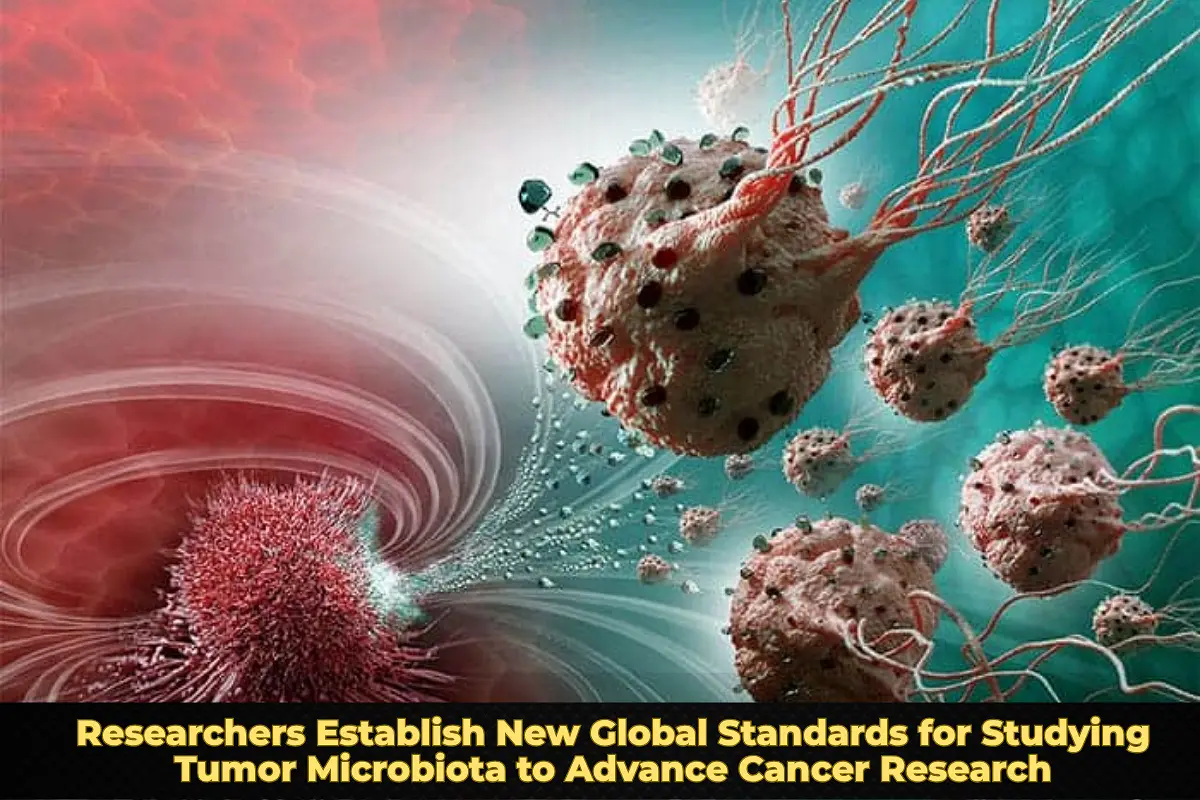
Researchers Establish New Global Standards for Studying Tumor Microbiota to Advance Cancer Research
An international group of researchers has introduced new standardized guidelines for studying tumor microbiota, aiming to improve consistency and reliability in cancer research, according to findings released in April 2026. The initiative seeks to address long-standing challenges in understanding the role of microorganisms within tumors and to accelerate progress in oncology research worldwide.
The guidelines were developed through collaboration among scientists, clinicians, and research institutions across multiple countries, focusing on harmonizing methodologies used to analyze the complex communities of bacteria, viruses, and other microorganisms present within tumor environments.
Addressing Variability in Tumor Microbiota Studies
Tumor microbiota has emerged as a significant area of interest in cancer research, with growing evidence suggesting that microbial populations within tumors can influence cancer development, progression, and response to treatment. However, inconsistencies in research methods have made it difficult to compare findings across studies.
The newly established standards aim to reduce this variability by providing clear recommendations on sample collection, processing, sequencing techniques, and data analysis. By aligning research practices, scientists hope to generate more reproducible and comparable results.
Experts involved in the initiative emphasized that standardization is essential for translating microbiota research into clinical applications.
Key Components of the New Guidelines
The guidelines cover multiple stages of tumor microbiota research, starting with sample collection. Researchers are encouraged to adopt uniform protocols to minimize contamination and preserve the integrity of microbial data.
In addition, the standards outline best practices for laboratory procedures, including DNA extraction and sequencing methods. These steps are critical for accurately identifying and quantifying microbial populations within tumor tissues.
Data analysis is another major focus, with recommendations for bioinformatics tools and statistical approaches to ensure consistency in interpreting results. The guidelines also emphasize transparency and data sharing to facilitate collaboration among research teams.
Implications for Cancer Research
The establishment of global standards is expected to significantly enhance the quality of tumor microbiota research, enabling scientists to better understand the relationship between microbes and cancer. This could lead to new insights into tumor biology and the development of innovative therapeutic strategies.
Researchers believe that microbiota may play a role in modulating immune responses, influencing how patients respond to treatments such as immunotherapy. Standardized research methods will help clarify these interactions and identify potential targets for intervention.
The guidelines may also support the discovery of biomarkers that can be used for early detection, diagnosis, and prognosis of cancer.
Advancing Precision Medicine
The integration of tumor microbiota research into precision medicine is a key objective of the initiative. By understanding how microbial communities vary between patients, clinicians may be able to tailor treatments more effectively.
Personalized approaches could involve modifying the microbiota to enhance treatment efficacy or reduce side effects. For example, therapies that target specific microbial populations may complement existing cancer treatments.
Standardized methodologies are essential for identifying reliable patterns and translating research findings into clinical practice.
Challenges in Microbiota Research
Despite its potential, tumor microbiota research faces several challenges. The low abundance of microbes in some tumor types and the risk of contamination during sample handling can complicate analysis.
Differences in sequencing technologies and data interpretation methods have also contributed to inconsistent results. The new guidelines aim to address these issues by promoting rigorous and standardized practices.
Researchers acknowledge that ongoing refinement of the standards will be necessary as technologies and scientific understanding continue to evolve.
Global Collaboration and Future Research
The development of the guidelines highlights the importance of international collaboration in addressing complex scientific challenges. By bringing together expertise from diverse fields, the initiative aims to create a unified framework for advancing tumor microbiota research.
Future efforts are expected to focus on validating the standards across different cancer types and research settings. Large-scale studies using standardized methods will be critical for confirming findings and identifying clinically relevant insights.
Collaboration between academic institutions, healthcare providers, and industry partners will play a key role in driving progress.
Impact on Clinical Applications
Standardized tumor microbiota research has the potential to influence clinical practice by improving the development of diagnostics and treatments. Reliable data can support the design of clinical trials and the evaluation of new therapies.
Healthcare providers may eventually incorporate microbiota analysis into routine cancer care, using it to guide treatment decisions and monitor patient outcomes. However, experts caution that further research is needed before such applications become widespread.
The guidelines represent an important step toward bridging the gap between research and clinical implementation.
Regulatory and Ethical Considerations
The adoption of standardized research practices also has implications for regulatory and ethical frameworks. Consistent methodologies can facilitate regulatory review processes by providing clearer evidence of safety and efficacy.
Ethical considerations, including patient consent and data privacy, are addressed within the guidelines to ensure responsible conduct of research. Transparency and accountability are emphasized as key principles.
Policymakers and regulatory bodies are expected to play a role in supporting the adoption of these standards.
Conclusion
The introduction of global standards for studying tumor microbiota marks a significant milestone in cancer research, with the potential to improve scientific understanding and accelerate the development of innovative treatments worldwide.