Global Stocks Fall as Trump’s Iran War Delay Fails to Boost Investor Confidence
Global stocks declined after former President Donald Trump’s delay in Iran war action failed to reassure investors, keeping markets under pressure.
 RUKAIYA KADIVAL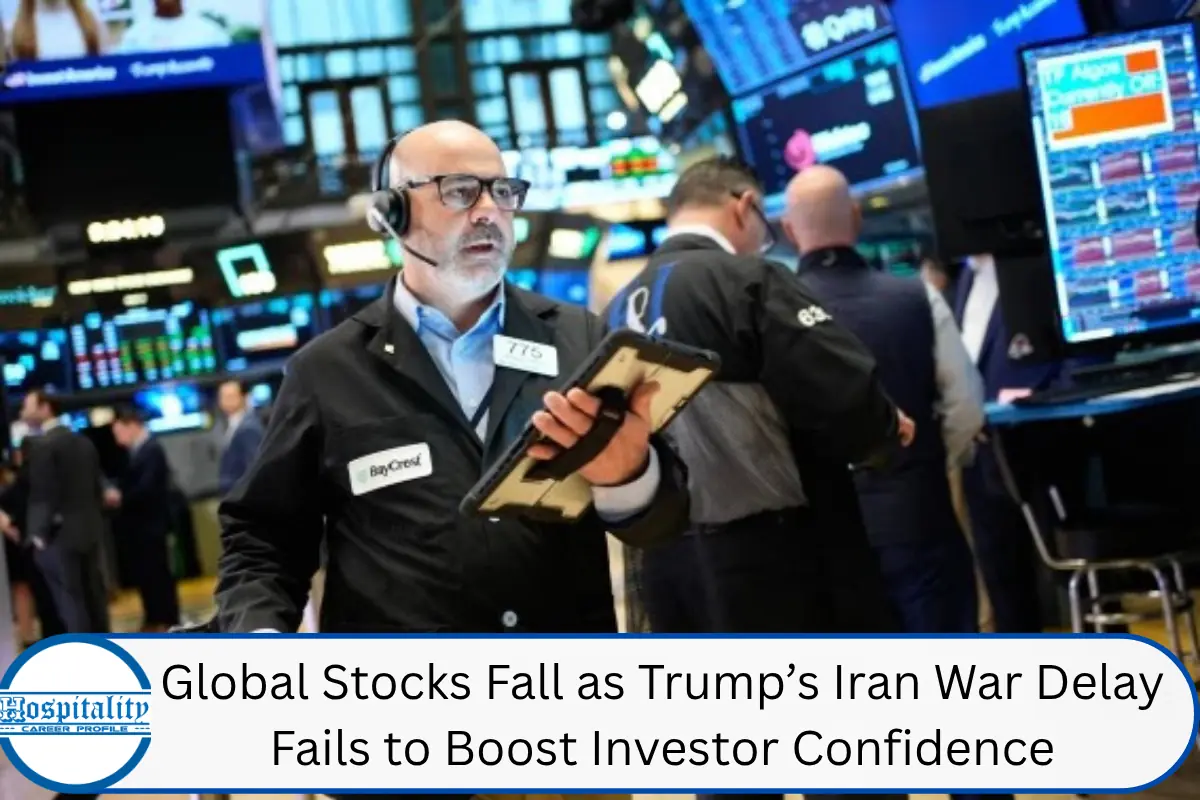
Global Stocks Fall as Trump’s Iran War Delay Fails to Boost Investor Confidence
Global stock markets declined on March 27 after former U.S. President Donald Trump’s decision to delay action related to the Iran conflict failed to restore investor confidence, with equities falling across major regions amid continued geopolitical uncertainty and cautious sentiment. Markets in the United States, Europe, and Asia reacted negatively as investors weighed the implications of prolonged tensions and unclear policy direction.
The decline reflects growing concerns that the delay does not signal a resolution to the conflict but rather prolongs uncertainty, leaving investors wary of potential escalation and its impact on global economic stability. The reaction was visible across equities, commodities, and currencies, with risk-sensitive assets facing selling pressure.
Geopolitical Uncertainty Weighs on Markets
Investor sentiment remained fragile as geopolitical tensions involving Iran continued to dominate market narratives. Trump’s decision to delay further action was initially seen as a potential de-escalation, but the lack of a clear diplomatic resolution led to skepticism among market participants.
Analysts noted that uncertainty often has a greater negative impact on markets than definitive outcomes, as investors struggle to assess risks and adjust their strategies accordingly. The ongoing situation has kept markets on edge, with any developments closely monitored for potential implications on trade, energy supplies, and global stability.
The absence of clarity has resulted in increased volatility, with investors adopting a risk-averse stance.
Oil Prices and Energy Markets React
Oil prices showed mixed movements as the geopolitical situation evolved, reflecting the complex interplay between supply concerns and demand expectations. While fears of disruption in Middle Eastern oil supplies typically push prices higher, uncertainty about the actual course of events has led to fluctuating trends.
Energy markets remain highly sensitive to developments in the region, given its importance in global oil production. Any escalation could lead to supply constraints, impacting prices and inflation worldwide.
Investors are closely tracking energy markets as a key indicator of geopolitical risk and its potential economic consequences.
Equity Markets See Broad-Based Declines
Equity markets across major regions recorded declines, with technology, financial, and industrial stocks among the hardest hit. The selloff was broad-based, reflecting a general shift toward risk aversion rather than sector-specific issues.
Technology stocks, which are often sensitive to changes in investor sentiment and interest rate expectations, faced significant pressure. Financial stocks also declined amid concerns about economic stability and potential impacts on lending and investment activity.
Defensive sectors such as utilities and consumer staples showed relative resilience, as investors sought safer investment options during the period of uncertainty.
Investor Sentiment Turns Risk-Averse
The market reaction highlights a shift in investor sentiment toward caution, with many opting to reduce exposure to equities and other riskier assets. Safe-haven investments such as government bonds and gold saw increased demand as investors sought to protect their portfolios.
This move reflects broader concerns about the global economic outlook, which remains uncertain due to a combination of geopolitical tensions, inflation pressures, and central bank policies.
Market participants are focusing on preserving capital and managing risk, leading to reduced trading activity in more volatile segments of the market.
Impact on Global Economic Outlook
The ongoing geopolitical situation has implications for the global economic outlook, particularly if tensions escalate or persist over an extended period. Prolonged uncertainty can affect business confidence, investment decisions, and consumer spending, potentially slowing economic growth.
Trade flows and supply chains could also be disrupted, especially if the conflict impacts key transportation routes or energy supplies. Such disruptions would have ripple effects across industries and regions.
Economists are closely monitoring developments to assess their potential impact on global growth and inflation.
Central Banks and Policy Considerations
Central banks may face additional challenges in managing monetary policy amid heightened geopolitical risks. While inflation remains a concern in many economies, uncertainty about growth prospects could influence policy decisions.
Policymakers are likely to adopt a cautious approach, balancing the need to control inflation with the potential impact of geopolitical developments on economic activity. This uncertainty adds another layer of complexity to an already challenging policy environment.
Investors are paying close attention to central bank signals for guidance on future market direction.
Market Outlook Remains Uncertain
Looking ahead, market direction will largely depend on developments related to the Iran situation and broader geopolitical dynamics. Any signs of de-escalation or diplomatic progress could help restore confidence, while further uncertainty or escalation may lead to continued volatility.
Analysts expect markets to remain sensitive to news and developments, with short-term movements driven by headlines and investor reactions. The current environment underscores the importance of flexibility and risk management in investment strategies.
Until clearer signals emerge, markets are likely to remain under pressure, with cautious sentiment prevailing among investors.
Conclusion
Global stocks declined as Trump’s delay in Iran-related action failed to reassure investors, highlighting ongoing geopolitical uncertainty and its continued impact on financial markets.