Hegseth’s Religious Rhetoric Draws Scrutiny Amid US-Iran War
Pete Hegseth’s Christian rhetoric faces renewed scrutiny as the United States enters a conflict with Iran, raising concerns over religion and policy.
 SANJANA DUTTA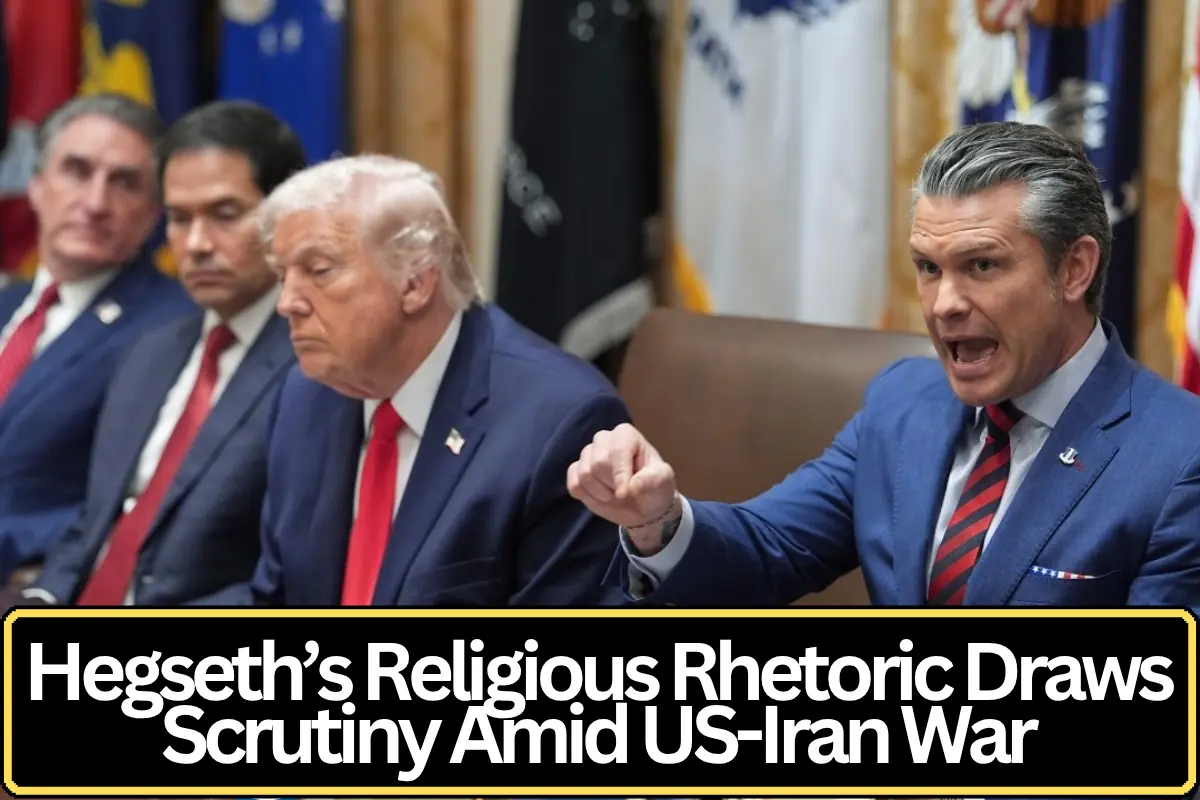
Religious Rhetoric Sparks Debate Amid Escalating Iran Conflict
Political commentator and media figure Pete Hegseth is facing renewed scrutiny over his use of Christian rhetoric following the United States’ entry into an escalating conflict with Iran in March 2026. The controversy has emerged as Washington intensifies military operations in the Middle East, prompting debate over the role of religion in shaping political discourse and foreign policy messaging.
Hegseth, known for his outspoken views on national security and cultural issues, has made public statements framing aspects of the conflict in religious terms. Critics argue that such language risks conflating geopolitical strategy with religious ideology, while supporters contend that it reflects deeply held values and resonates with certain segments of the American public.
Comments Resurface as War Intensifies
Hegseth’s past and recent remarks have drawn attention as the conflict with Iran enters a more volatile phase. His references to faith and moral struggle have been highlighted across media platforms, reigniting discussions about how public figures characterize international conflicts.
Observers note that rhetoric invoking religion in the context of war can carry significant implications, particularly in a region where religious identity already plays a central role in political dynamics. Critics warn that such framing may deepen divisions and complicate diplomatic efforts.
The timing of the renewed scrutiny underscores the heightened sensitivity surrounding public messaging during periods of military engagement.
Concerns Over Mixing Religion and Policy
Analysts and policymakers have raised concerns about the potential impact of religious rhetoric on US foreign policy. While official government positions have not adopted such language, commentators argue that influential voices can shape public perception and influence political debate.
Some experts caution that framing conflicts in religious terms could undermine efforts to present US actions as grounded in strategic and security considerations. They emphasize the importance of maintaining a clear distinction between personal beliefs and official policy.
Others point out that the United States has a long history of political figures referencing faith, suggesting that the current debate reflects broader tensions over the role of religion in public life.
Supporters Defend Expression of Beliefs
Supporters of Hegseth have defended his comments, arguing that expressions of faith are a legitimate part of public discourse and resonate with many Americans. They contend that moral and ethical considerations often inform views on national security and foreign policy.
Advocates also argue that restricting such language could limit freedom of expression and overlook the cultural and historical context in which political communication occurs. For them, references to faith are seen as a reflection of personal conviction rather than an attempt to shape official policy.
The divide between critics and supporters highlights broader debates about free speech and the boundaries of political commentary.
Impact on Public Perception
The controversy has sparked discussion about how rhetoric influences public understanding of international conflicts. Media analysts note that language used by prominent figures can shape narratives, affecting how audiences interpret events and policy decisions.
In the case of the Iran conflict, the use of religious framing may resonate differently across various communities, both within the United States and internationally. This variation in interpretation adds complexity to an already sensitive geopolitical situation.
Public opinion remains divided, with some viewing the rhetoric as inappropriate in a diplomatic context, while others see it as a reflection of deeply rooted values.
Broader Context of the Iran Conflict
The renewed focus on rhetoric comes as the United States continues military operations linked to the Iran-Israel conflict, which has seen escalating exchanges of strikes and heightened regional tensions. The situation has drawn global attention, with concerns over potential escalation and economic impact.
Diplomatic efforts to de-escalate the conflict are ongoing, though progress remains uncertain. The involvement of multiple actors and the strategic importance of the region have made the situation particularly complex.
Against this backdrop, the tone and framing of public discourse are seen as increasingly महत्वपूर्ण in shaping both domestic and international responses.
Historical Precedents and Debate
The use of religious language in political contexts is not new in the United States. Past leaders and commentators have often invoked faith when discussing issues of war, justice, and national identity. However, each instance tends to generate debate over its appropriateness and impact.
Experts suggest that the current controversy reflects enduring questions about how best to communicate during times of conflict. Balancing moral expression with diplomatic sensitivity remains a challenge for public figures.
The discussion also underscores the evolving nature of media and communication, where statements can quickly gain widespread attention and influence public discourse.
Media and Political Reactions
Media outlets and political commentators have offered varied perspectives on Hegseth’s remarks. Some have criticized the rhetoric as potentially divisive, while others have framed the issue as part of a broader conversation about values in public life.
Political leaders have largely avoided direct engagement with the controversy, focusing instead on policy and strategy related to the conflict. However, the issue has contributed to the wider discourse surrounding the war and its implications.
The diversity of reactions highlights the complexity of navigating communication in a highly polarized environment.
Future Implications
The debate over religious rhetoric is likely to continue as the conflict with Iran evolves and public attention remains focused on both policy decisions and the narratives surrounding them. The role of influential voices in shaping discourse will remain a key factor in how the situation is perceived.
Analysts suggest that maintaining clarity and consistency in messaging will be important for policymakers and commentators alike. As the conflict progresses, the interplay between language, perception, and policy will continue to influence outcomes.
The issue also raises broader questions about the responsibilities of public figures in times of crisis.
Conclusion
Pete Hegseth’s remarks have reignited debate over the role of religious rhetoric in political discourse, particularly during periods of military conflict.
Current Status
Scrutiny of public messaging continues as the US-Iran conflict intensifies, with discussions over rhetoric and policy unfolding alongside ongoing military and diplomatic developments.