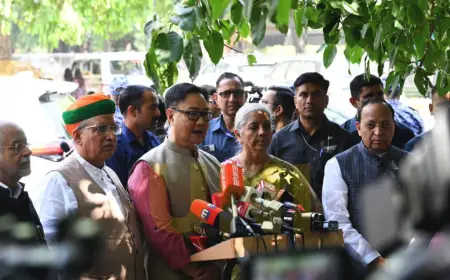
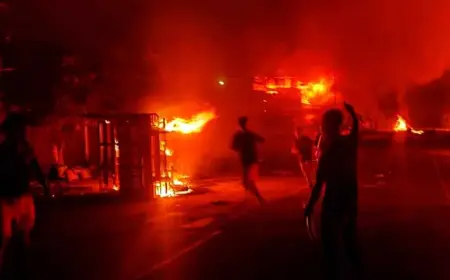
India Rejects ‘Mediator’ Label as PM Modi Urges End to War in Talks with Trump
India has rejected being labeled a mediator while Prime Minister Narendra Modi urged an end to the ongoing war during discussions with former US President Donald Trump.
 SANJANA DUTTA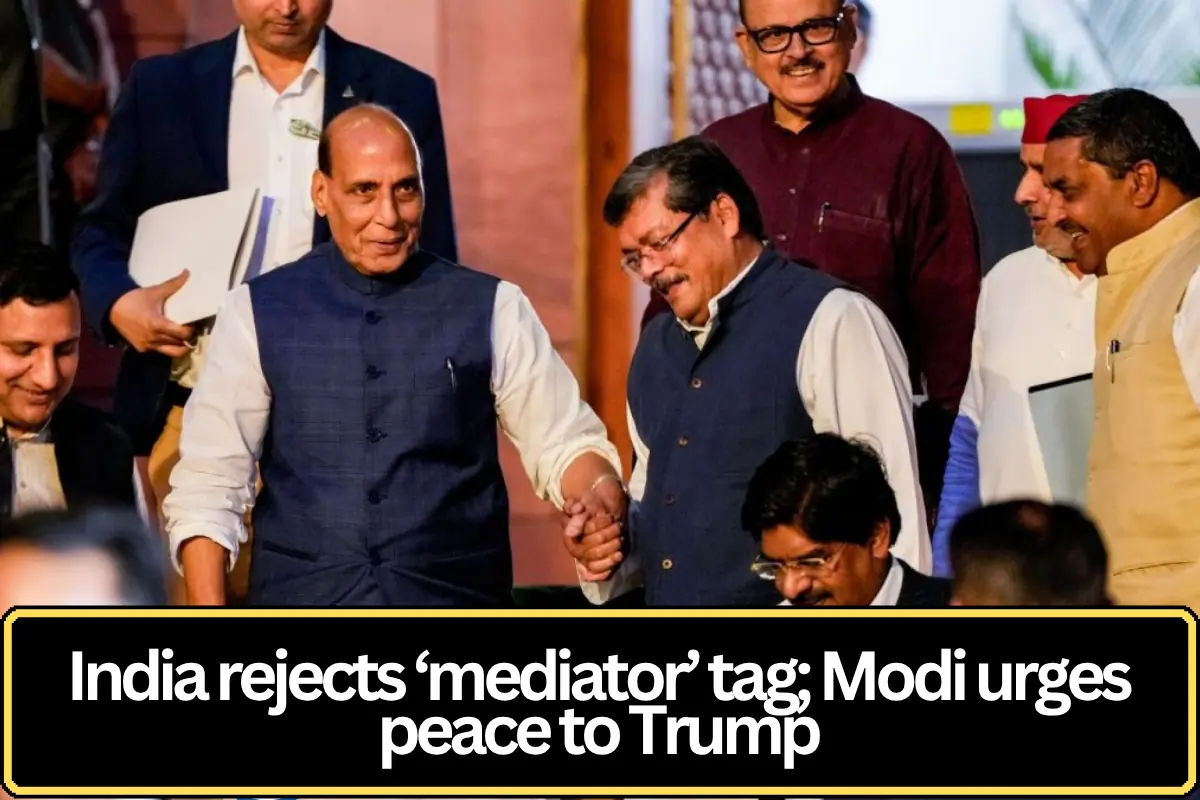
India Clarifies Position Amid Global Diplomatic Efforts
India has firmly rejected being characterized as a “mediator” in the ongoing international conflict, even as Prime Minister Narendra Modi called for an immediate end to hostilities during recent discussions with former US President Donald Trump. The clarification came on March 25, 2026, as New Delhi sought to reinforce its independent foreign policy stance while engaging in global diplomatic efforts.
Government officials emphasized that India’s role remains focused on advocating peace and stability rather than acting as an intermediary between warring sides. The remarks follow heightened international attention on India’s outreach efforts amid the escalating crisis.
Modi’s Appeal for Peace
During his interaction with Trump, Modi underscored the urgent need to de-escalate tensions and pursue diplomatic solutions to end the conflict. According to officials familiar with the discussions, the Indian leader reiterated that prolonged warfare would have severe humanitarian and economic consequences globally.
The conversation is part of a broader series of engagements by India with key global stakeholders, aimed at encouraging dialogue and reducing the risk of further escalation. Modi’s outreach reflects India’s growing role as a significant voice in international affairs.
India Rejects ‘Dalal’ Narrative
In a strong response to commentary suggesting that India was acting as a “dalal,” or broker, government sources rejected the characterization, calling it inaccurate and misleading. Officials stressed that India’s foreign policy is guided by national interests and principles of strategic autonomy.
They noted that India maintains diplomatic relations with multiple countries and engages in dialogue with all sides without aligning itself as a mediator. This approach, they said, allows India to contribute constructively to global peace efforts without compromising its neutrality.
Focus on Strategic Autonomy
India’s stance highlights its long-standing emphasis on strategic autonomy in foreign policy. By avoiding formal mediation roles, New Delhi seeks to preserve its ability to engage with diverse international actors while maintaining credibility across geopolitical divides.
Analysts say this approach enables India to play a balancing role, offering support for peace initiatives without becoming directly involved in negotiations or conflict resolution processes.
The government’s position also reflects a broader effort to manage perceptions domestically and internationally, ensuring that India’s diplomatic actions are not misinterpreted.
Pakistan’s Role in the Discourse
The issue has also brought attention to Pakistan’s position in the broader geopolitical context. Indian officials reiterated concerns about regional stability and emphasized the need for all countries to act responsibly in supporting peace efforts.
While not directly linking Pakistan to the current diplomatic exchanges, the government underscored the importance of addressing factors that contribute to instability in the region.
This aspect of the discourse highlights the complex interplay of regional and global dynamics influencing India’s foreign policy decisions.
Global Reactions and Diplomatic Momentum
India’s position has been noted by international observers, with some viewing it as a pragmatic approach to a complex situation. By advocating for peace without assuming a formal mediating role, India is positioning itself as a responsible global actor.
Diplomatic momentum is building as multiple countries and international organizations push for negotiations to resolve the conflict. India’s engagement adds to these efforts, even as it maintains a distinct stance on its role.
Experts suggest that India’s emphasis on dialogue and de-escalation aligns with broader international priorities, particularly given the far-reaching implications of the conflict.
Economic and Strategic Considerations
The ongoing conflict has raised concerns about its impact on global markets, energy supplies, and economic stability. India, as a major economy, has a vested interest in ensuring that disruptions are minimized.
Officials highlighted that prolonged instability could affect trade, investment, and supply chains, underscoring the urgency of finding a resolution. India’s diplomatic outreach is partly driven by these economic considerations.
The government’s approach reflects a balance between advocating for peace and safeguarding national interests in a volatile global environment.
Domestic Political Context
The clarification on India’s role also carries domestic political significance, as the government seeks to address criticism and shape public perception. By rejecting the “mediator” label, officials aim to reinforce the narrative of an independent and assertive foreign policy.
Political observers note that foreign policy issues often resonate strongly with domestic audiences, particularly in times of global uncertainty. The government’s messaging is therefore carefully calibrated to maintain public confidence.
This dimension adds another layer to the broader discourse surrounding India’s international engagement.
Conclusion
India’s rejection of the mediator label, coupled with its call for peace, underscores its nuanced approach to global diplomacy.
Current Status
Diplomatic engagements continue as India maintains its position of advocating de-escalation while avoiding a formal mediating role in the ongoing conflict.