Village in India Rejects Freebies and Bans Political Advertisements Ahead of Elections
A village in India has taken a unique stand by rejecting election freebies and banning political advertisements, emphasizing clean and independent democratic practices.
 SANJANA DUTTA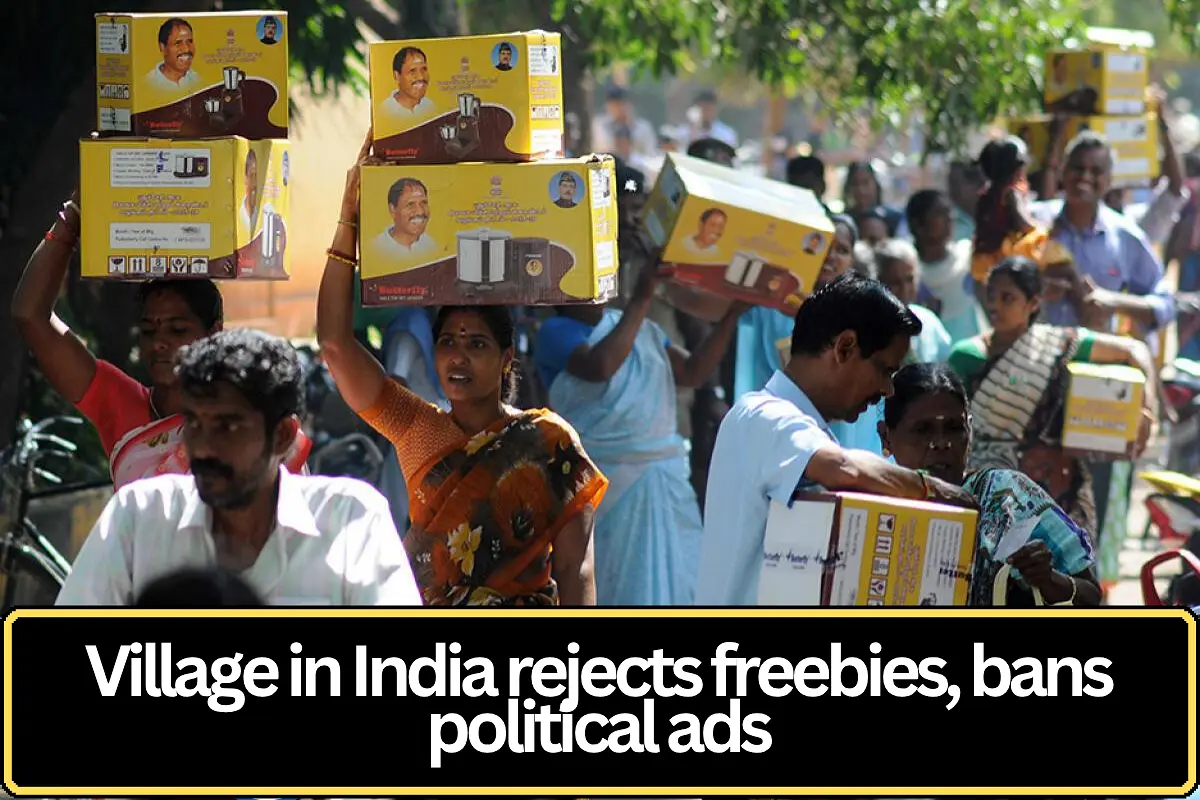
Village in India Rejects Freebies and Bans Political Advertisements Ahead of Elections
NEW DELHI, April 5, 2026 — In a rare move aimed at promoting ethical electoral practices, a village in India has collectively decided to reject freebies from political parties and prohibit all forms of political advertisements within its boundaries ahead of upcoming elections, residents and local officials said.
The initiative, driven by community consensus, reflects growing concerns over the influence of money and inducements in elections. Villagers have resolved not to accept gifts, cash, or incentives from candidates and have also barred posters, banners, and campaign materials from being displayed in public spaces.
A Community-Led Initiative for Clean Elections
The decision emerged from discussions among village elders, youth groups, and local governing bodies who expressed a desire to ensure that voting decisions are based solely on merit and policy considerations. Community leaders emphasized that elections should be free from undue influence and that voters must exercise their choice independently.
Residents said that the move is intended to send a strong message about the importance of integrity in the democratic process. By rejecting freebies, they aim to discourage candidates from relying on material inducements and instead focus on governance and development issues.
The ban on political advertisements is also seen as a way to reduce noise and maintain neutrality in the village environment, allowing voters to reflect on their choices without constant campaigning pressure.
Strict Enforcement Measures in Place
To ensure compliance, the village has reportedly put in place monitoring mechanisms involving local committees and volunteers. These groups are tasked with identifying violations and informing authorities if any political party or candidate attempts to distribute inducements or display promotional materials.
Residents have also agreed to collectively resist any attempts to influence voters through unofficial means. Community members say that social accountability plays a key role, as individuals who violate the agreed norms may face public disapproval.
Local officials have acknowledged the initiative and indicated that such community-driven efforts complement broader efforts by election authorities to ensure free and fair polls.
Challenge to Established Electoral Practices
The village’s decision stands in contrast to common electoral practices in many parts of the country, where distribution of freebies and aggressive campaigning are often reported. Analysts note that inducements, ranging from household items to cash, have historically been used by candidates to attract voters.
By rejecting such practices, the village is attempting to redefine the relationship between voters and political representatives. Experts suggest that this could encourage more issue-based campaigning and reduce the role of money power in elections.
However, they also point out that replicating such initiatives on a larger scale may be challenging due to varying socio-economic conditions and entrenched political habits.
Focus on Governance and Accountability
Villagers say their primary goal is to ensure that elected representatives are chosen based on their track record, vision, and ability to address local issues. Key concerns include infrastructure development, access to basic services, education, and employment opportunities.
By removing the influence of freebies and advertising, residents believe they can better evaluate candidates on substantive criteria. This shift in focus is expected to encourage more meaningful engagement between voters and political leaders.
Some community members have also called for public discussions and meetings where candidates can present their plans and answer questions, fostering transparency and accountability.
Mixed Reactions from Political Circles
The initiative has drawn mixed reactions from political parties and candidates. While some have welcomed the move as a positive step toward clean elections, others have expressed concern about the practical implications of restricting campaign activities.
Supporters argue that the decision aligns with democratic principles and strengthens voter autonomy. Critics, however, caution that limiting campaign visibility could disadvantage candidates who rely on outreach to communicate their policies.
Despite differing views, the development has sparked broader debate about the role of money and marketing in elections and the need for reforms to ensure a level playing field.
Potential Model for Electoral Reform
Observers note that the village’s approach could serve as a model for other communities seeking to promote ethical voting practices. Grassroots initiatives, they say, can play a significant role in shaping electoral behavior and encouraging systemic change.
Election experts emphasize that while institutional reforms are essential, community participation is equally important in ensuring the success of democratic processes. Efforts like this highlight the power of collective action in addressing longstanding challenges.
There is also growing interest in studying the impact of such measures on voter turnout and election outcomes, which could provide valuable insights for policymakers and election authorities.
Broader Implications for Indian Democracy
The development comes at a time when concerns about electoral integrity and the influence of money in politics are increasingly being discussed at national and regional levels. Initiatives that promote transparency and fairness are seen as crucial for strengthening democratic institutions.
The village’s stance underscores the importance of citizen-driven efforts in maintaining the credibility of elections. By prioritizing ethical considerations, residents are contributing to a broader conversation about the future of democratic governance in India.
As elections approach, the effectiveness of this initiative will be closely watched, both within the region and across the country, as stakeholders assess its impact and potential for replication.
Conclusion
The village’s decision to reject freebies and ban political advertisements marks a significant step toward promoting clean and independent elections, highlighting the role of community action in shaping democratic practices.
Current Status
The measures remain in force as preparations for the elections continue, with villagers committed to upholding their collective decision.