Iran Strike on UAE’s Fujairah Oil Terminal Triggers Massive Fire and Raises Regional Tensions
A reported Iranian strike on the UAE’s Fujairah port oil terminal triggered a massive fire, raising security concerns in the Gulf and escalating regional tensions in the Middle East.
 SANJANA DUTTA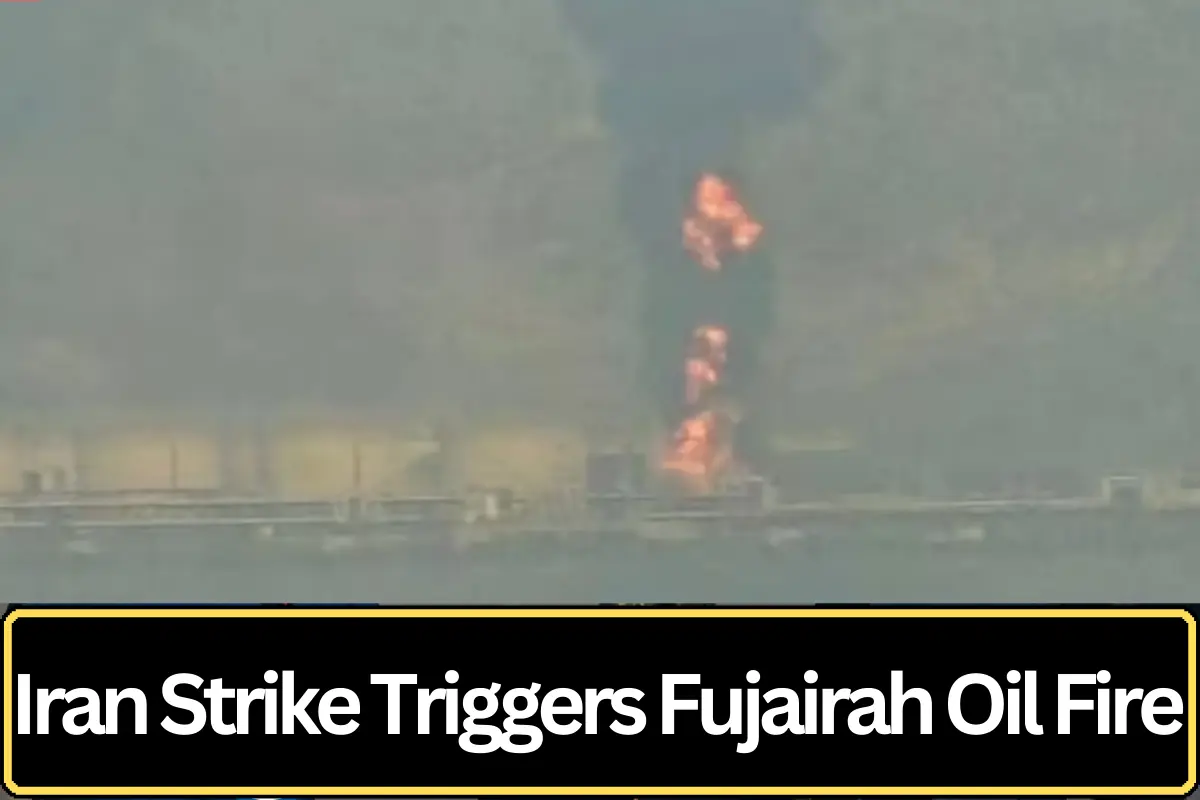
Iran Strike on Fujairah Oil Terminal Sparks Major Fire at Key UAE Energy Hub
A reported strike attributed to Iran on an oil terminal at Fujairah port in the United Arab Emirates triggered a large fire and heightened tensions across the Gulf region. The incident occurred at the strategically important Fujairah oil storage and export facility, one of the world’s major energy logistics hubs. Authorities and regional observers are assessing the damage and monitoring potential impacts on regional energy security and geopolitical stability.
The attack reportedly targeted infrastructure linked to oil storage and handling operations at Fujairah port, located on the eastern coast of the United Arab Emirates along the Gulf of Oman. The port is considered one of the most critical energy transit points in the region, handling significant volumes of oil storage and shipments that bypass the Strait of Hormuz.
Following the strike, a large fire erupted at the terminal, sending thick smoke into the air and prompting emergency response teams to move quickly to contain the blaze. Local authorities and port operators initiated fire control and safety procedures while assessing the extent of the damage to the facility and surrounding infrastructure.
Strategic Importance of Fujairah Port
Fujairah port is widely recognized as one of the most important oil storage and bunkering hubs in the Middle East. The facility supports global shipping operations and serves as a critical logistics center for oil shipments moving between producers in the Gulf and international markets.
Unlike many energy terminals located inside the Persian Gulf, Fujairah sits outside the Strait of Hormuz, a narrow waterway through which a significant portion of the world’s oil supply passes. Because of this location, the port has become a key strategic asset for energy security, allowing tankers to load and unload oil without navigating the sensitive maritime chokepoint.
The terminal includes extensive storage capacity, pipelines, and bunkering services that support vessels traveling across major global trade routes. Disruptions at the port can therefore have implications for shipping operations, energy markets, and regional logistics networks.
Emergency Response and Fire Containment
Emergency teams responded rapidly to the fire that erupted following the reported strike. Firefighters and safety personnel worked to control the flames and prevent the blaze from spreading to other storage facilities or nearby infrastructure.
Initial response efforts focused on isolating affected areas of the terminal and protecting nearby oil tanks and operational equipment. Authorities also implemented safety measures to secure the surrounding port area while investigations began into the cause and scale of the incident.
Officials have not yet released detailed information regarding casualties or the full extent of structural damage. However, images and reports from the area indicated that the fire was significant and required extensive emergency operations.
Regional Security Implications
The reported strike has intensified concerns about regional security in the Middle East, particularly regarding critical energy infrastructure. Energy facilities across the Gulf are considered highly strategic assets, and any attack on such infrastructure has the potential to disrupt global oil markets.
Security analysts note that tensions involving Iran and several Gulf states have remained high in recent years due to political disputes, regional conflicts, and concerns over maritime security. Incidents targeting energy facilities or shipping routes can quickly escalate geopolitical tensions.
Events affecting oil terminals, pipelines, or tanker routes are closely monitored by governments and international energy markets because of their potential impact on global oil supply chains.
Impact on Global Energy Markets
Energy analysts say incidents involving major oil infrastructure can influence global energy markets even before full details of the event are confirmed. The Fujairah terminal plays an important role in oil storage, blending, and shipping operations that support international energy trade.
If operations at the port are disrupted for an extended period, shipping routes and energy logistics may need to be adjusted. However, market reactions will depend largely on the scale of the damage and the speed at which operations can resume.
Traders and analysts typically monitor such events closely because they may affect oil supply flows, shipping insurance costs, and broader energy market stability.
Geopolitical Context
The incident comes amid ongoing geopolitical tensions across the Middle East involving regional rivalries and security concerns related to energy infrastructure. The Gulf region remains one of the world’s most important areas for oil production and export, making it particularly sensitive to political and military developments.
Over the years, several incidents have targeted shipping routes, tankers, and energy facilities in the region. Such events often trigger diplomatic reactions and heightened security measures from countries involved in global energy trade.
International observers emphasize the importance of protecting critical energy infrastructure in order to maintain stability in global supply chains.
Investigation and Official Assessments
Authorities in the United Arab Emirates and regional partners are assessing the incident to determine the full scope of damage and the circumstances surrounding the reported strike. Investigations typically involve evaluating security footage, monitoring systems, and operational records from affected facilities.
Officials are also likely to coordinate with international partners to review maritime and airspace activity around the time of the incident. Such assessments help determine whether the event involved drones, missiles, or other forms of attack.
Security experts say understanding the method and origin of the strike will be critical for preventing similar incidents in the future.
Importance of Protecting Energy Infrastructure
Energy infrastructure across the Gulf region is protected by extensive security measures because of its importance to the global economy. Ports, pipelines, and storage facilities often include advanced monitoring systems, naval patrols, and coordinated security frameworks designed to deter attacks.
Despite these measures, the scale and strategic value of the region’s energy network make it a potential target during periods of geopolitical tension. Governments and energy companies therefore invest heavily in protective technologies and emergency preparedness.
Incidents such as the Fujairah fire highlight the importance of maintaining strong security systems around major energy hubs.
Current Situation
Authorities continue to monitor the situation at Fujairah port as emergency teams work to control the fire and assess damage to the oil terminal. Investigations into the reported strike are ongoing, and officials are evaluating the broader security implications for regional energy infrastructure and maritime operations.