Iran War Day 8: Casualties Mount as US‑Israel Strikes Expand Across Middle East
The Iran war enters its eighth day with more than 1,300 people reported killed in US‑Israeli strikes as missile and drone attacks spread across the Middle East.
 SANJANA DUTTA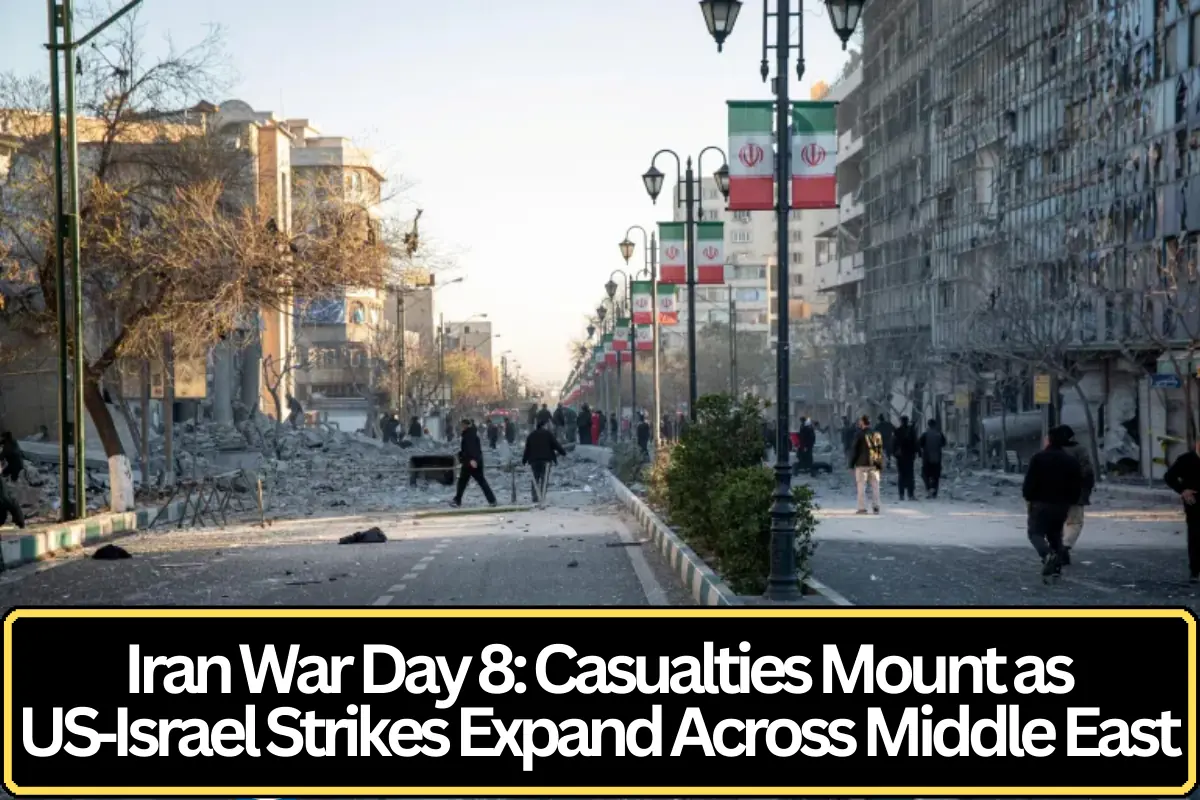
Iran War Enters Eighth Day as Strikes and Casualties Rise
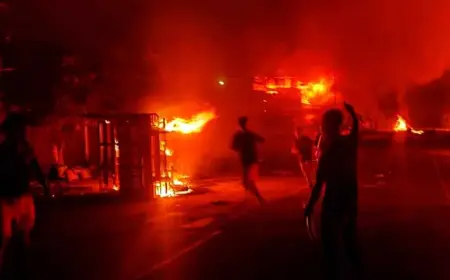
The war involving Iran, the United States and Israel has entered its eighth day with heavy fighting across the Middle East and a rapidly rising death toll. More than 1,300 people have reportedly been killed in Iran since the conflict began on February 28 following large‑scale US and Israeli military strikes.
New waves of bombing were reported in Tehran and other areas as the conflict continued to escalate, with both sides launching attacks across multiple fronts in the region.
Massive Military Campaign in Iran
The US military’s Central Command says it has struck more than 3,000 targets inside Iran since the start of the war. Officials also claim that dozens of Iranian naval vessels have been destroyed during the ongoing campaign.
Iran’s leadership has strongly condemned the attacks, while President Donald Trump has demanded Iran’s “unconditional surrender,” stating that negotiations will not take place unless Tehran accepts that condition.
Regional Tensions Escalate
The conflict has spread beyond Iran and Israel, triggering missile and drone attacks across several Gulf countries. Qatar, Kuwait and the United Arab Emirates reported intercepting incoming Iranian drones and missiles in recent days.
Saudi Arabia also said its air defense systems intercepted multiple drones near the capital Riyadh. The widening conflict has raised fears of a broader regional war involving countries that host US military bases.
Threats to Global Energy Routes
Iranian officials have warned that ships belonging to the United States and Israel could become targets in the Strait of Hormuz, one of the world’s most critical oil shipping routes.
The growing instability has already caused disruptions to global energy markets, with oil prices rising amid fears that shipping through the narrow waterway could be threatened.
Israel and Lebanon Front Intensifies
Iran has continued launching waves of missiles and drones toward Israel, triggering air raid sirens in cities including Tel Aviv and areas across northern Israel. Military analysts believe Iran’s strategy is aimed at stretching Israel’s air‑defense systems and exhausting interceptor supplies.
Meanwhile, Hezbollah has joined the conflict from Lebanon, launching rockets into northern Israel. Israeli airstrikes have hit several towns in Lebanon, where authorities say hundreds of people have been killed since the fighting began.
Humanitarian and Diplomatic Concerns
The United Nations estimates that more than 330,000 people have been displaced across the region as civilians flee areas affected by airstrikes and missile attacks.
International diplomatic efforts are intensifying as world leaders call for de‑escalation. Several European nations have pledged defensive military support to allies in the region while urging negotiations to prevent a wider war.
As the conflict continues to expand across multiple countries, analysts warn that the coming weeks could determine whether the fighting develops into a prolonged regional war.