Kerala Elections 2026: Key Issues, Alliances and Voter Trends
An in-depth look at the 2026 Kerala Assembly elections, covering key political alliances, major issues, and evolving voter trends shaping the outcome.
 SANJANA DUTTA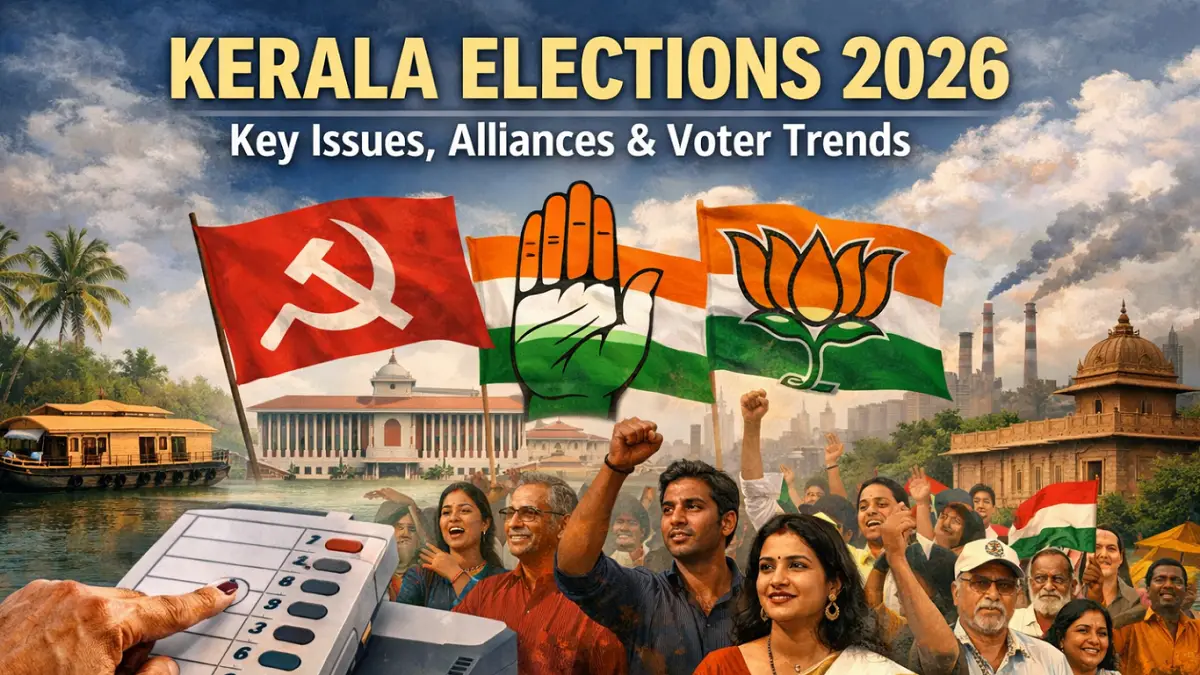
Kerala Assembly Elections 2026: Key Issues, Alliances and Voter Trends Explained
THIRUVANANTHAPURAM, April 8, 2026 — The 2026 Kerala Assembly elections are emerging as a closely contested political battle, with major alliances intensifying campaigns as voters weigh governance performance, economic concerns, and welfare priorities. The outcome is expected to hinge on shifting voter expectations and the effectiveness of campaign strategies across the state.
Kerala’s politics continues to be defined by the contest between two dominant alliances — the Left Democratic Front (LDF) and the United Democratic Front (UDF) — while the Bharatiya Janata Party (BJP) is working to expand its footprint. As campaigning gathers momentum, each bloc is seeking to align its messaging with both traditional voter bases and emerging concerns.
Alliances and Political Positioning
The LDF is foregrounding its governance record, highlighting achievements in welfare delivery, public healthcare, and education, while projecting continuity and administrative stability. In contrast, the UDF is positioning itself as a credible alternative, focusing on economic management, unemployment, and perceived gaps in governance to tap into anti-incumbency sentiment.
The BJP, though historically limited in electoral success in Kerala, is attempting to broaden its appeal through targeted outreach and by linking state issues with national narratives, aiming to increase its vote share and relevance in the state’s political landscape.
Key Issues Shaping the Election
Welfare remains central to Kerala’s political discourse, with parties debating both the reach and fiscal sustainability of social support programmes. At the same time, economic concerns — particularly unemployment and the need for industrial growth — have gained prominence, especially among younger voters.
Infrastructure development, disaster preparedness, and environmental sustainability are also key factors. Recurrent floods and climate-related challenges have heightened public focus on resilience and long-term planning, making these issues integral to electoral decision-making.
Evolving Voter Trends
Kerala’s electorate has traditionally alternated between major alliances, but recent patterns indicate a more performance-driven approach, with voters increasingly evaluating policy outcomes and governance effectiveness.
Youth and first-time voters are expected to play a pivotal role, with priorities centred on employment opportunities, digital infrastructure, and transparency. Women voters, a decisive constituency in past elections, continue to influence outcomes, particularly on issues related to welfare access, healthcare, and social security.
Campaign Strategies
Political parties are combining grassroots mobilisation with digital outreach to maximise engagement. While traditional methods such as rallies and door-to-door canvassing remain vital, social media and targeted messaging are increasingly shaping voter perceptions.
Campaigns have also become more localised, with candidates tailoring their narratives to constituency-specific concerns, reflecting Kerala’s diverse socio-economic landscape.
Governance and Economic Debate
Governance remains a central electoral theme, with voters assessing administrative efficiency, transparency, and service delivery. The ruling alliance has highlighted its policy implementation record, while the opposition has questioned its effectiveness and long-term sustainability.
Economic challenges — including fiscal management, investment climate, and job creation — are driving policy debates. With the state’s economy reliant on remittances and the service sector, parties are proposing strategies for diversification, industrial expansion, and support for small and medium enterprises.
National vs Regional Dynamics
Although Kerala’s elections are primarily shaped by state-specific issues, national political narratives continue to exert influence. The BJP’s strategy reflects this dynamic, while regional alliances emphasise Kerala’s distinct political priorities and governance model.
Outlook
With campaigning intensifying, the election remains highly competitive, with no clear frontrunner. The result is likely to depend on voter turnout, issue prioritisation, and the ability of parties to convert support into votes on the ground.
The outcome will not only determine the composition of the next state government but also signal broader trends in voter behaviour and governance expectations in Kerala.