MGUG Signs MoU to Promote AI-Based Healthcare Innovation in Varanasi
MGUG in Varanasi has signed a memorandum of understanding to promote artificial intelligence-based healthcare innovation, aiming to strengthen research, digital health solutions, and medical technology development.
 Akanksha jain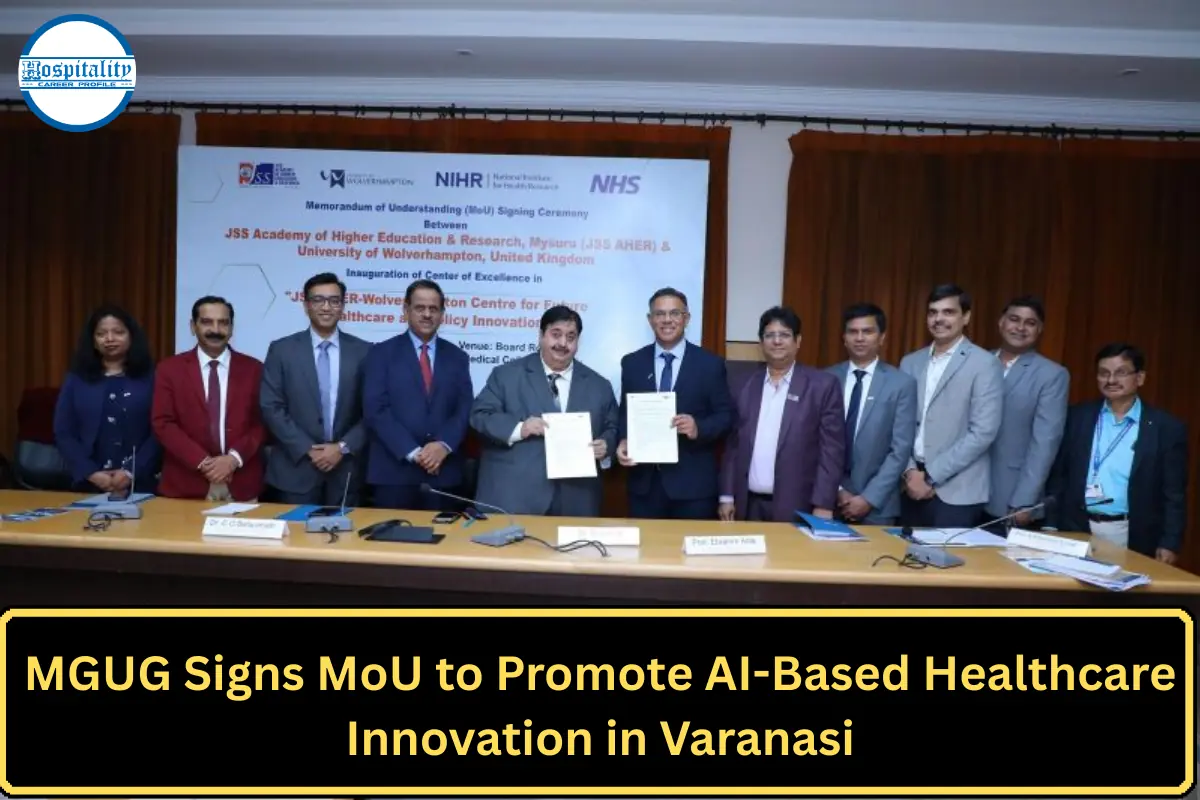
Mahatma Gandhi University (MGU) in Varanasi has signed a memorandum of understanding to promote artificial intelligence-based healthcare innovation, marking a step toward strengthening research and technological collaboration in the medical sector. The agreement was announced in Varanasi and aims to bring together academic researchers, healthcare professionals, and technology experts to develop digital health solutions that improve patient care and medical research.
The initiative focuses on integrating artificial intelligence technologies into healthcare systems, enabling the development of advanced diagnostic tools, predictive analytics, and digital platforms that can support hospitals and healthcare providers. University officials said the collaboration is designed to create a research environment that encourages innovation in medical technology and prepares students and researchers to work on emerging healthcare challenges.
Strengthening Research in AI and Healthcare
The memorandum of understanding establishes a framework for cooperation between the university and partner organizations working in the healthcare and technology sectors. Through this collaboration, the university aims to promote interdisciplinary research that combines medical science, engineering, data science, and artificial intelligence.
Academic institutions are increasingly playing an important role in the development of digital health technologies. Universities serve as hubs where researchers can test new ideas, build prototypes, and collaborate with hospitals and technology companies to create solutions that address real-world medical needs.
Officials involved in the initiative said artificial intelligence has the potential to transform healthcare by enabling faster data analysis and improving the accuracy of clinical decision-making. AI systems can analyze large medical datasets, identify patterns, and assist doctors in diagnosing diseases earlier and more efficiently.
The collaboration is expected to support the development of research projects that focus on improving disease detection, optimizing treatment strategies, and enhancing healthcare delivery systems. By integrating artificial intelligence with medical research, the university hopes to contribute to innovations that benefit both healthcare providers and patients.
Focus on Digital Health Solutions
The partnership also aims to promote the development of digital health technologies that can expand access to healthcare services. Digital health platforms supported by artificial intelligence can help doctors monitor patient conditions remotely, manage chronic diseases, and provide timely medical advice.
Healthcare systems around the world are increasingly adopting digital technologies to improve efficiency and expand access to care. AI-based tools are being used to assist in radiology analysis, medical imaging interpretation, and patient data management.
Researchers working under the collaboration are expected to explore ways to develop healthcare applications that can support telemedicine services and improve healthcare accessibility, particularly in regions where medical resources are limited.
Digital platforms that integrate artificial intelligence can help healthcare providers track patient health trends, identify risk factors, and deliver personalized treatment plans. These technologies are becoming increasingly important as healthcare systems adapt to growing patient demands and complex medical conditions.
Encouraging Innovation and Skill Development
The agreement is also designed to encourage innovation among students and researchers at the university. Academic leaders say initiatives that combine healthcare and artificial intelligence can help prepare the next generation of professionals for careers in digital health and medical technology.
Training programs, workshops, and research collaborations are expected to be introduced as part of the initiative. These programs will aim to equip students with the technical skills required to develop artificial intelligence solutions for healthcare applications.
Universities are increasingly incorporating digital health and data science programs into their academic curricula as healthcare technologies evolve. The integration of artificial intelligence into medical education allows students to gain experience in analyzing healthcare data and developing innovative medical tools.
Researchers involved in the collaboration will have opportunities to work on projects that involve machine learning algorithms, healthcare data modeling, and digital health platform development. These projects may contribute to the creation of new technologies that improve healthcare delivery and patient outcomes.
Advancing Healthcare Technology in India
The development of artificial intelligence technologies in healthcare has become a priority for many research institutions and technology companies in India. AI-driven tools are being explored to address challenges such as early disease detection, patient monitoring, and healthcare resource management.
Healthcare experts say artificial intelligence can significantly improve the speed and accuracy of medical analysis. AI-powered systems can review medical images, analyze patient records, and identify disease indicators that may not be immediately visible through traditional diagnostic methods.
In addition to improving diagnostic accuracy, artificial intelligence can help healthcare organizations manage patient data more efficiently. AI systems can organize large datasets, identify healthcare trends, and assist doctors in making evidence-based treatment decisions.
The collaboration launched by MGUG is expected to contribute to these efforts by supporting research initiatives that explore new applications of artificial intelligence in medical science. Universities and research institutions are increasingly becoming key contributors to healthcare technology innovation.
Potential Benefits for Healthcare Systems
Artificial intelligence technologies have the potential to transform healthcare systems by improving efficiency and supporting better clinical outcomes. Healthcare professionals can use AI tools to analyze complex medical data, identify patterns in patient health information, and predict disease risks.
Predictive analytics powered by artificial intelligence can help healthcare providers identify patients who may require early intervention. This approach enables hospitals to deliver preventive care and reduce the likelihood of severe medical complications.
AI-based diagnostic tools can also assist doctors in interpreting medical images, laboratory results, and patient histories. These technologies can provide additional support to clinicians, allowing them to make faster and more accurate medical decisions.
Healthcare leaders say collaborations between universities, hospitals, and technology companies are essential for advancing these innovations. Academic institutions provide a research environment where new technologies can be tested and refined before they are implemented in healthcare settings.
Expanding Collaboration Between Academia and Industry
The memorandum of understanding signed by MGUG reflects a growing trend of collaboration between academic institutions and industry partners. Partnerships between universities and technology organizations can accelerate the development of innovative healthcare solutions.
Industry collaboration allows researchers to access advanced technologies, funding opportunities, and practical expertise needed to bring research ideas into real-world applications. At the same time, companies benefit from academic research that contributes to technological advancement.
Healthcare innovation increasingly depends on the ability of institutions to combine expertise from multiple disciplines. Artificial intelligence research often involves collaboration between computer scientists, medical professionals, engineers, and data analysts.
Through such partnerships, universities can create innovation ecosystems where research discoveries are translated into practical healthcare technologies that support patient care and medical research.
Future Outlook for AI-Based Healthcare Innovation
Artificial intelligence is expected to play a significant role in shaping the future of healthcare. Advances in machine learning, data analytics, and medical imaging technologies are opening new opportunities for improving disease detection and treatment strategies.
Healthcare organizations are investing in digital infrastructure that allows them to integrate AI systems into clinical workflows. These technologies can assist in medical decision-making, support patient monitoring, and improve operational efficiency in hospitals.
The collaboration initiated by MGUG is expected to support research initiatives that explore these possibilities. By encouraging academic research and technological experimentation, the university aims to contribute to the development of innovative healthcare solutions.
University officials said the agreement represents an important step toward strengthening collaboration between the education sector and healthcare technology developers. Such initiatives are increasingly viewed as essential for building a modern healthcare ecosystem supported by digital innovation.
As artificial intelligence continues to evolve, partnerships between universities, healthcare institutions, and technology companies are expected to play a key role in advancing medical research and improving healthcare delivery systems.
The memorandum of understanding signed in Varanasi highlights the growing importance of academic collaboration in driving healthcare innovation and supporting the development of next-generation medical technologies.