Scientists Identify Molecular Chain Driving Early Brain Changes in Alzheimer’s Disease
Researchers have identified a sequence of molecular events responsible for early brain changes in Alzheimer’s disease, offering new insights for early diagnosis and treatment.
 Akanksha jain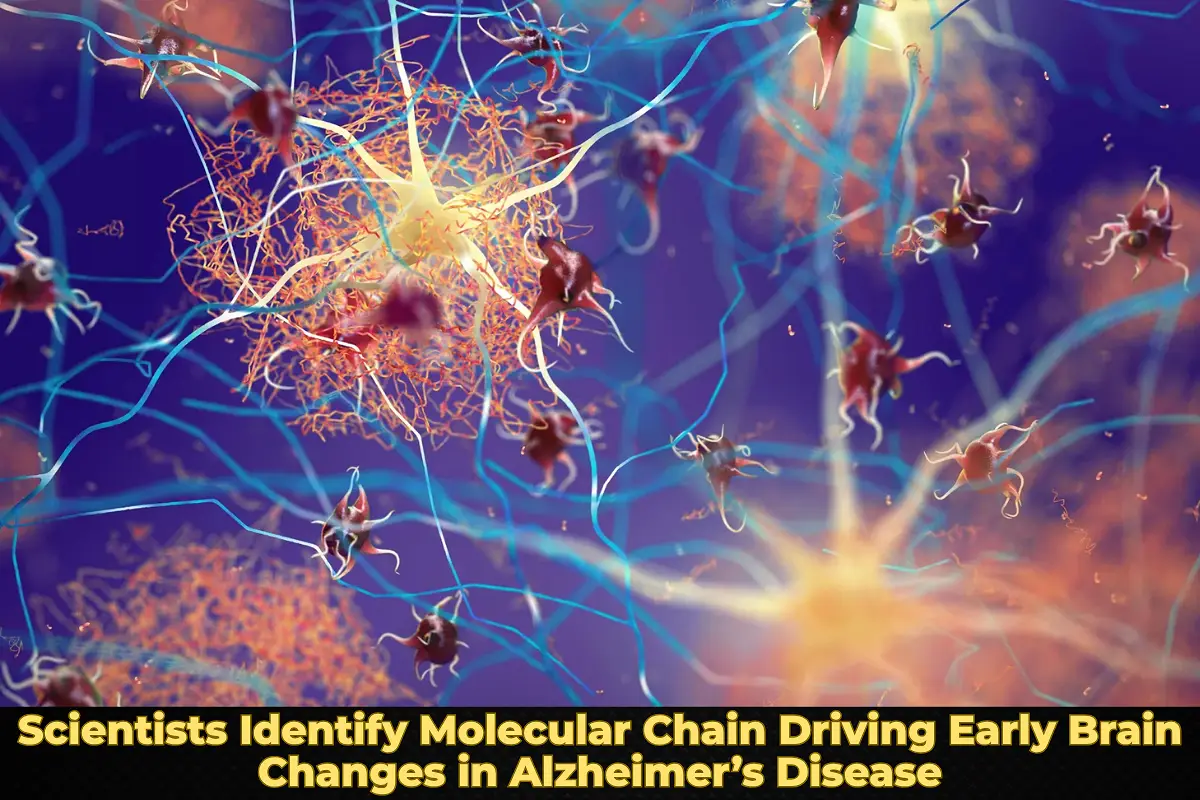
Scientists Identify Molecular Chain Driving Early Brain Changes in Alzheimer’s Disease
Researchers have uncovered a sequence of molecular events that may drive the earliest changes in the brain associated with Alzheimer’s disease, according to findings released in April 2026, providing critical insight into how the condition begins and potentially opening new avenues for early diagnosis and treatment.
The study, conducted by an international team of scientists, focused on identifying the biological mechanisms that occur before the onset of noticeable symptoms. Alzheimer’s disease, the most common form of dementia, develops over many years, often progressing silently before cognitive decline becomes evident. Understanding these early processes has been a major goal in neuroscience research.
Tracing the Earliest Changes in the Brain
Alzheimer’s disease is characterized by the accumulation of abnormal protein structures in the brain, including amyloid plaques and tau tangles. While these features have been widely studied, the precise sequence of molecular events leading to their formation has remained unclear.
In the new research, scientists mapped a chain of biological interactions that appear to initiate and accelerate these pathological changes. The findings suggest that disruptions at the molecular level begin much earlier than previously recognized, potentially years or even decades before clinical symptoms appear.
By identifying this sequence, researchers hope to better understand the transition from a healthy brain to one affected by neurodegeneration.
Key Molecular Mechanisms Identified
The study revealed that specific molecular signals within brain cells trigger a cascade of events that ultimately lead to the buildup of toxic proteins. These signals influence cellular processes such as protein folding, energy metabolism, and communication between neurons.
One of the critical findings involves the interaction between cellular stress responses and protein regulation systems. When these systems become disrupted, they may fail to properly manage protein accumulation, leading to the formation of harmful aggregates.
Researchers also identified changes in how brain cells process and clear waste products, suggesting that impaired clearance mechanisms may play a central role in disease progression.
Implications for Early Diagnosis
The discovery of this molecular chain has significant implications for early diagnosis of Alzheimer’s disease. Current diagnostic methods often rely on detecting symptoms or advanced brain changes, by which time significant damage has already occurred.
By targeting the earliest molecular events, scientists may be able to develop diagnostic tools that detect the disease at a much earlier stage. This could involve biomarkers that reflect the initial disruptions identified in the study.
Early detection is considered crucial for improving outcomes, as interventions are likely to be more effective before extensive neuronal damage takes place.
Potential for New Treatment Strategies
The findings also provide a foundation for developing new therapeutic approaches aimed at interrupting the disease process at its earliest stages. By targeting specific points in the molecular chain, researchers may be able to prevent or slow the progression of Alzheimer’s disease.
Current treatments primarily focus on managing symptoms rather than addressing the underlying causes of the disease. The identification of early molecular triggers could shift the focus toward disease-modifying therapies.
Pharmaceutical researchers are increasingly interested in developing drugs that can influence these early mechanisms, potentially altering the course of the disease.
Challenges in Translating Research into Practice
Despite the promising nature of the findings, researchers caution that translating these insights into clinical applications will require further investigation. The complexity of Alzheimer’s disease means that multiple factors, including genetics and environmental influences, contribute to its development.
Validating the molecular chain in diverse populations and understanding how it interacts with other risk factors will be essential steps in advancing this research. Clinical trials will be needed to test potential interventions targeting these pathways.
Developing reliable and accessible diagnostic tools based on these findings will also present technical and logistical challenges.
Broader Impact on Neuroscience Research
The study represents a significant advancement in the broader field of neuroscience, highlighting the importance of understanding disease processes at the molecular level. Similar approaches may be applied to other neurodegenerative conditions, such as Parkinson’s disease and amyotrophic lateral sclerosis.
Researchers emphasized that uncovering the earliest stages of disease progression is key to developing effective prevention and treatment strategies. The integration of advanced technologies, including molecular imaging and data analysis, has played a crucial role in enabling these discoveries.
The findings also underscore the need for continued investment in basic scientific research, which forms the foundation for medical innovation.
Future Research Directions
Future studies will aim to refine the understanding of the molecular chain and explore how it varies among individuals. Researchers are particularly interested in identifying factors that may accelerate or slow down these processes.
Long-term studies tracking individuals over time could provide valuable insights into how early molecular changes translate into clinical symptoms. Collaboration between research institutions, healthcare providers, and industry partners will be essential for advancing these efforts.
The ultimate goal is to translate these findings into practical tools and therapies that can improve patient outcomes.
Conclusion
The identification of a molecular chain underlying early brain changes in Alzheimer’s disease marks a significant step forward in understanding the condition, with ongoing research expected to build on these findings to enable earlier diagnosis and more effective treatment strategies.