Nigeria Secures $83M IFC-Backed Funding to Expand Off-Grid Power Access
Nigeria secures $83 million in IFC-backed financing to expand off-grid renewable electricity access, targeting millions of underserved communities under the DARES programme.
 Tripti Srivastava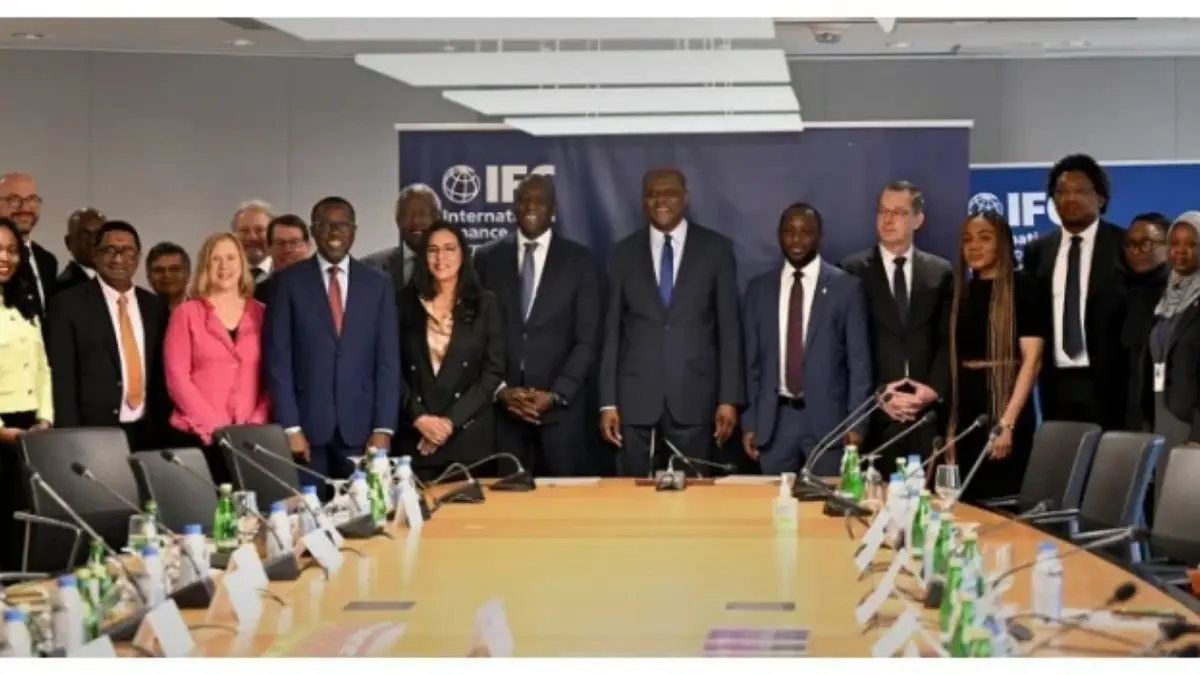
Nigeria has secured approximately $83 million in financing backed by the International Finance Corporation (IFC) to expand off-grid electricity access, which is an important step toward addressing the country’s persistent power deficit and supporting renewable energy deployment across underserved regions.
The funding from the Distributed Access through Renewable Energy Scale-Up (DARES) programme is meant to speed up the rollout of mini-grids and solar home systems, especially in rural and peri-urban communities that do not have reliable grid connectivity.
Financing Structure and Programme Scope
The financing agreement was signed during the 2026 Spring Meetings of the World Bank Group and the International Monetary Fund in Washington, D.C. It is structured as a revolving debt facility, blending concessional and commercial capital to provide long-term funding to private developers.
Officials said the facility will enable a transition from small-scale pilot projects to large-scale deployment of distributed renewable energy systems. The approach aims to create a sustainable financing model for developers while improving electricity access across multiple communities.
The first phase of the programme includes companies such as Darway Coast, PriVida Power, Prado Power, GVE Projects, and StarTimes Smart Energy. Additional developers—including Ashipa Energy, Eauxwell Nigeria, Ignite Power, Maskh Nigeria, Nayo Tropical Resources, and Paras Energy—are expected to participate in subsequent phases.
Authorities said the initiative is expected to significantly improve electricity access for millions of Nigerians, particularly in areas where grid expansion remains economically unviable. The programme supports the privatesector-led deployment of renewable energy solutions, including solar mini-grids and standalone solar systems.
The Nigeria Electrification Programme indicated that distributed renewable energy is now evolving into a commercially viable market segment, with financing structures designed to attract sustained investment and accelerate implementation.
The broader DARES programme, backed by a $750 million World Bank facility, aims to provide electricity access to more than 17.5 million Nigerians by 2028. It also targets the deployment of approximately 465 megawatts of distributed renewable energy capacity.
Policy Alignment and Government Strategy
The financing aligns with Nigeria’s broader economic and infrastructure strategy, which prioritises investment in energy access as a driver of economic growth and poverty reduction. Government officials emphasised that improving electricity supply remains central to enhancing productivity and living standards.
The initiative also supports the country’s ambition to build a more technology-driven economy, with increased focus on digital infrastructure and sustainable energy systems. Officials highlighted that expanding reliable power access is critical for enabling business activity and reducing reliance on costly diesel and petrol generators.
Blended finance mechanisms like this facility are being seen as important tools to solve structural challenges in the energy sector, such as limited access to affordable long-term capital for private developers.
According to programme data, Nigeria has already reached over 4.1 million people through existing electrification initiatives. However, a significant portion of the population still lacks reliable electricity, particularly in rural areas.
The country continues to face a substantial electricity access gap, with many households and businesses dependent on fossil fuel-based generators. These alternatives are not only expensive but also contribute to environmental challenges.
Officials noted that scaling up renewable energy deployment through structured financing and private sector participation is essential to closing this gap. The DARES programme is intended to demonstrate how coordinated investment and policy support can drive long-term improvements in energy access.
The latest $83 million financing underscores growing international support for Nigeria’s renewable energy sector and highlights the role of development finance institutions in enabling large-scale infrastructure expansion in emerging markets.