Odisha PCC Chief Meets Mallikarjun Kharge as BJD and Congress Explore Common Rajya Sabha Candidate
Odisha Congress leaders met AICC president Mallikarjun Kharge as discussions intensified over fielding a common Rajya Sabha candidate with the BJD, with Datteshwar Hota emerging as a key name.
 SANJANA DUTTA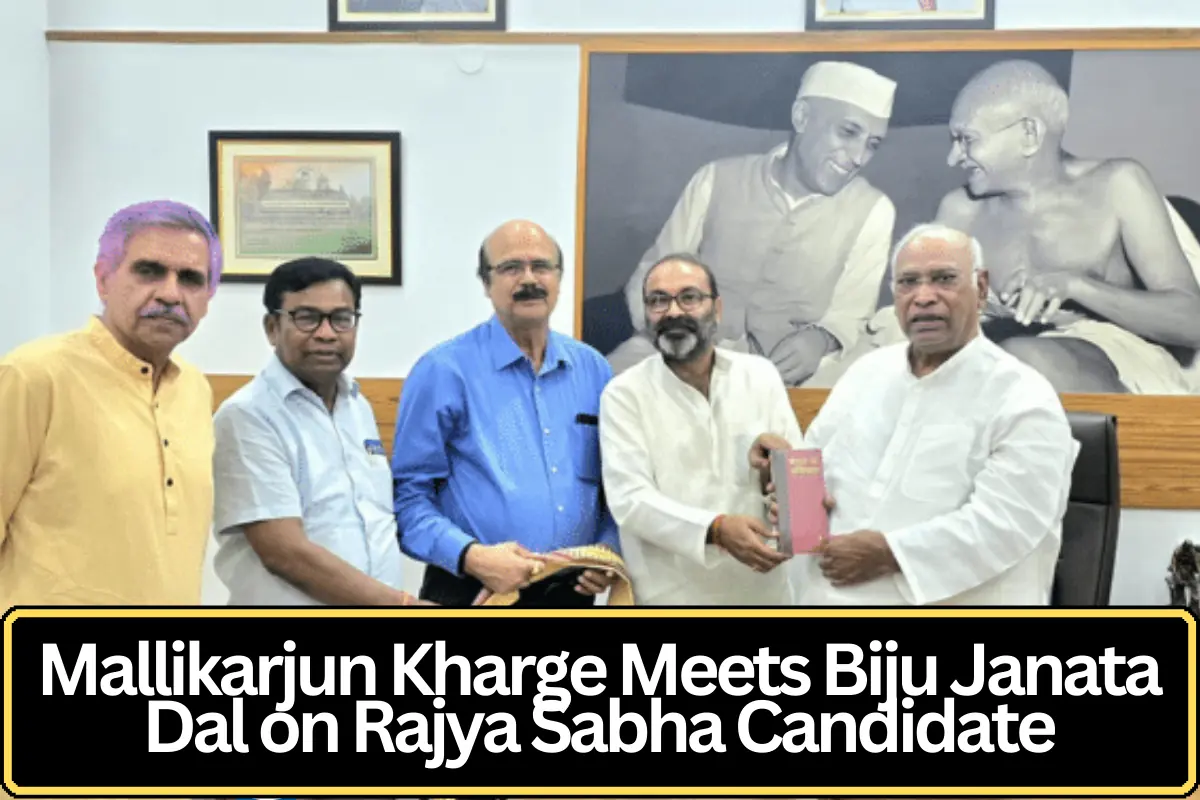
Odisha Political Developments Intensify Ahead of Rajya Sabha Elections
Political activity in Odisha has intensified following reports that leaders of the Odisha Pradesh Congress Committee (PCC) recently met All India Congress Committee (AICC) president Mallikarjun Kharge to discuss the possibility of supporting a common Rajya Sabha candidate. The discussions come at a time when political parties across the country are preparing strategies for upcoming Rajya Sabha elections, which often involve complex negotiations and alliances.
According to reports, the meeting focused on the potential nomination of senior public figure Datteshwar Hota as a common candidate with the backing of both the Biju Janata Dal (BJD) and the Congress party. Such a move would represent a notable political development in the state’s political landscape, where parties frequently compete intensely but occasionally align on strategic parliamentary nominations.
The development has sparked significant interest among political observers, as cooperation between the BJD and Congress on a parliamentary candidate could influence broader political dynamics in Odisha.
Meeting with AICC Leadership
The Odisha PCC leadership reportedly met Congress president Mallikarjun Kharge in New Delhi to deliberate on the evolving political situation and discuss the party’s approach to the Rajya Sabha election. The meeting was seen as an important step in determining the party’s position regarding potential alliances or consensus candidates.
Party insiders suggested that the discussions focused on evaluating political feasibility, electoral arithmetic, and the potential impact of supporting a joint candidate. Rajya Sabha elections often involve negotiations among political parties, particularly when numbers in the legislative assembly make cooperation advantageous.
Sources familiar with the discussions indicated that the Congress leadership is carefully considering all options before making any final decision. The aim is to ensure that the party’s long-term political interests are balanced with the immediate dynamics of the parliamentary election.
Datteshwar Hota Emerges as Possible Consensus Candidate
Datteshwar Hota has emerged as a prominent name in discussions surrounding a potential consensus candidate for the Rajya Sabha seat from Odisha. Known for his extensive administrative and public service experience, Hota has been regarded by some political observers as a candidate who could attract support across party lines.
In Indian parliamentary politics, consensus candidates are sometimes proposed when political parties seek to avoid confrontational contests or when a candidate is widely respected across the political spectrum. Such arrangements can also help ensure smoother legislative processes and strengthen institutional cooperation.
Supporters of the idea argue that a candidate with broad support could represent the state effectively in the Rajya Sabha while maintaining a balanced and constructive approach to national policymaking.
Background and Public Service
Datteshwar Hota is known for his long association with public administration and policy work. His career has involved engagement with government institutions and contributions to administrative reforms and governance initiatives.
Many observers believe that individuals with significant administrative experience can bring valuable perspectives to parliamentary debates, particularly on issues related to governance, development, and institutional functioning.
The possibility of his candidacy has therefore generated interest not only among political leaders but also among policy experts and commentators who follow parliamentary affairs.
Role of the Biju Janata Dal in Odisha Politics
The Biju Janata Dal has been one of the dominant political forces in Odisha for more than two decades. Under its leadership, the party has maintained strong electoral support across large parts of the state and has played a central role in shaping regional political discourse.
Given its strength in the Odisha Legislative Assembly, the BJD plays a decisive role in determining the outcome of Rajya Sabha elections from the state. The party’s support for any candidate can significantly influence the final result.
If the BJD chooses to back a consensus candidate supported by the Congress, it could signal a pragmatic political approach aimed at ensuring smooth representation for the state in the upper house of Parliament.
Strategic Considerations
Political analysts note that decisions regarding Rajya Sabha nominations are often shaped by strategic considerations rather than purely ideological alignments. Parties evaluate factors such as legislative numbers, potential political benefits, and the broader impact on state and national politics.
In Odisha’s case, cooperation between parties on a candidate could help avoid unnecessary electoral contests and reflect a shared interest in sending a widely respected representative to Parliament.
Congress Party’s Position and Internal Deliberations
The Congress party has been assessing its options carefully as discussions about the Rajya Sabha seat continue. Meetings with senior leadership, including AICC president Mallikarjun Kharge, are part of the party’s internal decision‑making process.
Party leaders are believed to be evaluating whether supporting a common candidate would strengthen the party’s influence in parliamentary discussions and maintain constructive engagement with other regional political forces.
At the same time, Congress leaders are mindful of maintaining their independent political identity in the state while navigating the complex dynamics of parliamentary elections.
Importance of Strategic Alliances
Strategic alliances or understandings between parties are not uncommon in Indian parliamentary politics, particularly during elections for the Rajya Sabha. Such arrangements can help parties manage legislative arithmetic and ensure that representation reflects broader political consensus.
For the Congress party, supporting a widely respected candidate could be seen as a move that demonstrates political maturity and a willingness to prioritize institutional stability over competitive rivalry in certain situations.
Understanding the Rajya Sabha Election Process
The Rajya Sabha, the upper house of India’s Parliament, plays a crucial role in reviewing legislation, debating national policy issues, and representing the interests of states at the national level. Members are elected by the elected representatives of state legislative assemblies using a proportional representation system.
Because the outcome depends on the composition of the legislative assembly, political parties often negotiate alliances or support arrangements to ensure the election of preferred candidates.
In states where a single party holds a dominant majority, the party typically has a decisive say in the choice of candidate. However, in cases where numbers are more balanced or where parties wish to avoid contestation, consensus candidates may emerge.
Significance for State Representation
Rajya Sabha members represent the interests of their respective states while participating in national legislative processes. As such, the selection of candidates is often viewed as an important decision that can influence policy discussions at the national level.
Political parties therefore seek individuals who possess the experience, expertise, and credibility required to contribute effectively to parliamentary debates and committee work.
Political Reactions and Public Interest
The possibility of a common candidate supported by multiple political parties has generated considerable discussion among political observers in Odisha. Some commentators view the development as a pragmatic step that could enhance cooperation in parliamentary affairs.
Others argue that such arrangements should be evaluated carefully to ensure that they align with the long‑term political goals of the parties involved.
Public interest in the issue reflects the importance that citizens attach to effective representation in Parliament and the broader functioning of democratic institutions.
Potential Impact on Odisha’s Political Landscape
If the proposal for a common Rajya Sabha candidate moves forward, it could influence the political narrative in Odisha in several ways. Cooperation between parties on a parliamentary nomination may signal a willingness to adopt flexible strategies in specific contexts.
At the same time, political parties will continue to compete vigorously in electoral contests and policy debates within the state.
The situation illustrates the dynamic nature of Indian politics, where alliances and understandings can evolve depending on the circumstances and strategic priorities of different parties.
Looking Ahead
As discussions continue, the final decision regarding the Rajya Sabha candidate from Odisha will depend on consultations among party leadership and the evaluation of political calculations within the state assembly.
The meeting between the Odisha PCC leadership and AICC president Mallikarjun Kharge marks an important step in this process, highlighting the role of national party leadership in guiding state‑level political strategies.
Whether or not a consensus candidate ultimately emerges, the developments surrounding the Rajya Sabha election have once again drawn attention to the intricate negotiations and strategic planning that shape parliamentary politics in India.
The coming days are expected to bring further clarity as political parties finalize their positions and prepare for the next phase of the electoral process.