Oil Prices Rise as Iran War Risks Persist Despite Ceasefire Signals and China Factory Growth
Global oil prices increase amid Iran war tensions despite ceasefire signals, with China’s factory growth adding demand pressure on energy markets.
 mansi labhde
LONDON, April 10, 2026 — Global oil prices rose sharply as ongoing tensions linked to the Iran war continued to threaten supply routes, even as ceasefire signals emerged, while stronger-than-expected factory activity in China added further upward pressure on energy demand and market sentiment.
Oil Prices Increase Amid Persistent Supply Risks
Crude oil markets recorded gains during the latest trading sessions, driven by concerns over potential disruptions in the Middle East. Despite reports suggesting a possible ceasefire in the Iran conflict, traders remained cautious, reflecting uncertainty over the durability of any agreement.
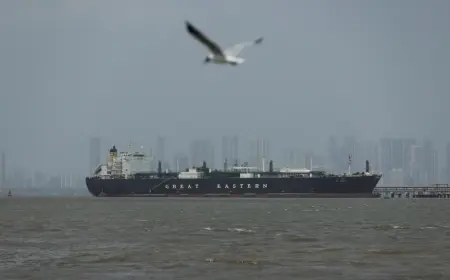
The Strait of Hormuz, a critical passage for global oil shipments, remains a focal point of concern. A significant share of global crude supply moves through this route, and any instability or escalation linked to the Iran war continues to influence pricing trends.
Market participants responded to mixed signals, balancing expectations of reduced hostilities with ongoing geopolitical risks. This uncertainty has contributed to sustained volatility in oil markets.
Ceasefire Signals Fail to Stabilise Markets
While ceasefire discussions between key actors in the Iran conflict have provided some optimism, they have not led to a significant cooling of oil prices. Investors remain wary of the fragility of such arrangements, particularly in a conflict involving multiple stakeholders.
Reports indicate that despite diplomatic efforts, underlying risks to oil infrastructure and transportation routes persist. Traders have continued to factor in the possibility of renewed disruptions, maintaining upward pressure on prices.
The lack of clarity over enforcement and long-term sustainability of ceasefire measures has prevented markets from stabilising, with energy prices reflecting ongoing uncertainty.
China Factory Growth Adds Demand Pressure
Data indicating increased factory activity in China has added another layer of complexity to global oil markets. Stronger manufacturing output suggests higher energy consumption, reinforcing demand at a time when supply concerns remain elevated.
China’s industrial performance is closely monitored by global markets due to its position as one of the largest energy consumers. The recent uptick in factory output has strengthened expectations of sustained oil demand.
This combination of supply-side risks and demand-side growth has contributed to the upward trajectory in oil prices, amplifying market volatility.
Broader Economic Impact Emerging
The rise in oil prices is beginning to affect global economic conditions, with higher energy costs contributing to inflationary pressures. Increased fuel prices are expected to raise transportation and production costs across multiple sectors.
Countries dependent on oil imports are particularly exposed to these developments, facing potential strain on fiscal balances and currency stability. Businesses may also pass on higher costs to consumers, further influencing inflation trends.
The situation underscores the interconnected nature of geopolitical events and economic outcomes, as developments in the Middle East continue to shape global market conditions.
Continued Volatility Expected in Energy Markets
Energy markets are expected to remain sensitive to developments in the Iran conflict, with traders closely monitoring diplomatic progress, military activity, and supply chain indicators. Even incremental changes in the situation have the potential to trigger significant price movements.
Market observers note that the current environment is defined by competing forces, including ceasefire negotiations, geopolitical risks, and evolving demand patterns. This has created a complex landscape for policymakers and investors.
As the situation evolves, oil prices are likely to remain a key indicator of both geopolitical stability and global economic sentiment, with uncertainty continuing to shape market behaviour.