Political Leaders Across Jammu and Kashmir Condemn Attack on Farooq Abdullah
Political leaders across Jammu and Kashmir strongly condemned the reported attack on National Conference leader Farooq Abdullah, calling for peace and respect in democratic political discourse.
 SANJANA DUTTA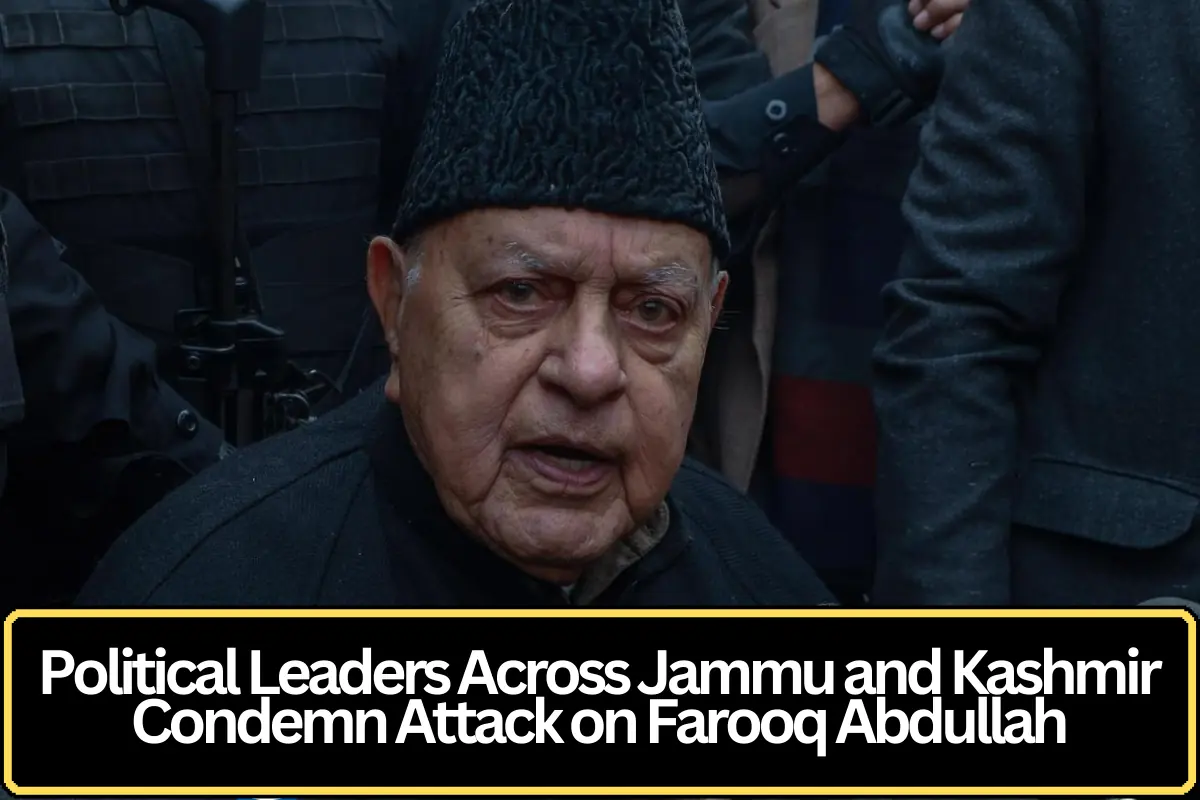
Introduction
Political leaders from across Jammu and Kashmir have strongly condemned the reported attack on senior political leader Farooq Abdullah, describing the incident as deeply concerning and incompatible with democratic values. The episode has sparked widespread reactions across political parties and civil society groups, many of whom have emphasized the importance of maintaining respectful political engagement and ensuring the safety of public representatives.
Farooq Abdullah, a prominent political figure and veteran leader in the region, has long played a central role in Jammu and Kashmir’s political landscape. The alleged attack has therefore drawn significant attention not only within the region but also across the broader national political community.
Leaders from multiple political parties have called for calm while urging authorities to investigate the circumstances surrounding the incident and ensure that such events do not undermine democratic discourse.
Details of the Reported Incident
According to reports, the incident involving Farooq Abdullah occurred during a public interaction where tensions escalated unexpectedly. While details about the exact circumstances remain limited, the episode has raised concerns about the safety of political leaders and the broader tone of political debate in the region.
Witnesses indicated that the confrontation happened amid heightened political discussions, which sometimes attract strong reactions from supporters and critics alike. However, political leaders and observers have stressed that disagreements must never lead to physical aggression or intimidation.
Authorities are expected to examine the incident closely to determine how the situation unfolded and whether any individuals should face legal action.
Condemnation from Political Parties
Political figures from across the ideological spectrum have expressed solidarity with Farooq Abdullah and condemned the incident in strong terms. Leaders from regional parties as well as national political organizations emphasized that violence or intimidation directed at elected representatives cannot be tolerated.
Several statements released by political leaders described the episode as unfortunate and urged supporters of all political parties to exercise restraint. They highlighted that democratic politics must remain rooted in dialogue, debate, and respect for differing opinions.
Political observers note that such unified condemnation reflects a shared recognition among political actors that maintaining a safe environment for public engagement is essential to democratic functioning.
Farooq Abdullah’s Role in Jammu and Kashmir Politics
Farooq Abdullah is one of the most prominent political leaders in Jammu and Kashmir, with decades of experience in public service and governance. As a senior leader of the National Conference, he has played an influential role in shaping regional political debates and policy discussions.
Over the years, Abdullah has served in several key political positions, including leadership roles within both regional and national political institutions. His political career spans a period of significant transformation in Jammu and Kashmir, including changes in governance structures, security challenges, and evolving political dynamics.
Because of his longstanding presence in the region’s political life, any incident involving him tends to attract widespread attention and reaction from political stakeholders.
Calls for Respectful Political Dialogue
Following the incident, many political leaders emphasized the importance of maintaining respectful and constructive dialogue in public life. They argued that political disagreements are natural in democratic systems but must be expressed through peaceful and lawful means.
Public representatives often engage with citizens in open forums, rallies, and meetings where differing views may be expressed. Ensuring that such interactions remain safe and respectful is essential for maintaining trust between political leaders and the communities they serve.
Leaders who spoke out about the incident stressed that political engagement should focus on addressing public concerns and strengthening democratic participation rather than escalating tensions.
Security Concerns for Public Representatives
The episode has also renewed discussions about security arrangements for political leaders during public engagements. While many politicians prefer open interactions with the public, these events can sometimes create situations where security risks emerge.
Authorities responsible for maintaining public safety may review existing security protocols to ensure that political figures can interact with citizens while minimizing potential threats. Balancing accessibility with safety remains a key challenge for public officials and law enforcement agencies.
In regions where political issues are particularly sensitive, maintaining effective security measures becomes even more important to prevent incidents that could escalate tensions.
Public Reactions and Civil Society Responses
The incident has also prompted reactions from civil society organizations and community leaders in Jammu and Kashmir. Many have expressed concern about the broader implications of political hostility and emphasized the need to preserve democratic norms.
Community representatives have urged citizens to respect differences of opinion and avoid actions that could deepen divisions. Civil society groups often play an important role in encouraging peaceful civic participation and promoting dialogue across political lines.
Observers note that maintaining a culture of tolerance and open debate is particularly important in regions where political discussions often involve deeply held views about governance, identity, and regional development.
The Importance of Democratic Norms
Democratic systems rely on the ability of leaders and citizens to engage in open debate without fear of violence or intimidation. Incidents involving aggression toward public figures can undermine confidence in political institutions and discourage participation in public life.
Political analysts emphasize that safeguarding democratic norms requires collective responsibility from political parties, supporters, and community leaders. Encouraging respectful political engagement helps strengthen democratic institutions and ensures that policy debates remain constructive.
The strong condemnation of the incident by leaders across the political spectrum suggests a shared commitment to protecting these principles.
Investigations and Next Steps
Authorities are expected to review the incident to determine what occurred and whether any security or legal measures are required. Investigations typically involve gathering witness statements, reviewing available evidence, and assessing whether any individuals violated public order laws.
Ensuring transparency in such investigations is important for maintaining public trust. Clear communication from authorities can help reassure citizens that incidents affecting public representatives are taken seriously and addressed appropriately.
Observers believe that swift action and accountability may help prevent similar incidents in the future.
Looking Ahead
The condemnation of the reported attack on Farooq Abdullah highlights the importance of preserving peaceful political engagement in Jammu and Kashmir. As the region continues to navigate complex political and social challenges, maintaining respectful dialogue will remain essential for fostering stability and democratic participation.
Political leaders across parties have expressed hope that the incident will serve as a reminder of the need to prioritize constructive debate and mutual respect in public life. By reinforcing these principles, they aim to ensure that political competition remains focused on addressing the needs and aspirations of the people.
Moving forward, many observers believe that strengthening civic engagement and promoting peaceful discourse will play a key role in shaping the region’s political future.
Conclusion
The reported attack on Farooq Abdullah has drawn strong condemnation from political leaders throughout Jammu and Kashmir. Across party lines, leaders have emphasized that violence and intimidation have no place in democratic politics.
As authorities review the incident and political leaders call for calm, the episode has sparked renewed discussions about the importance of respectful political dialogue and the safety of public representatives.
Ensuring that political debates remain peaceful and constructive will be essential for maintaining public confidence in democratic institutions and encouraging meaningful civic participation in the region.