Purdue University Advances Rare Disease Drug Discovery with High-Throughput WELLJET Technology
Purdue University is accelerating rare disease drug discovery using the WELLJET dispenser stacker, enhancing high-throughput screening and research efficiency.
 Akanksha jain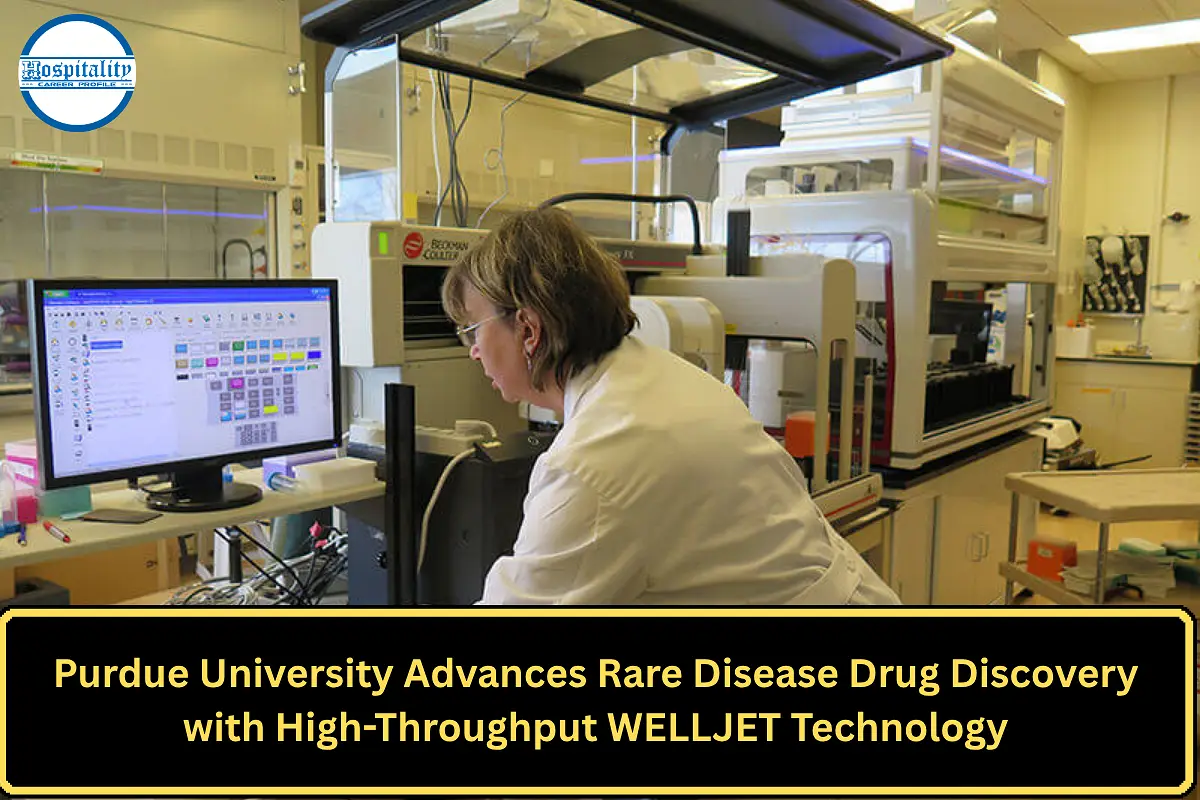
Purdue University Advances Rare Disease Drug Discovery with High-Throughput WELLJET Technology
Purdue University researchers have accelerated efforts in rare disease drug discovery by deploying advanced high-throughput laboratory technology, including the WELLJET dispenser stacker, according to developments announced in April 2026. The initiative aims to improve the speed and efficiency of identifying potential therapies for rare diseases, which often lack effective treatment options due to limited research resources and complex biological challenges.
The adoption of automated liquid handling systems is enabling scientists to conduct large-scale screening of chemical compounds with greater precision and consistency. By streamlining laboratory workflows, the technology is expected to significantly reduce the time required to identify promising drug candidates.
Addressing Challenges in Rare Disease Research
Rare diseases affect millions of people globally, yet many conditions remain under-researched due to small patient populations and limited funding. Developing treatments for these diseases presents unique challenges, including a lack of comprehensive biological data and difficulties in conducting large-scale clinical trials.
Researchers at Purdue University are focusing on overcoming these barriers by leveraging advanced technologies that can process large volumes of experimental data quickly. The goal is to identify viable therapeutic targets more efficiently and bring new treatments closer to clinical development.
Experts note that improving early-stage drug discovery is critical to addressing the unmet medical needs of patients with rare conditions.
Role of the WELLJET Dispenser Stacker
The WELLJET dispenser stacker is a high-throughput liquid handling system designed to automate the distribution of small volumes of liquids into microplates used in laboratory experiments. This capability allows researchers to perform thousands of tests simultaneously, significantly increasing productivity.
By automating repetitive tasks, the system reduces the risk of human error and ensures consistent experimental conditions. This is particularly important in drug discovery, where precise measurements and reproducibility are essential for reliable results.
The technology also supports miniaturization of experiments, enabling researchers to conserve valuable reagents while expanding the scope of their studies.
Enhancing High-Throughput Screening
High-throughput screening is a critical process in drug discovery that involves testing large libraries of chemical compounds against biological targets to identify potential therapeutic effects. The integration of the WELLJET system enhances this process by increasing speed, accuracy, and scalability.
Researchers can now screen thousands of compounds in a fraction of the time previously required, accelerating the identification of promising drug candidates. This capability is particularly valuable in rare disease research, where time and resources are often limited.
The improved efficiency also allows for more comprehensive exploration of chemical libraries, increasing the likelihood of discovering effective treatments.
Impact on Drug Development Timelines
The use of automated laboratory technologies is expected to shorten the overall timeline for drug development. By accelerating the early stages of research, scientists can move more quickly from discovery to preclinical and clinical testing.
This is especially important for rare diseases, where patients often face long waiting periods for new therapies. Faster identification of drug candidates can lead to earlier intervention and improved outcomes.
Industry experts believe that such advancements could transform the drug development landscape, making it more responsive to urgent medical needs.
Integration with Advanced Research Methods
The WELLJET system is being used alongside other advanced research tools, including computational modeling and genomic analysis, to enhance the drug discovery process. This integrated approach allows researchers to combine experimental data with predictive insights, improving decision-making.
By leveraging multiple technologies, scientists can better understand disease mechanisms and identify the most promising therapeutic targets. This holistic approach is becoming increasingly important in modern biomedical research.
The combination of automation and data-driven analysis represents a significant step forward in scientific innovation.
Potential Benefits for Patients
For patients with rare diseases, the acceleration of drug discovery efforts offers new hope for effective treatments. Many rare conditions currently have limited or no therapeutic options, leaving patients with unmet medical needs.
By improving the efficiency of research, technologies like the WELLJET system can help bring new therapies to market more quickly. This could lead to better disease management and improved quality of life for affected individuals.
Healthcare professionals emphasize the importance of continued investment in rare disease research to ensure that these advancements translate into real-world benefits.
Challenges and Considerations
Despite the advantages of high-throughput technologies, challenges remain in translating laboratory findings into clinically effective treatments. Drug discovery is a complex process that requires rigorous testing and validation at multiple stages.
Researchers must also ensure that automated systems are properly calibrated and maintained to deliver accurate results. Additionally, the cost of implementing advanced technologies can be a barrier for some institutions.
Addressing these challenges will be essential for maximizing the impact of technological innovations in healthcare research.
Broader Implications for Pharmaceutical Innovation
The advancements at Purdue University reflect a broader trend toward automation and digitalization in the pharmaceutical industry. High-throughput systems and data-driven approaches are transforming how drugs are discovered and developed.
These innovations are enabling researchers to tackle complex diseases more effectively and explore new therapeutic possibilities. As technology continues to evolve, the potential for breakthroughs in medicine is expected to grow.
Experts believe that continued collaboration between academic institutions, industry partners, and technology providers will be key to sustaining this momentum.
Conclusion
The deployment of WELLJET technology at Purdue University marks a significant advancement in rare disease drug discovery, with the potential to accelerate research and bring new treatments closer to patients in need.