PUSU Elections: A Nursery for Future Political Leaders
The PUSU elections in Patna continue to serve as a training ground for aspiring politicians, shaping future political leaders through campus debates, campaigns, and grassroots mobilisation.
 SANJANA DUTTA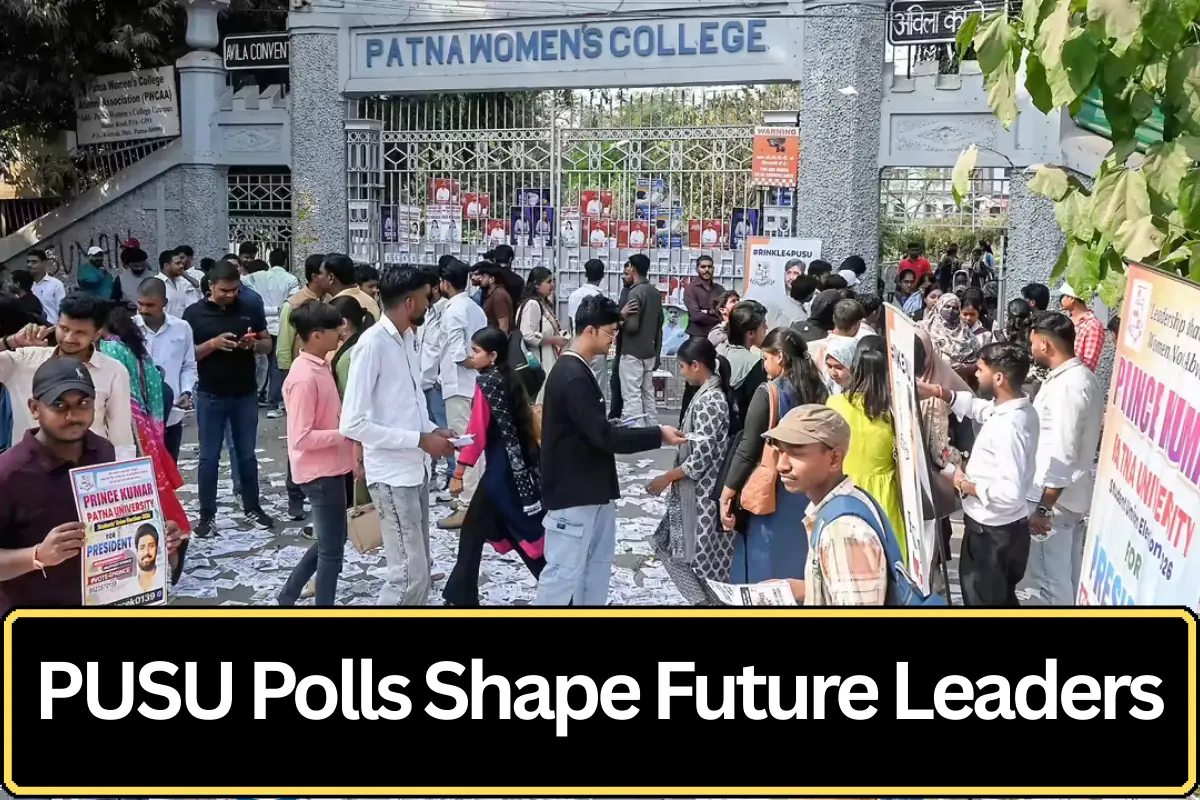
PUSU Elections: Shaping Tomorrow’s Political Leadership
The Patna University Students’ Union (PUSU) elections have long been regarded as a breeding ground for future political leaders. Over the years, the campus has served as a vibrant platform where young aspirants test their leadership skills, political strategies, and public speaking abilities.
Student elections at Patna University are more than just campus contests — they are seen as the first step into mainstream politics for many. Several prominent leaders from Bihar have had their early exposure to political life through student union campaigns.
A Training Ground for Grassroots Politics
PUSU elections mirror the dynamics of larger political battles. Candidates engage in door-to-door outreach, public debates, coalition-building, and issue-based campaigning. These experiences help students understand voter engagement, organisational strategy, and the importance of public perception.
The campus atmosphere during election season is marked by rallies, manifesto releases, and intense discussions on student welfare, infrastructure, academic reforms, and governance — offering hands-on political exposure.
Leadership Beyond the Campus
Many former student leaders credit PUSU for providing them with early lessons in negotiation, public accountability, and constituency management. The electoral process not only builds confidence but also teaches the practical aspects of democracy.
Observers note that student politics in Bihar has historically played a crucial role in shaping broader state politics. University elections often reflect the ideological alignments and political currents seen at the state level.
Youth Engagement and Democratic Values
Beyond political ambition, PUSU elections encourage civic engagement among students. The process familiarises young voters with democratic participation, electoral procedures, and issue-based advocacy.
Supporters argue that such platforms empower youth voices and strengthen democratic culture by introducing political awareness at an early stage.
Conclusion
The PUSU elections continue to stand as an important institution in Bihar’s political landscape. As a nursery for future leaders, the campus provides aspiring politicians with practical experience, ideological grounding, and the confidence to step into larger arenas of governance.
With each election cycle, the university reaffirms its role in shaping the next generation of political leadership.