Rajya Sabha Polls: Opposition Alliances Against NDA Face Crucial Test in Bihar and Odisha
Opposition alliances challenging the NDA face a crucial test in the upcoming Rajya Sabha elections in Bihar and Odisha, where cross‑party cooperation and voting arithmetic could determine the outcome.
 SANJANA DUTTA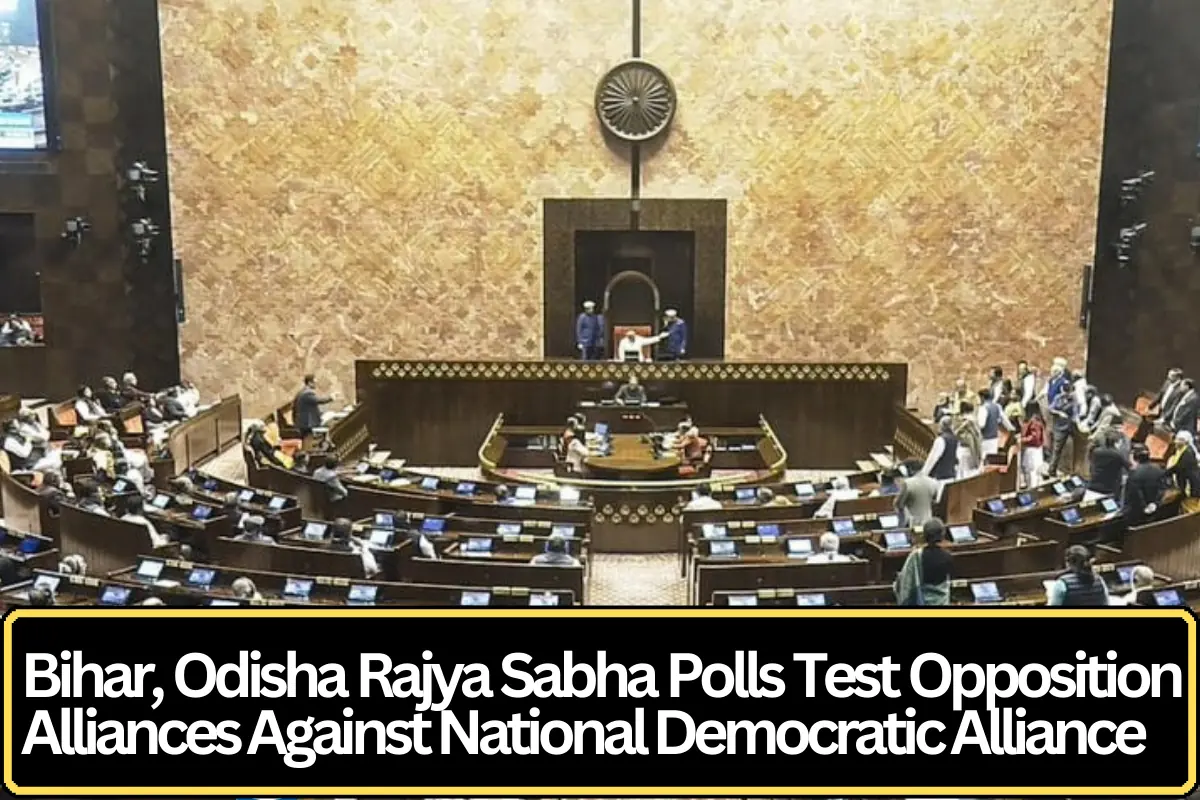
Opposition Alliances Face Critical Test in Rajya Sabha Polls
The upcoming Rajya Sabha elections are set to become an important political test for opposition alliances attempting to challenge the National Democratic Alliance (NDA) in key states such as Bihar and Odisha. The polls will examine whether political partnerships formed to counter the ruling alliance can effectively translate cooperation into electoral success.
Rajya Sabha elections are often shaped by complex political arithmetic because members of the Upper House of Parliament are elected by state legislators rather than directly by the public. As a result, the strength of each party in the state assembly and the willingness of allies to coordinate their votes play a decisive role in determining the outcome.
In Bihar and Odisha, opposition parties have been exploring strategic alignments to maximize their chances against the NDA. However, the elections will reveal whether these arrangements can withstand the pressures of competitive politics and internal differences.
Bihar: A Key Political Battleground
Bihar has long been considered one of India’s most politically dynamic states, where alliances frequently shift and political competition remains intense. In the context of the Rajya Sabha elections, the balance of power in the state assembly is expected to play a crucial role in shaping the results.
Opposition parties are attempting to coordinate their votes in order to challenge candidates backed by the NDA. However, the success of such cooperation depends on maintaining unity among multiple parties that may have competing political ambitions at the state level.
Even minor deviations in voting patterns can significantly affect outcomes in Rajya Sabha polls, making party discipline and alliance coordination critical factors.
Importance of Legislative Strength
The Rajya Sabha election process uses a proportional representation system with a single transferable vote. This system means that parties must carefully calculate how many candidates they can realistically elect based on their number of legislators.
In states where no single party enjoys overwhelming dominance, alliances often become essential for securing victory. For opposition parties in Bihar, this election is seen as an opportunity to demonstrate their ability to function as a united political front.
Political observers believe that if opposition parties manage to coordinate effectively, they could challenge the NDA’s dominance in the state. However, any internal divisions or cross‑voting could alter the expected outcome.
Odisha: Strategic Contest in the East
Odisha represents another important state where the Rajya Sabha polls could test political alliances and strategies. The state’s political environment is unique, with strong regional leadership and a political landscape that often differs from national trends.
While the ruling regional party remains a dominant force in the state assembly, the presence of national parties and evolving political dynamics have created opportunities for strategic maneuvering during parliamentary elections.
Opposition parties are closely watching developments in Odisha because even a small shift in legislative voting patterns could influence the distribution of Rajya Sabha seats.
As in Bihar, the effectiveness of political coordination among non‑NDA parties will determine whether they can successfully challenge the ruling alliance in the Upper House elections.
Rajya Sabha Elections and Political Strategy
Rajya Sabha elections often serve as an indicator of broader political strategies among parties. Unlike general elections, these polls depend heavily on negotiation, alliance management, and legislative arithmetic.
Political parties frequently engage in intense discussions before these elections to determine candidate selection and vote allocation. Ensuring that each alliance partner receives fair representation while maintaining electoral viability can be a delicate balancing act.
In some cases, parties also seek support from smaller groups or independent legislators to secure the numbers required for victory.
Such negotiations highlight the importance of coalition politics in India’s parliamentary system, particularly when no single party controls a decisive majority across all state assemblies.
Challenges for Opposition Unity
Although opposition parties have frequently spoken about the importance of unity against the NDA, translating that rhetoric into coordinated electoral action remains challenging.
Different parties often have competing interests at the state level, which can complicate alliance strategies. Local political rivalries, leadership ambitions, and policy differences may affect how effectively parties cooperate during elections.
Rajya Sabha polls therefore provide a practical test of opposition unity. If parties are able to coordinate their votes successfully, it could strengthen their broader political narrative of collective resistance against the ruling alliance.
On the other hand, any signs of disunity could weaken their credibility and reinforce the perception that opposition cooperation remains fragile.
NDA’s Position in the Elections
The National Democratic Alliance continues to maintain significant political strength across several states. In Rajya Sabha elections, the NDA’s strategy typically focuses on consolidating its legislative support and ensuring strict voting discipline among allied parties.
The alliance’s ability to maintain internal cohesion has often helped it secure favorable outcomes in parliamentary elections. Strong organizational coordination and strategic candidate selection are considered key elements of this approach.
For the NDA, the upcoming Rajya Sabha polls in Bihar and Odisha represent an opportunity to reinforce its parliamentary presence and demonstrate its continued influence in state politics.
Why Rajya Sabha Seats Matter
Control of seats in the Rajya Sabha is politically significant because the Upper House plays an important role in the legislative process. While the Lok Sabha determines the formation of the government, the Rajya Sabha reviews legislation and can influence the pace and direction of lawmaking.
A stronger presence in the Upper House enables political alliances to shape debates, propose amendments, and sometimes delay or block legislation.
For opposition parties, gaining additional seats can strengthen their ability to challenge government policies. For the ruling alliance, maintaining a strong position ensures smoother passage of legislative proposals.
Political Implications Beyond the Polls
The outcome of the Rajya Sabha elections in Bihar and Odisha may also have broader implications for national politics. Successful coordination among opposition parties could strengthen momentum for wider alliances in future elections.
Conversely, if opposition strategies fail to produce the expected results, it may raise questions about the practicality of multi‑party cooperation against the NDA.
Political analysts believe that these elections could serve as a preview of how alliances might operate in future parliamentary contests.
Conclusion
As the Rajya Sabha elections approach, the spotlight is firmly on Bihar and Odisha, where political alliances opposing the NDA face a crucial test of unity and strategy. The results will not only determine representation in the Upper House but may also shape the narrative of opposition cooperation in Indian politics.
Whether the elections strengthen opposition unity or reinforce the NDA’s political dominance will depend largely on the ability of parties to manage alliances, maintain voting discipline, and navigate the complex arithmetic of legislative elections.