Rally Urges Political Parties to Prioritise Tamil Language Conservation in Election Manifestos
A public rally in Tamil Nadu has called on political parties to include Tamil language conservation and promotion measures in their upcoming election manifestos.
 SANJANA DUTTA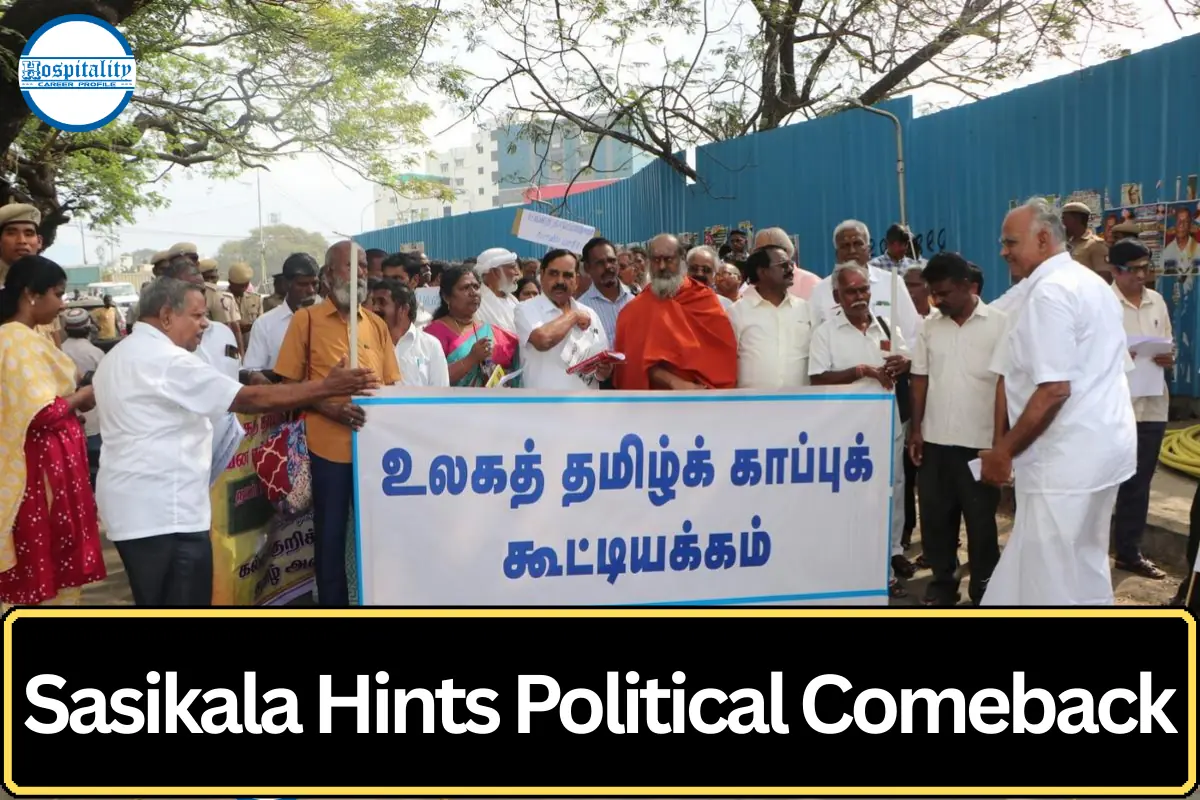
Public Rally Calls for Tamil Language Conservation in Election Agendas
A public rally held in Tamil Nadu has intensified demands for political parties to include comprehensive Tamil language conservation measures in their election manifestos. Organised by cultural activists, scholars, and community groups, the gathering underscored the importance of safeguarding the linguistic heritage of the state amid evolving educational, technological, and administrative landscapes.
Participants at the rally argued that the protection and promotion of Tamil must be treated as a core electoral issue rather than a symbolic cultural commitment. With Assembly elections approaching, speakers urged political parties to outline clear, time-bound policy frameworks to strengthen the use of Tamil in governance, education, digital platforms, and public life.
Language and Identity in Tamil Nadu Politics
Language has long played a central role in Tamil Nadu’s political identity. The preservation of Tamil has historically shaped public movements and electoral narratives, influencing party platforms and governance policies. The rally reflected this legacy, with speakers recalling earlier struggles to protect linguistic rights and promote Tamil in official and academic domains.
Organisers stressed that language is not merely a means of communication but a cornerstone of cultural identity, literature, and social cohesion. They expressed concern that globalisation, shifting educational preferences, and technological transformation may dilute the everyday use of Tamil unless active measures are taken.
Key Demands Presented at the Rally
Several concrete proposals were placed before political representatives and the wider public. Among them were calls to:
- Strengthen Tamil-medium education through updated curricula and improved infrastructure.
- Expand digital resources and technological tools that support Tamil usage online.
- Ensure greater use of Tamil in government documentation and public services.
- Promote Tamil research, literature, and translation initiatives at national and international levels.
- Introduce incentives for creative industries that produce Tamil-language content.
Speakers emphasised that manifesto commitments must be accompanied by budgetary allocations and transparent implementation mechanisms. According to organisers, symbolic references to language pride are insufficient without measurable policy outcomes.
Education and Youth Engagement
A significant portion of the discussion focused on education policy. Participants highlighted concerns that urban students are increasingly opting for English-medium education, potentially weakening Tamil proficiency among younger generations. While acknowledging the importance of multilingual skills in a globalised economy, speakers insisted that foundational fluency in Tamil should not be compromised.
They proposed enhanced teacher training programmes, updated textbooks reflecting contemporary knowledge, and scholarships for students pursuing higher studies in Tamil language and literature.
Technology and Digital Presence
In the digital era, language preservation extends beyond classrooms into online spaces. Activists at the rally called for expanded technological infrastructure to support Tamil computing, including improved fonts, speech recognition tools, translation software, and AI-driven language resources.
They argued that without robust digital integration, Tamil risks losing relevance among younger users who rely heavily on digital communication platforms. Encouraging startups and technology companies to develop Tamil-centric tools was suggested as a practical step toward bridging this gap.
Political Reactions and Electoral Context
Representatives from various political parties have historically expressed support for Tamil language promotion. However, rally organisers noted that specific, actionable commitments often remain limited. As election season approaches, language conservation may once again feature prominently in campaign speeches.
Political analysts suggest that while major parties are unlikely to oppose language preservation demands, the depth of their commitments could vary. The inclusion of detailed policy roadmaps in manifestos may become a benchmark for evaluating sincerity.
Balancing Development and Cultural Preservation
The rally also highlighted the broader challenge of balancing economic development with cultural preservation. Tamil Nadu’s growth in sectors such as technology, manufacturing, and services has increased exposure to global markets. Activists argued that economic progress need not come at the expense of linguistic heritage.
They pointed to examples of multilingual societies that have successfully integrated local languages into modern governance and innovation ecosystems. According to speakers, Tamil can coexist with global engagement if supported by proactive policy measures.
Cultural Institutions and Research
Another focal point was the strengthening of cultural institutions dedicated to Tamil research and heritage conservation. Scholars at the rally advocated increased funding for archival preservation, classical literature studies, and translation projects that bring Tamil works to global audiences.
They also called for greater collaboration between universities, cultural academies, and international research centres to expand the global footprint of Tamil scholarship.
Public Participation and Civic Responsibility
Organisers emphasised that language conservation is not solely the responsibility of political parties. Citizens, educational institutions, and cultural organisations play a crucial role in sustaining linguistic vitality. The rally encouraged families to foster Tamil usage at home and community events to celebrate literary traditions.
At the same time, participants maintained that state-level policy support remains essential to institutionalise preservation efforts.
Historical Continuity of Language Movements
Tamil Nadu has witnessed multiple language-based movements in its political history. From campaigns advocating for regional linguistic rights to initiatives promoting classical language status, such efforts have shaped the state’s socio-political evolution.
The recent rally is viewed by some observers as part of this continuing trajectory, reaffirming the centrality of language in public life.
Looking Ahead to the Election Manifestos
As political parties prepare their election manifestos, pressure from cultural organisations is expected to intensify. Analysts believe that detailed proposals regarding Tamil language promotion could resonate with voters who value cultural identity and heritage.
Whether these demands translate into concrete manifesto commitments will likely become clear in the coming weeks. Organisers have indicated that they plan to monitor party declarations and hold leaders accountable for promises made.
Conclusion
The rally urging political parties to prioritise Tamil language conservation underscores the enduring significance of linguistic identity in Tamil Nadu’s political discourse. As elections approach, the inclusion of comprehensive language policies in manifestos may serve as both a symbolic and substantive indicator of commitment to cultural preservation.
For activists and scholars, the message is clear: safeguarding Tamil requires sustained institutional support, community engagement, and forward-looking policies that integrate tradition with technological advancement. The coming electoral cycle will reveal how political parties respond to these calls and whether language conservation secures a prominent place in the state’s governance agenda.