Supreme Court Examines Detention of Sonam Wangchuk, Questions Government Actions During Hearing
India’s Supreme Court examined the detention of activist Sonam Wangchuk during a hearing, raising questions about the circumstances of the detention and the government’s actions.
 SANJANA DUTTA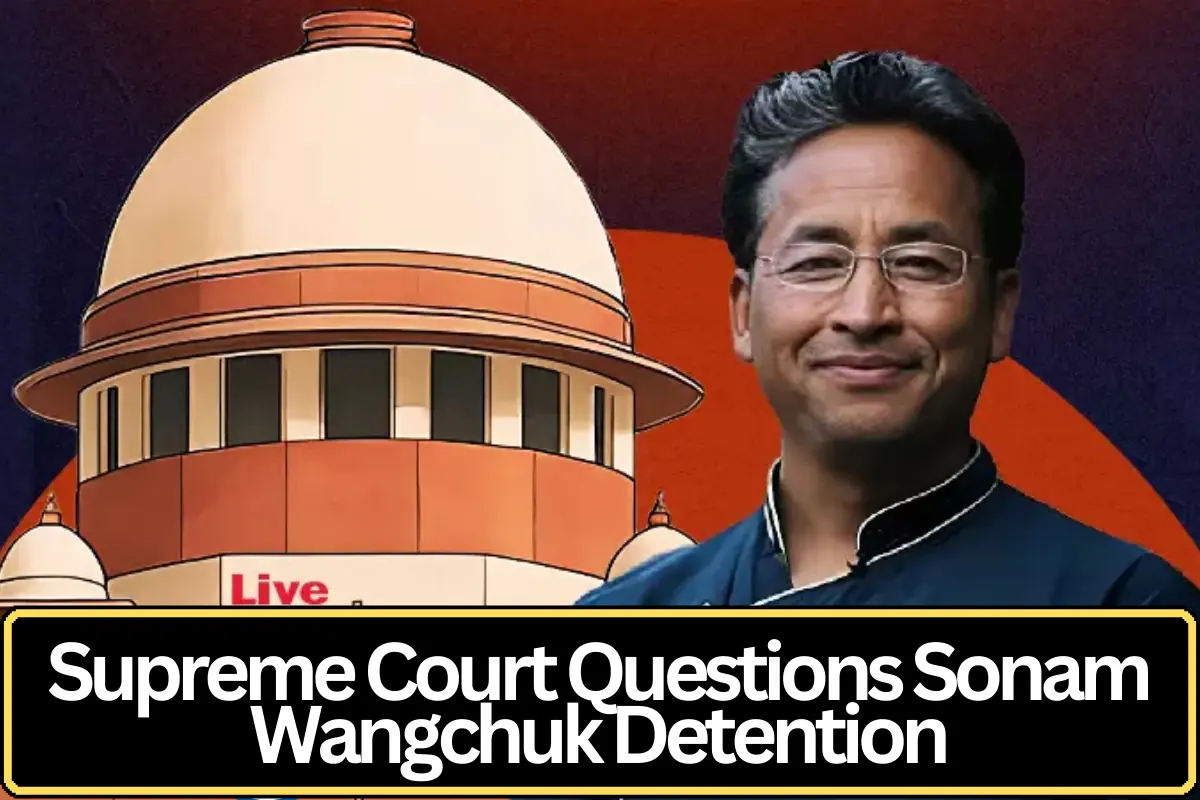
Supreme Court Examines Detention of Sonam Wangchuk
The Supreme Court of India reviewed the detention of Ladakh-based environmentalist and education reform advocate Sonam Wangchuk during a court hearing that examined the circumstances surrounding his custody and the actions taken by authorities. The hearing focused on legal and procedural questions regarding how and why the activist was detained while traveling with supporters during a protest march linked to demands concerning Ladakh’s political and environmental issues.
The case reached the country’s highest court after petitions challenged the legality of the detention and sought clarification regarding the authority under which Wangchuk and other protesters were taken into custody. During the hearing, the bench examined the timeline of events and asked questions about the legal provisions used by authorities to detain the activist and members of the group accompanying him.
Background to the Detention
Sonam Wangchuk, known for his work in sustainable development, education reform, and environmental advocacy in Ladakh, has been involved in public campaigns addressing governance and ecological protection in the Himalayan region. In recent months, he and several supporters have participated in demonstrations and awareness campaigns related to demands for greater safeguards for Ladakh’s environment and political representation.
The detention occurred during a march involving activists and supporters who were attempting to highlight their concerns through public demonstrations. Authorities intervened and detained several participants, including Wangchuk, citing security and administrative considerations related to the gathering.
Following the detention, legal petitions were filed challenging the actions taken by authorities and seeking judicial review. Petitioners argued that the detention raised important questions about civil liberties and the rights of individuals to organize and participate in peaceful demonstrations.
Questions Raised by the Supreme Court
During the hearing, the Supreme Court bench raised a series of questions directed at government representatives and legal counsel regarding the circumstances of the detention. The court sought clarification on the specific legal provisions invoked by authorities and the justification for detaining Wangchuk and other protesters.
Judges also asked about the timeline of the events leading to the detention, including when the group was stopped and what procedures were followed afterward. The bench examined whether the actions taken by authorities complied with established legal safeguards related to detention and personal liberty.
Legal experts observing the proceedings noted that the court’s questions focused on procedural transparency and adherence to constitutional protections. The hearing highlighted the role of the judiciary in reviewing actions taken by administrative and law enforcement authorities.
Government Response During Hearing
Government representatives presented their position during the hearing, explaining the circumstances that led to the detention. Authorities argued that their actions were taken within the framework of maintaining law and order and managing public gatherings that could create administrative or security challenges.
The government also addressed the legal provisions used during the detention and outlined the steps taken by officials once the activists were taken into custody. Counsel for the authorities maintained that procedures were followed according to applicable regulations.
The court examined these explanations as part of its effort to determine whether the detention was consistent with constitutional and legal requirements.
Legal Issues Involved in the Case
The case involves broader legal questions related to preventive detention, public assembly, and the limits of administrative authority. Courts in India often review such cases to determine whether government actions affecting personal liberty meet constitutional standards.
The Constitution of India guarantees several fundamental rights, including the right to freedom of speech and expression as well as the right to assemble peacefully. At the same time, authorities may impose restrictions in certain circumstances related to public order, safety, or security.
Courts frequently examine whether the balance between these considerations has been maintained when disputes arise over the detention of protesters or activists.
Public Interest and Attention
The detention of Sonam Wangchuk attracted widespread attention because of his public profile and long-standing work in environmental and social initiatives in Ladakh. He is widely recognized for promoting sustainable technologies, educational innovation, and ecological awareness in the region.
His advocacy on issues affecting Ladakh, including environmental protection and governance arrangements, has drawn support from various civil society groups and individuals. As a result, the detention and the subsequent legal proceedings have been closely followed by observers across India.
Legal analysts say cases involving prominent activists often generate public debate about the balance between administrative authority and the rights of citizens to express concerns through public demonstrations.
Role of the Supreme Court in Reviewing Detentions
The Supreme Court of India plays a key role in examining cases involving fundamental rights and constitutional questions. Through judicial review, the court evaluates whether actions taken by government authorities comply with the law and constitutional protections.
In cases involving detention, the court may examine procedural aspects such as whether proper legal grounds existed, whether due process was followed, and whether individuals were provided appropriate legal safeguards.
Such hearings allow the judiciary to clarify legal standards and ensure that government actions remain within constitutional limits.
Broader Context of Protest and Governance Issues in Ladakh
Ladakh has experienced growing public discussions in recent years regarding governance structures, environmental protection, and development policies. Activists and community leaders have raised concerns about ecological preservation and administrative representation in the region.
Public demonstrations and campaigns have been used by civil society groups to highlight these issues and advocate for policy discussions. Authorities have sometimes intervened in such gatherings citing administrative and security considerations.
The legal challenge involving Wangchuk’s detention reflects the broader intersection between civic activism, public protest, and administrative regulation.
Legal Proceedings Continue
The Supreme Court’s examination of the case is part of an ongoing legal process aimed at determining the legality of the detention and the procedures followed by authorities. The court’s questions during the hearing indicate that judges are carefully reviewing the circumstances surrounding the incident.
Both the petitioners and the government are expected to present further arguments as the proceedings continue. The outcome could clarify legal interpretations related to detention during protests and the responsibilities of authorities in managing public demonstrations.
Current Status
The Supreme Court continues to examine the legal issues related to Sonam Wangchuk’s detention, with the bench seeking detailed explanations from authorities regarding the actions taken. The case remains under judicial consideration as the court reviews the arguments presented by both sides.