Supreme Court Hearing on West Bengal SIR Case Highlights Electoral Roll Dispute and Rising Political Tensions
The Supreme Court hearing on the West Bengal SIR case brings focus to allegations surrounding electoral roll revisions, intensifying political tensions ahead of key elections.
 SANJANA DUTTA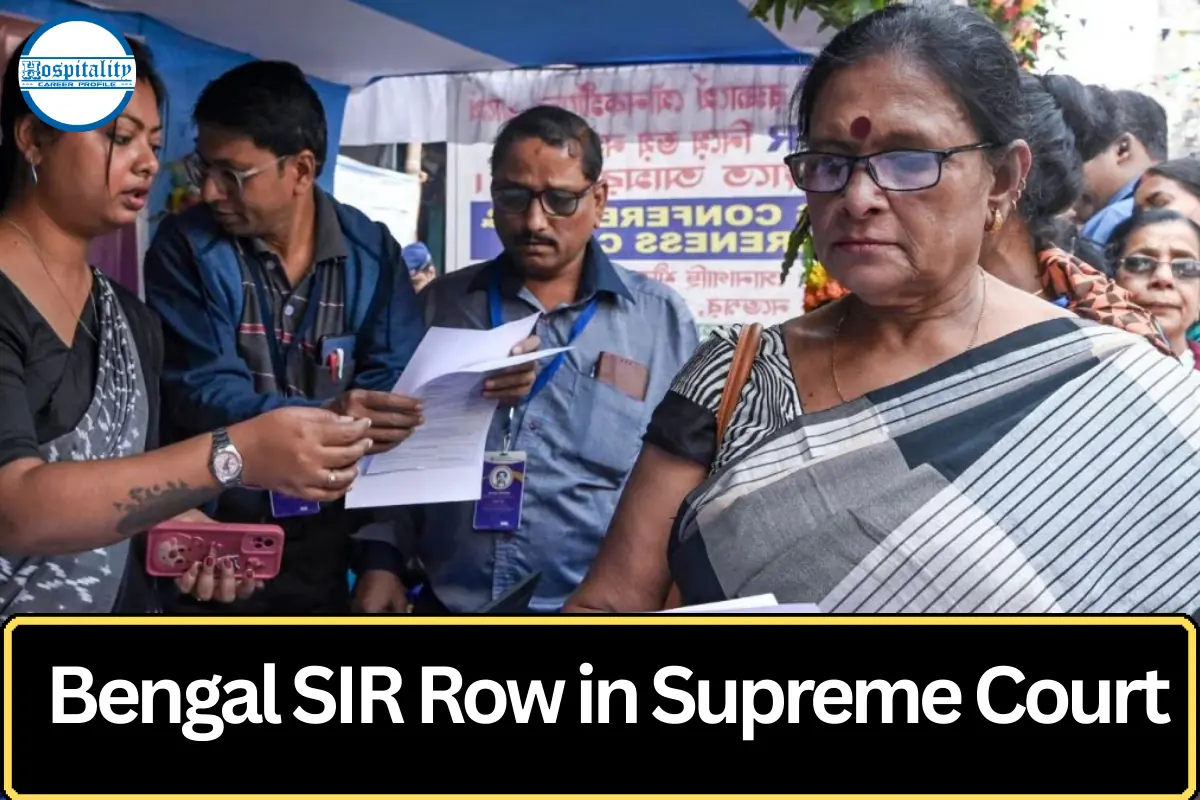
Supreme Court Examines Controversy Surrounding West Bengal’s SIR Process
The Supreme Court of India recently heard arguments in connection with the Special Intensive Revision (SIR) process conducted in West Bengal, bringing renewed national attention to concerns surrounding electoral roll updates and their broader political implications. The case has emerged as a significant development in the state’s political landscape, particularly as parties prepare for upcoming electoral battles.
The hearing focused on allegations that the voter list revision process may have resulted in irregularities, including the deletion or inclusion of names without proper verification. Petitioners approached the apex court seeking intervention, arguing that the integrity of electoral rolls is fundamental to democratic participation.
Background of the Special Intensive Revision (SIR)
The Special Intensive Revision process is undertaken periodically to ensure that electoral rolls are updated and accurate. The exercise typically involves verification of voter details, removal of duplicate entries, correction of demographic information, and inclusion of newly eligible voters. Authorities maintain that the process is essential to preserve transparency and accuracy in elections.
In West Bengal, the SIR exercise gained heightened attention after political parties alleged discrepancies in the revised rolls. Claims ranged from improper deletions of legitimate voters to alleged inclusion of questionable entries. These allegations intensified the political discourse, prompting legal scrutiny.
Allegations Raised Before the Court
During the Supreme Court hearing, petitioners contended that certain procedural lapses may have occurred during the revision process. They argued that some voters were allegedly removed without adequate notice, while others faced difficulties in restoring their names despite documentation.
The petitioners maintained that such irregularities could affect electoral fairness and undermine public confidence. They sought judicial oversight to ensure corrective mechanisms are applied where necessary.
Election Commission’s Position
Representatives for election authorities defended the SIR process, stating that revisions were conducted in accordance with established guidelines and statutory procedures. They emphasized that the process includes opportunities for objections, corrections, and appeals.
Authorities further asserted that periodic revisions are a routine and legally mandated exercise designed to prevent duplication and maintain updated records. According to officials, any grievances can be addressed through designated administrative channels.
Legal Questions Considered
The Supreme Court examined whether due process was followed during the revision exercise and whether adequate safeguards were in place to protect voters’ rights. The bench sought clarity on procedural transparency, public notification, and grievance redress mechanisms.
The court also weighed broader constitutional considerations, including the right to vote and the responsibility of authorities to ensure accurate electoral rolls without disenfranchising eligible citizens.
Political Reactions Intensify
The SIR controversy has heightened political tensions in West Bengal. Opposition parties have expressed concern that electoral roll revisions could impact voter participation, particularly in closely contested constituencies. Leaders have publicly called for strict oversight and accountability.
Meanwhile, ruling party representatives have dismissed allegations of deliberate manipulation, asserting that the revision process is administrative in nature and conducted under statutory supervision. They argue that politicizing routine procedures risks undermining public trust.
Impact on Pre-Election Climate
As the state approaches key electoral events, the dispute has become central to campaign narratives. Political leaders have referenced the court proceedings in rallies and public statements, framing the issue as one of democratic integrity.
The debate has also resonated with civil society groups, some of which have called for independent monitoring to ensure transparency and fairness.
Judicial Oversight and Democratic Safeguards
The Supreme Court’s involvement underscores the importance of judicial oversight in electoral matters. Courts have historically intervened in cases where electoral processes were challenged, balancing administrative authority with constitutional protections.
Legal experts note that the outcome of the case could clarify procedural standards for future voter list revisions, not only in West Bengal but across other states as well.
Possible Directions from the Court
While the court has not yet delivered a final verdict, potential outcomes could include directives for additional verification, strengthened grievance mechanisms, or reaffirmation of existing procedures. The decision may also establish guidelines to prevent future disputes.
Observers indicate that the court’s emphasis will likely remain on ensuring that no eligible voter is disenfranchised while maintaining the credibility of electoral records.
Broader Implications for Electoral Governance
The SIR case has broader implications for electoral governance in India. Accurate voter rolls are considered foundational to free and fair elections. Any perception of irregularity can generate public concern and political friction.
Experts suggest that technological modernization, transparent communication, and proactive engagement with stakeholders may help mitigate disputes in future revision exercises.
Public Confidence and Institutional Trust
The controversy highlights the delicate balance between administrative procedure and political perception. Maintaining public confidence in electoral systems requires both procedural rigor and clear communication.
Authorities face the challenge of conducting revisions efficiently while addressing concerns in a timely and transparent manner. The court proceedings may serve as a reminder of the need for institutional accountability.
Conclusion
The Supreme Court hearing on the West Bengal SIR case has brought the state’s electoral roll revision process under national focus. As political parties exchange allegations and defenses, the judiciary’s role in ensuring procedural integrity remains central.
With elections on the horizon, the resolution of this dispute will be closely watched. The case underscores the broader principle that electoral transparency and voter rights form the cornerstone of democratic governance.