Fiber Optics Reveal Hidden Landslide Motion in Northern Taiwan
Fiber optic sensors in Taiwan detect deep landslide movements, linking hidden slip events to typhoons and earthquakes.
 Shah Vaibhavi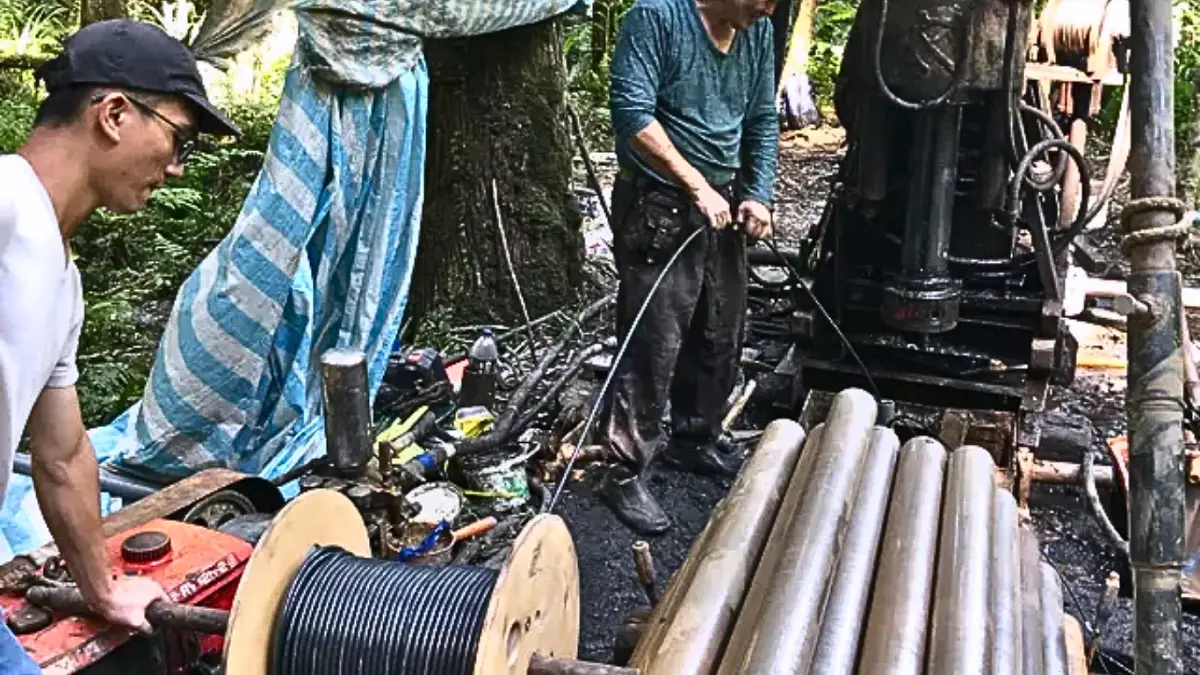
Northern Taiwan, 2026 — A deep-seated landslide in northern Taiwan is revealing previously undetected internal movement patterns after researchers deployed fiber optic sensors capable of capturing minute slip events, with findings linking these hidden motions to typhoon rainfall and earthquake activity.
The study, presented at the 2026 Seismological Society of America Annual Meeting, used a fiber optic cable installed deep within a borehole at the Lantai landslide site to detect small, recurring stick-slip movements along the shear zone. These subtle shifts, occurring 20 to 30 meters below the surface, were previously invisible to conventional surface monitoring systems.
Fiber optic system captures deep underground motion
Researchers utilized distributed acoustic sensing (DAS), a technique that transforms a fiber optic cable into thousands of seismic sensors. By sending laser pulses through the cable and analyzing reflected signals, scientists detected disturbances caused by underground movement with high spatial and temporal resolution.
The system identified periodic stick-slip events—brief cycles of stress accumulation and release—within the landslide’s base layer. Unlike earlier observations that linked such events to imminent large-scale failures, the new data show that these movements occur continuously but are typically too small to be detected without subsurface instrumentation.
The ability to monitor these micro-movements provides new insight into how landslides behave internally, particularly in deep-seated systems where the sliding interface extends to bedrock.
Rainfall and earthquakes influence slip activity
Data collected during five monitoring deployments revealed a strong correlation between environmental triggers and landslide behavior. Periods of typhoon-related rainfall and seismic activity were associated with both accelerated ground movement and increased frequency of stick-slip events.
While rainfall has long been recognized as a trigger for shallow landslides, its role in deep-seated landslides is more complex. The study found that water infiltration affects underground fracture networks and fluid pathways, gradually altering friction along the shear plane rather than causing immediate failure.
Earthquake shaking also contributed to changes in the landslide’s internal dynamics, indicating that multiple natural forces interact to influence movement at depth.
Deep landslides pose high-impact risks
The Lantai landslide represents a deep-seated system, where large volumes of soil and rock move along a boundary with underlying bedrock. Such landslides are particularly hazardous because their scale can lead to widespread destruction when failure occurs.
Monitoring these systems has historically been challenging due to limited access to subsurface conditions. Most traditional instruments are installed at the surface, providing only indirect information about deeper processes. In contrast, the borehole-based DAS system allows direct observation of the sliding interface.
Researchers noted that compared to other borehole instruments, fiber optic systems are relatively cost-effective and easier to deploy at significant depths, making them a practical option for long-term monitoring.
Continuous monitoring improves hazard understanding
The findings suggest that persistent stick-slip activity may serve as an indicator of evolving stress conditions within landslides rather than acting solely as a precursor to failure. Continuous monitoring of these patterns could help scientists better understand how landslides develop over time.
During typhoon alerts, the research team deployed the sensing system for periods ranging from two weeks to one month, capturing detailed data on how extreme weather conditions influence subsurface movement. These observations provide a clearer picture of how rainfall intensity and duration interact with geological structures.
The study highlights that deep landslide behavior involves a dynamic network of fractures and fluid pathways, making prediction difficult without direct measurement at depth. By observing changes in friction and movement at the shear plane, researchers can begin to quantify processes that were previously inaccessible.
Implications for early warning systems
The ability to detect continuous micromovements offers potential for improving landslide early warning systems. By identifying patterns in stick-slip activity and correlating them with environmental triggers, scientists may develop more accurate indicators of when a landslide is approaching a critical state.
Current warning systems often rely on surface deformation or rainfall thresholds, which may not capture the full complexity of subsurface processes. Incorporating fiber optic sensing data could enhance forecasting by providing real-time information about internal stress changes.
The research underscores the importance of integrating advanced sensing technologies into hazard monitoring frameworks, particularly in regions prone to extreme weather and seismic activity. As climate change increases the frequency and intensity of such events, understanding how they interact with geological systems becomes increasingly critical.
By revealing continuous motion deep within the Earth, the study marks a significant step toward more comprehensive monitoring of landslides and improved risk management in vulnerable regions.