Prior Approval Mandatory for Political Events in Private Venues Ahead of 2026 Tamil Nadu Elections
Election authorities in Chennai mandate prior approval for political events in private venues ahead of the 2026 Tamil Nadu assembly elections to ensure compliance with poll regulations.
 SANJANA DUTTA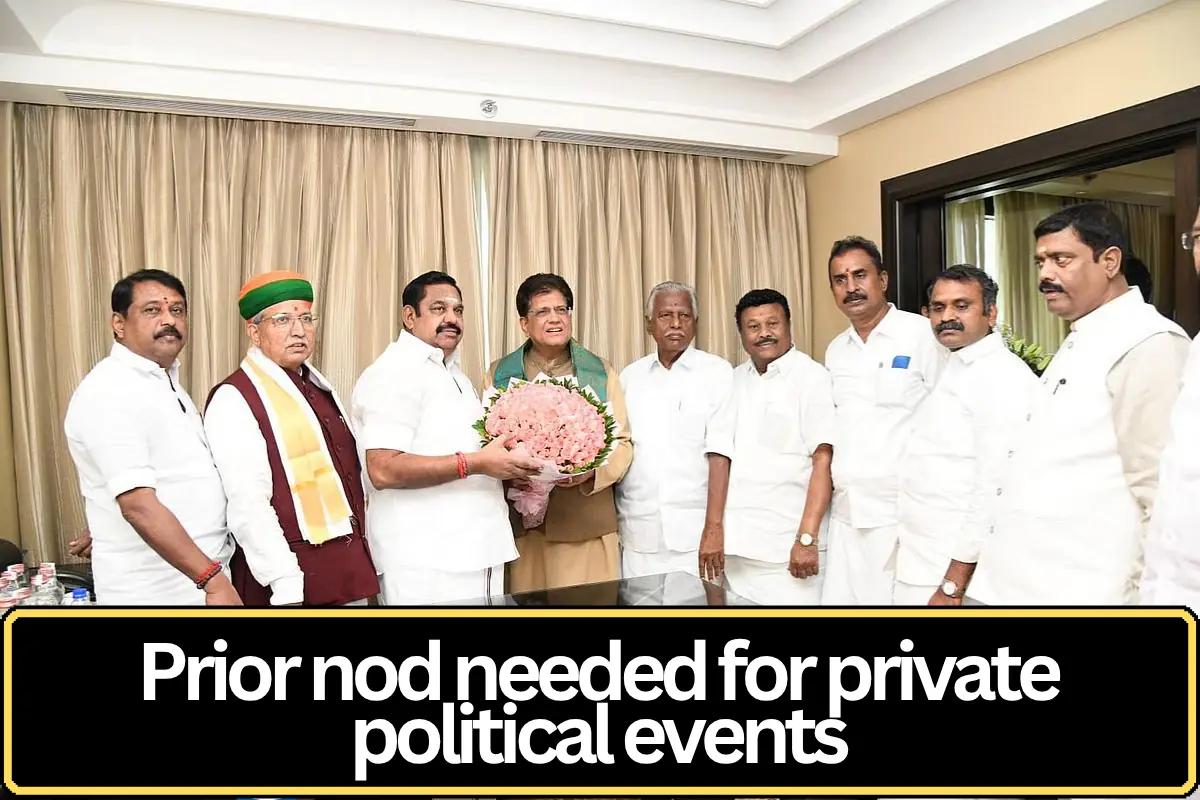
Election Authorities Tighten Campaign Regulations
CHENNAI, March 27, 2026 — Political parties and candidates planning to hold events in private venues in Chennai will now require prior approval from election authorities, officials said, as preparations intensify for the 2026 Tamil Nadu Assembly elections. The directive, issued by the city’s election officer, aims to ensure strict adherence to election norms and prevent violations of the model code of conduct during the campaign period.
The move comes as political activity gathers momentum across the state, with parties organizing meetings, outreach programs, and campaign events ahead of the polls. Authorities have emphasized that the regulation is necessary to maintain transparency and ensure a level playing field for all participants in the electoral process.
Scope of the New Directive
Under the new guidelines, any political gathering, meeting, or campaign-related event held in privately owned venues—including banquet halls, auditoriums, hotels, and convention centers—must receive clearance from the election office before being आयोजित. Organizers will be required to submit detailed information about the event, including its purpose, expected attendance, and logistical arrangements.
Officials said the rule is intended to prevent misuse of private spaces for activities that could bypass standard monitoring mechanisms applied to public rallies and gatherings. By extending oversight to private venues, authorities aim to ensure that all campaign activities are conducted within the framework of election laws.
The directive also places responsibility on venue owners to verify whether necessary permissions have been obtained before allowing political events to take place on their premises.
Ensuring Compliance with Model Code of Conduct
The introduction of the approval requirement is closely linked to the enforcement of the model code of conduct, which governs the behavior of political parties and candidates during elections. The code includes provisions related to campaign practices, use of resources, and conduct in public spaces.
Election officials noted that private venues have increasingly been used for campaign activities, sometimes making it difficult to monitor compliance with spending limits and other regulations. The new measure seeks to address these challenges by bringing such events under formal scrutiny.
Authorities have reiterated that violations of the model code could result in penalties, including warnings, fines, or more severe कार्रवाई depending on the nature of the offense.
Impact on Political Campaign Strategies
The requirement for prior approval is expected to influence how political parties plan their campaign strategies in Chennai and potentially across Tamil Nadu. Private venues are often preferred for smaller, targeted events, including meetings with specific voter groups, party workers, and community leaders.
With the new regulation in place, parties may need to factor in additional time for obtaining permissions and ensure that all documentation is in order before scheduling events. This could lead to more structured and carefully planned campaign activities.
Some political observers believe the directive could also encourage greater use of digital campaigning and public rallies, where procedures for obtaining permissions are already well established.
Reactions from Political Parties
Initial reactions from political parties have been mixed. While some have welcomed the move as a step toward ensuring fairness and transparency in the electoral process, others have expressed concerns about potential delays and administrative hurdles.
Opposition leaders have called for clear and consistent guidelines to prevent arbitrary decision-making in granting approvals. They have emphasized the importance of ensuring that the process remains impartial and does not disadvantage any particular party.
Ruling party representatives, on the other hand, have largely supported the measure, stating that it will help maintain order and prevent misuse of resources during the campaign period.
Role of Venue Owners and Organizers
The directive places significant responsibility on venue owners, who must now ensure that political events hosted at their premises comply with election regulations. Failure to do so could result in legal consequences, including penalties or restrictions on future use of the venue for similar activities.
Event organizers are also required to coordinate closely with authorities, providing accurate information and adhering to all conditions specified in the approval. This includes compliance with guidelines related to crowd management, security arrangements, and adherence to campaign expenditure limits.
Officials have indicated that inspections may be conducted to verify compliance, and any discrepancies could lead to कार्रवाई against both organizers and venue providers.
Broader Context of Election Preparedness
The introduction of stricter regulations for political events in private venues is part of a broader effort by election authorities to ensure a smooth and transparent electoral process in Tamil Nadu. Preparations for the 2026 Assembly elections are already underway, with a focus on strengthening monitoring mechanisms and enhancing voter awareness.
Authorities have been implementing various measures to curb electoral malpractices, including stricter monitoring of campaign finance, surveillance of sensitive areas, and deployment of technology to track violations. The new directive is seen as an extension of these efforts.
Election officials have also been engaging with political parties to familiarize them with the rules and encourage compliance. Workshops and meetings are being conducted to clarify procedures and address concerns raised by stakeholders.
Challenges in Implementation
Despite its intended benefits, the new regulation may face challenges in implementation. Ensuring timely processing of approval requests will be critical to avoid disruptions to campaign schedules. Authorities will need to allocate adequate resources and streamline procedures to handle the expected volume of applications.
There are also concerns about enforcement, particularly in monitoring smaller events that may not be widely publicized. Ensuring that all parties adhere to the rules will require coordination between multiple agencies and vigilant oversight.
Experts suggest that clear communication and transparency in the approval process will be key to building trust among political stakeholders and ensuring the effectiveness of the directive.
Focus on Fair and Transparent Elections
The move underscores the commitment of election authorities to uphold the integrity of the electoral process. By extending regulatory oversight to private venues, officials aim to close potential loopholes and ensure that all campaign activities are conducted in a fair and transparent manner.
As the election approaches, the emphasis on compliance and accountability is expected to shape the overall conduct of political campaigns in the state. Parties will need to adapt to the evolving regulatory environment while continuing to engage with voters.
Observers note that such measures, while sometimes contentious, are essential for maintaining public confidence in the electoral system.
Conclusion
The requirement for prior approval of political events in private venues marks a significant step in strengthening election oversight in Chennai ahead of the 2026 Tamil Nadu Assembly polls.
Current Status
Authorities have begun implementing the directive, with political parties adjusting their campaign plans as the state moves closer to the चुनाव period.