Toyota to Discontinue Innova Crysta by Early 2027 as Market Shifts Toward Newer Models
Toyota plans to discontinue the Innova Crysta by early 2027 as it shifts focus to newer models and evolving consumer demand in the MPV segment.
 RUKAIYA KADIVAL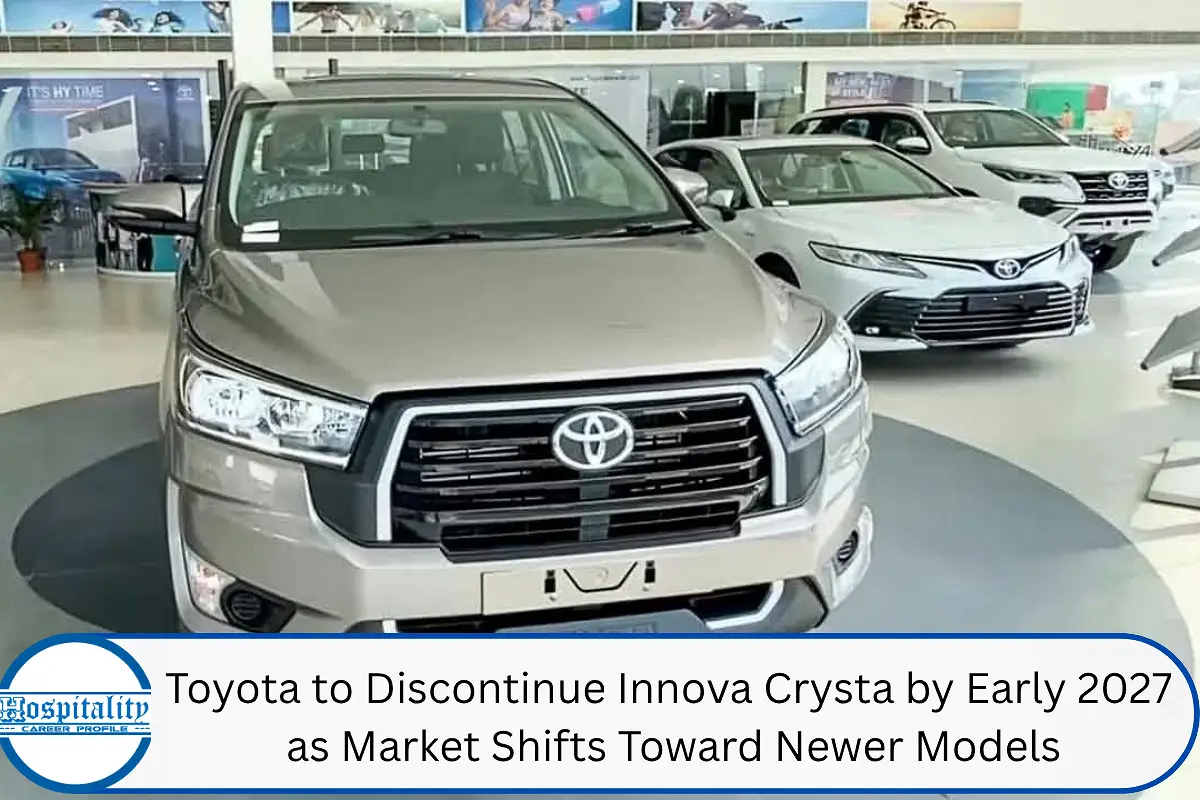
Toyota to Discontinue Innova Crysta by Early 2027 as Market Shifts Toward Newer Models
Toyota Motor is planning to discontinue its popular multi-purpose vehicle Innova Crysta by early 2027, according to recent industry reports, as the company shifts its focus toward newer-generation models and changing consumer preferences in India and other key markets.
The move signals a strategic transition by Toyota as it adapts to evolving demand in the MPV segment, where buyers are increasingly opting for modern, feature-rich, and electrified vehicles. The Innova Crysta, long regarded as a benchmark for reliability and comfort, has been a strong performer for the automaker since its launch.
End of a Successful Product Cycle
The Innova Crysta has enjoyed a long and successful lifecycle, becoming one of Toyota’s best-selling models in India and a preferred choice for both private buyers and fleet operators. Known for its durability, spacious interiors, and strong resale value, the model has built a loyal customer base over the years.
However, as automotive technology and consumer expectations evolve, the lifecycle of traditional internal combustion engine vehicles is gradually shortening. Toyota’s decision to phase out the Crysta reflects a broader industry trend toward modernization and electrification.
The discontinuation timeline suggests that the company will continue production for a limited period before gradually winding down operations, allowing dealers and customers time to transition to alternative offerings.
Shift Toward Newer Models
Toyota has already introduced newer MPV offerings with updated platforms, improved technology, and hybrid powertrains. These vehicles are designed to cater to changing market demands, including better fuel efficiency, lower emissions, and enhanced driving experiences.
The company’s newer models feature advanced safety systems, connected car technologies, and more refined interiors, aligning with the expectations of modern consumers. This transition is expected to play a key role in Toyota’s strategy to maintain its competitiveness in the MPV segment.
The shift also reflects the company’s global focus on sustainable mobility solutions, including hybrid and electric vehicles.
Changing Consumer Preferences
Consumer preferences in the automotive market are undergoing a significant transformation, driven by factors such as rising fuel costs, environmental concerns, and technological advancements. Buyers are increasingly prioritizing vehicles that offer a combination of efficiency, connectivity, and advanced features.
In the MPV segment, this shift is particularly evident, as customers seek vehicles that provide not only practicality but also a premium driving experience. The growing popularity of hybrid vehicles has further accelerated this trend.
Toyota’s decision to discontinue the Innova Crysta is closely linked to these changing dynamics, as the company aims to align its product portfolio with future market needs.
Impact on the Indian Market
The discontinuation of the Innova Crysta is expected to have a notable impact on the Indian automotive market, where the model has been a dominant player for years. It has been widely used in both personal and commercial segments, including ride-hailing and corporate fleets.
Dealers may see a temporary surge in demand as customers look to purchase the model before it is phased out. At the same time, the transition to newer models could drive increased interest in Toyota’s updated lineup.
Competitors in the MPV segment may also look to capitalize on the gap left by the Crysta’s eventual exit, intensifying competition in the market.
Industry-Wide Transition
The move is part of a broader transformation within the global automotive industry, as manufacturers shift away from legacy models and invest in next-generation technologies. Electrification, digitalization, and sustainability are becoming central to product development strategies.
Automakers are increasingly focusing on reducing emissions and meeting stricter regulatory requirements, particularly in major markets. This has led to the introduction of hybrid and electric vehicles across various segments.
Toyota, a pioneer in hybrid technology, is leveraging its expertise to strengthen its position in this evolving landscape.
Production and Supply Considerations
The phased discontinuation of the Innova Crysta will likely involve adjustments in production and supply chain operations. Toyota may gradually reduce output while ramping up production of newer models to ensure a smooth transition.
Suppliers and dealers will also need to adapt to the changing product mix, aligning their operations with the company’s future strategy. This process is expected to be managed carefully to minimize disruptions.
The company’s manufacturing facilities may be reallocated to support the production of updated vehicles, reflecting the shift in priorities.
Customer Transition and After-Sales Support
For existing customers, Toyota is expected to continue providing after-sales support, including maintenance, spare parts, and service, even after the model is discontinued. This is a standard practice in the industry and helps maintain customer confidence.
Customers considering the Innova Crysta may also evaluate newer models as alternatives, particularly those offering hybrid technology and enhanced features.
The transition period will be crucial in ensuring a seamless shift for both customers and the company’s distribution network.
Future Outlook for Toyota
Looking ahead, Toyota is expected to focus on expanding its portfolio of advanced and environmentally friendly vehicles. The company’s strategy includes increasing the adoption of hybrid technology while exploring fully electric options.
The MPV segment will continue to play an important role in Toyota’s lineup, with newer models expected to address evolving consumer needs. Innovation, sustainability, and customer experience are likely to remain key priorities.
The discontinuation of legacy models like the Innova Crysta marks a significant step in this transition, reflecting the company’s long-term vision for the automotive industry.
Conclusion
Toyota’s plan to discontinue the Innova Crysta by early 2027 highlights a strategic shift toward modern, technology-driven vehicles as the company adapts to changing market dynamics and prepares for the future of mobility.