UK Prime Minister Keir Starmer Faces Political Pressure and Rising Cost Challenges
UK Prime Minister Keir Starmer faces mounting political pressure as rising costs and economic challenges test his government’s policy direction.
 SANJANA DUTTA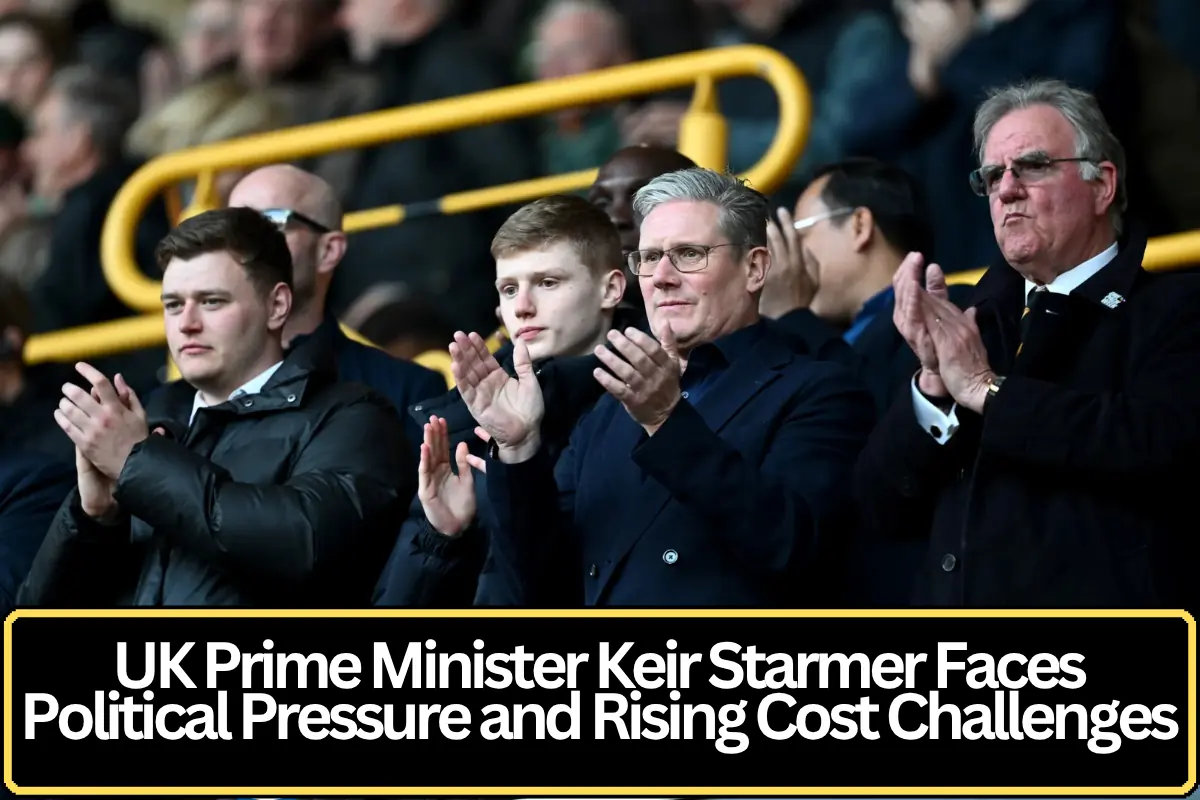
Starmer Confronts Dual Political and Economic Pressures
UK Prime Minister Keir Starmer is facing growing political pressure alongside rising economic challenges, as his government navigates persistent cost-of-living concerns and mounting expectations for policy delivery. The situation has intensified in recent weeks, with economic strains and political scrutiny converging to test the resilience of his leadership.
Starmer, who came to power on a platform of stability and economic reform, now finds himself balancing domestic political demands with the realities of inflation, public spending constraints, and voter dissatisfaction. The combination of these factors is shaping a critical phase for his administration.
Cost-of-Living Pressures Remain Central Concern
At the heart of the current challenges is the continued strain on household finances across the United Kingdom. Rising prices for essential goods, energy, and housing have kept the cost-of-living crisis at the forefront of public discourse.
Despite earlier efforts to stabilize inflation, many households continue to feel the impact of elevated costs. Wage growth has struggled to keep pace with price increases, leading to concerns about declining real incomes and reduced consumer spending.
The government has introduced targeted support measures, but critics argue that these have not gone far enough to alleviate the burden on lower- and middle-income families. The persistence of these issues is contributing to growing public frustration.
Economic Policy Under Scrutiny
Starmer’s economic strategy is facing increasing scrutiny from both political opponents and sections of his own party. Questions have been raised about the pace and effectiveness of reforms aimed at boosting growth and controlling inflation.
Analysts note that the government is attempting to strike a delicate balance between fiscal discipline and the need for investment in public services and infrastructure. However, limited fiscal space has constrained the scope of policy interventions.
The administration’s approach to taxation and public spending has also become a focal point of debate, with some calling for more aggressive measures to stimulate economic activity.
Political Pressures Intensify
In addition to economic challenges, Starmer is dealing with increasing political pressure from opposition parties and within his own ranks. Critics have questioned the government’s ability to deliver on its promises, particularly in areas such as economic growth and public service improvements.
Opposition leaders have seized on the cost-of-living crisis to highlight perceived shortcomings in the government’s policies, while internal debates within the ruling party have added to the complexity of the political landscape.
The prime minister’s leadership is being closely watched as he seeks to maintain unity and confidence within his party while addressing external criticism.
Energy and Inflation Concerns Persist
Energy prices continue to play a significant role in shaping the economic environment. Fluctuations in global energy markets have contributed to ongoing inflationary pressures, affecting both households and businesses.
The government has outlined plans to transition towards more sustainable energy sources, but the short-term impact of high energy costs remains a challenge. Businesses, particularly small and medium enterprises, are grappling with increased operational expenses.
Inflation, although showing signs of moderation, remains above desired levels, complicating efforts to restore economic stability. Policymakers are closely monitoring trends as they consider further actions.
Public Services and Spending Constraints
Public services are another area of concern, with demands for increased funding in healthcare, education, and social services. However, the government’s commitment to fiscal responsibility has limited its ability to significantly expand spending.
This has led to difficult choices regarding resource allocation, with trade-offs between immediate relief measures and long-term investments. Critics argue that underfunding in key sectors could undermine economic recovery and social stability.
The government has emphasized efficiency and reform as key strategies to improve service delivery without significantly increasing expenditure.
Global Factors Add Complexity
External factors are also influencing the UK’s economic outlook. Global geopolitical tensions, supply chain disruptions, and fluctuations in commodity prices are contributing to uncertainty.
These dynamics have made it more challenging for the government to implement domestic policies effectively, as external shocks can quickly alter economic conditions. The interconnected nature of global markets means that developments abroad have direct implications for the UK economy.
Starmer’s administration is working to navigate these complexities while maintaining a focus on domestic priorities.
Balancing Reform and Stability
A key challenge for the prime minister is balancing the need for structural reforms with the demand for immediate relief. Long-term initiatives aimed at boosting productivity and economic resilience require time to yield results, while voters are seeking tangible improvements in the near term.
This tension is evident in debates over policy priorities, with differing views on how best to achieve sustainable growth. The government has sought to communicate its strategy, emphasizing a phased approach to reform.
Maintaining public confidence during this period is critical, as perceptions of economic management can have significant political consequences.
Market Reactions and Investor Sentiment
Financial markets have been closely watching the government’s policy decisions, with investor sentiment influenced by perceptions of economic stability and policy clarity. Any signs of uncertainty or inconsistency can affect market confidence.
While there has been cautious optimism in some quarters, concerns about inflation and fiscal constraints continue to weigh on outlooks. The government’s ability to provide clear and consistent policy signals will be key in maintaining investor trust.
Business leaders have also called for greater certainty and support to navigate the challenging economic environment.
Outlook for the Government
The coming months are expected to be critical for Starmer’s administration as it seeks to address both political and economic challenges. The effectiveness of policy measures and the government’s ability to respond to evolving conditions will shape its trajectory.
Efforts to ease cost-of-living pressures, support economic growth, and maintain political stability will be central to the government’s agenda. Success in these areas could strengthen the administration’s position, while setbacks may intensify scrutiny.
The interplay between domestic policy decisions and global economic trends will continue to influence outcomes.
Conclusion
Prime Minister Keir Starmer’s leadership is being tested by a combination of rising costs and political pressures, highlighting the challenges of governing in a complex economic environment.
Current Status
The UK government continues to assess policy options as it works to manage economic pressures and address growing political scrutiny.