U.S. Temporarily Eases Sanctions on Russian Oil as Global Energy Prices Rise
The United States has temporarily eased sanctions on Russian oil to stabilize global energy markets as oil prices rise amid geopolitical tensions and supply disruptions.
 SANJANA DUTTA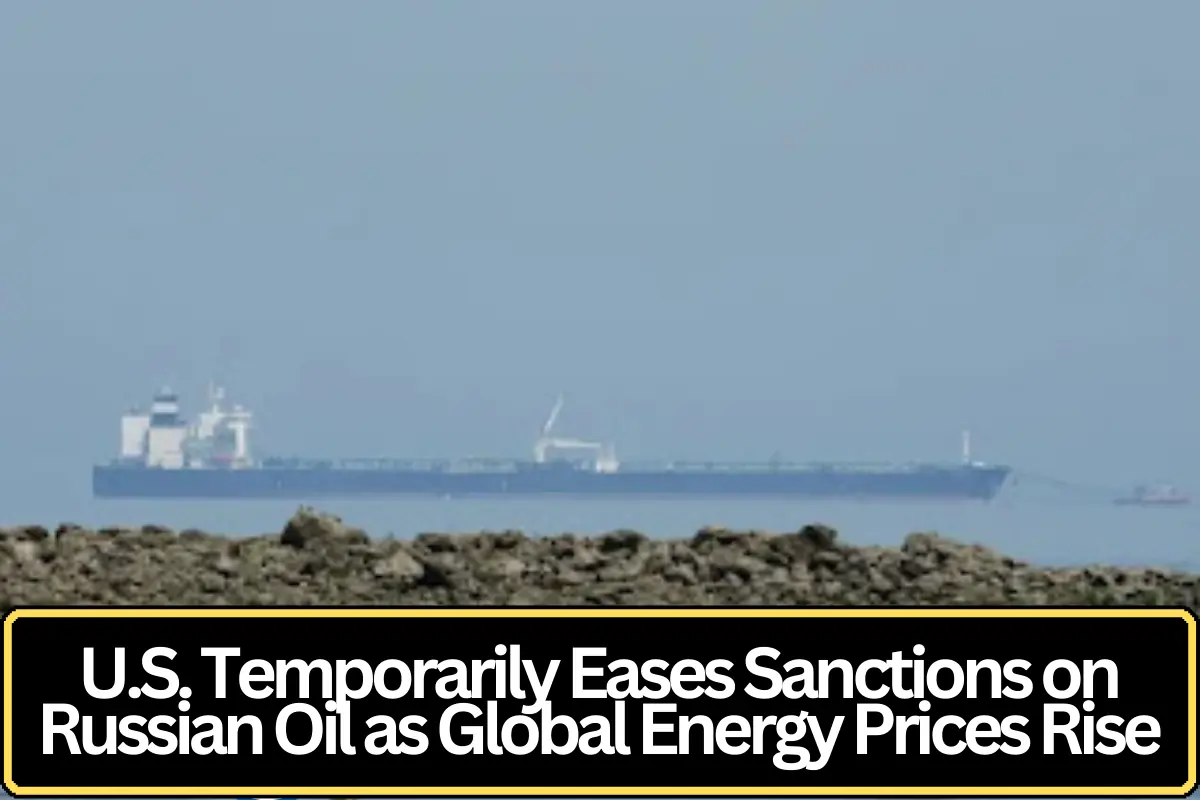
U.S. Temporarily Eases Sanctions on Russian Oil Amid Global Energy Pressure
The United States has temporarily eased certain sanctions on Russian oil exports in an effort to stabilize global energy markets during a period of rising oil prices and geopolitical tensions. The policy adjustment allows the delivery and sale of Russian crude that was already in transit before the new restrictions took effect.
The move comes as global oil markets face supply disruptions linked to conflicts in the Middle East and ongoing instability in international shipping routes. Officials say the temporary waiver is intended to prevent further spikes in fuel prices and maintain stability in global energy supply chains.
The decision has triggered debate among Western allies and policymakers, with some warning that easing restrictions could provide financial benefits to Russia while it continues its war in Ukraine.
Sanctions Adjustment Allows Oil Already in Transit to Be Delivered
Under the temporary measure, countries and companies are permitted to receive Russian oil shipments that were already loaded before the sanctions deadline. The authorization is limited in duration and is designed to prevent large volumes of oil from becoming stranded at sea.
Officials said the waiver will remain in effect for a limited period, allowing energy markets time to adjust to ongoing geopolitical developments. The policy does not represent a full removal of sanctions on Russia’s energy sector.
Instead, it allows existing shipments to be completed while maintaining broader restrictions aimed at limiting Russia’s energy revenue.
Analysts estimate that millions of barrels of Russian crude could be affected by the policy, potentially easing short‑term pressure on global oil supplies.
Global Oil Prices Rise Amid Geopolitical Tensions
The sanctions adjustment comes during a period of rising oil prices linked to escalating geopolitical tensions. Conflicts in the Middle East have disrupted shipping routes and increased concerns about global energy supply.
Energy markets have been particularly sensitive to developments affecting the Strait of Hormuz, one of the world’s most important oil transport routes. A significant portion of global oil shipments passes through this narrow waterway.
Recent security incidents and threats to shipping have raised fears of supply disruptions. These concerns have contributed to higher global oil prices and increased volatility in energy markets.
By allowing Russian oil already in transit to reach buyers, policymakers hope to prevent sudden supply shortages that could further increase fuel costs worldwide.
Western Allies Raise Concerns Over Policy Shift
The decision to temporarily ease restrictions has drawn criticism from several Western allies and political leaders. Critics argue that relaxing sanctions risks weakening international pressure on Russia over its military actions in Ukraine.
European governments have emphasized that sanctions on Russia’s energy sector remain an important tool for limiting the Kremlin’s ability to finance its war effort. Some officials have warned that even temporary adjustments could send mixed signals about Western unity.
Ukraine has also expressed concern about the move, arguing that continued economic pressure is essential to reducing Russia’s capacity to sustain military operations.
Supporters of the waiver, however, say it is a short‑term measure intended to stabilize energy markets rather than a broader policy change.
Russia’s Oil Industry Remains Central to Its Economy
Oil exports play a critical role in Russia’s economy. Energy sales provide a large share of government revenue and remain one of the country’s most important sources of foreign income.
Since the start of the war in Ukraine, Western countries have imposed multiple rounds of sanctions targeting Russia’s energy sector. These measures aim to limit Moscow’s ability to generate income from oil and gas exports.
The restrictions include price caps, shipping limitations, and financial sanctions on companies involved in the Russian oil trade.
Despite these measures, Russia has continued exporting oil to major buyers in Asia, including China and India. Analysts say Moscow has also relied on alternative shipping networks and intermediaries to maintain exports.
Impact on Global Energy Markets
Energy markets are closely watching the impact of the sanctions adjustment. Oil prices have already been influenced by supply disruptions and rising geopolitical risk.
Allowing previously loaded Russian oil shipments to reach international buyers could help ease short‑term supply concerns. However, experts say the broader effect on global prices may be limited.
Many traders believe the policy primarily prevents logistical problems rather than significantly increasing global supply. Most of the oil affected by the waiver had already been sold and transported before the sanctions deadline.
As a result, the policy mainly ensures that those shipments can be delivered without creating legal or financial complications for shipping companies and buyers.
Sanctions Have Already Affected Russia’s Oil Revenue
Western sanctions imposed since 2022 have had a measurable impact on Russia’s energy sector. Restrictions on shipping, insurance, and financial transactions have made it more difficult for Russian companies to sell oil on international markets.
As a result, Russian crude has often been sold at significant discounts compared with global benchmark prices. This pricing gap has reduced overall revenue despite continued export volumes.
Additional sanctions introduced in recent years have targeted Russian oil companies, tankers, and financial networks involved in the energy trade.
These measures aim to reduce Russia’s ability to fund its military operations while avoiding severe disruptions to global energy supply.
Political and Economic Debate in the United States
The sanctions waiver has also become part of a broader political debate in the United States about balancing economic stability with foreign policy objectives.
Some policymakers argue that maintaining stable fuel prices is critical for economic growth and domestic consumers. High oil prices can increase transportation costs, raise inflation, and affect global economic stability.
Others contend that easing restrictions on Russian oil, even temporarily, risks undermining international efforts to pressure Moscow.
The debate highlights the complex relationship between global energy markets and geopolitical strategy.
Shipping Disruptions and Security Concerns
Energy markets have also been affected by disruptions linked to conflicts and attacks on infrastructure. Recent security incidents targeting oil facilities and shipping routes have slowed some exports.
Harsh winter weather and logistical challenges have also contributed to delays at major Russian oil ports. In some cases, shipping operations were temporarily halted following security threats or infrastructure damage.
These disruptions have added to uncertainty in global oil supply chains and increased pressure on governments to stabilize energy markets.
Allowing already‑loaded shipments to reach buyers helps reduce congestion and prevent oil tankers from remaining stranded at sea.
Long‑Term Sanctions Policy Remains Unchanged
Officials have emphasized that the temporary waiver does not represent a fundamental change in sanctions policy toward Russia. The broader framework of restrictions targeting Moscow’s energy sector remains in place.
Western governments continue to coordinate economic measures aimed at limiting Russia’s ability to finance its war in Ukraine.
Future sanctions decisions will likely depend on developments in the conflict, global energy conditions, and diplomatic negotiations.
For now, policymakers say the priority is balancing economic stability with long‑term geopolitical strategy.
Conclusion
The temporary easing of sanctions on Russian oil highlights the complex relationship between global energy markets and international politics. While the policy aims to prevent supply disruptions and stabilize oil prices, it has also raised concerns among allies about maintaining pressure on Russia.
As conflicts and geopolitical tensions continue to affect global energy supply, governments are likely to face ongoing challenges in balancing economic stability with foreign policy objectives.
The situation underscores how developments in the global oil market remain closely linked to international political decisions and geopolitical conflicts.