US Pushes for Hamas Political Surrender in New Gaza Plan Amid Ongoing Conflict
The United States is reportedly pursuing a new Gaza plan that seeks Hamas’ political surrender, aiming to reshape governance and end the ongoing conflict in the region.
 SANJANA DUTTA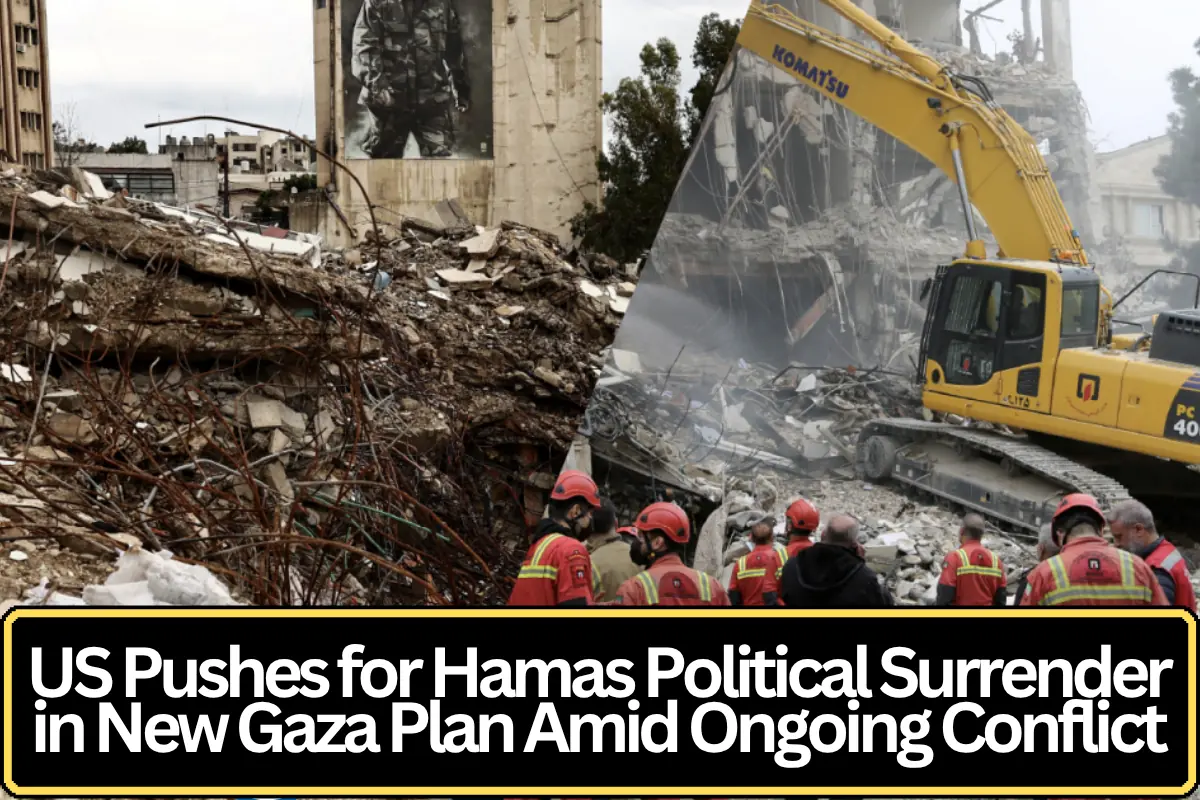
US Advances New Strategy for Gaza Governance
WASHINGTON, March 26, 2026 — The United States is pushing a new plan aimed at securing the political surrender of Hamas in Gaza, as part of broader efforts to end the ongoing conflict and reshape governance in the Palestinian territory. The proposal comes amid continued hostilities and growing international pressure for a long-term resolution to the crisis.
According to reports, the plan envisions a significant restructuring of Gaza’s political leadership, with the goal of removing Hamas from power and replacing it with an alternative governing framework. The initiative reflects Washington’s evolving strategy to address both the immediate security concerns and the longer-term political future of the region.
Focus on Political Transition
Central to the proposed plan is the idea of Hamas relinquishing its political authority in Gaza. US officials are believed to view this as a critical step toward stabilizing the region and enabling reconstruction efforts. The proposal reportedly includes provisions for the establishment of a new administrative structure that could involve Palestinian authorities and international oversight.
Supporters of the plan argue that a political transition is necessary to break the cycle of violence and create conditions for sustainable peace. They contend that removing armed groups from governance roles could pave the way for more accountable and internationally supported institutions.
However, the feasibility of such a transition remains uncertain, given the complex political dynamics within Gaza and the broader Palestinian territories.
Challenges and Resistance
Hamas has historically rejected calls to disarm or step down from its governing role in Gaza, making the prospect of political surrender highly contentious. Analysts note that the group’s entrenched position and support base could pose significant obstacles to implementing the US plan.
Critics also warn that attempts to impose political changes without broad consensus could lead to further instability. They emphasize the importance of inclusive dialogue that takes into account the perspectives of various Palestinian factions and the local population.
In addition, the humanitarian situation in Gaza continues to deteriorate, complicating efforts to pursue long-term political solutions while immediate needs remain urgent.
International Reactions
The US initiative has drawn mixed reactions from the international community. Some countries have expressed cautious support, viewing the plan as a potential pathway to ending hostilities and addressing governance issues in Gaza.
Others have raised concerns about the practicality of enforcing political surrender and the risks of exacerbating tensions. Diplomatic efforts are ongoing to build consensus around a framework that balances security, political, and humanitarian considerations.
Regional stakeholders are also closely monitoring developments, given the broader implications for stability in the Middle East.
Link to Ongoing Conflict
The proposed plan is closely tied to the ongoing conflict in Gaza, which has seen repeated cycles of violence and significant civilian casualties. US officials have indicated that any lasting solution must address both the immediate cessation of hostilities and the underlying political issues.
The push for Hamas’ political surrender is seen as part of a broader strategy to weaken militant capabilities while promoting alternative governance structures. This approach aligns with longstanding US policy objectives in the region.
However, achieving these goals will require coordination with multiple actors, including regional governments and international organizations.
Humanitarian and Reconstruction Concerns
Beyond the political dimensions, the situation in Gaza is marked by severe humanitarian challenges. Infrastructure damage, displacement, and limited access to essential services have created a complex environment for recovery efforts.
The US plan is expected to include provisions for reconstruction and economic support, contingent on changes in governance. Officials have stressed the need for a stable political framework to ensure that aid is effectively utilized and reaches those in need.
Humanitarian organizations have called for immediate measures to alleviate suffering, regardless of political developments, underscoring the urgency of the crisis.
Implications for Peace Efforts
The initiative represents a significant development in ongoing efforts to find a resolution to the Gaza conflict. By focusing on political restructuring, the US aims to address one of the core issues that have hindered previous peace initiatives.
Experts note that the success of the plan will depend on a range of factors, including the willingness of parties to negotiate, the level of international support, and the ability to implement changes on the ground.
While the proposal outlines a potential pathway forward, it also highlights the complexities of achieving lasting peace in a region marked by deep-rooted divisions.
Uncertain Path Ahead
As discussions continue, the future of the US plan remains uncertain. Negotiations are expected to face significant hurdles, and the outcome will likely depend on evolving political and security dynamics.
Observers suggest that any progress will require sustained diplomatic engagement and a balanced approach that addresses both immediate and long-term concerns.
The situation underscores the challenges of navigating conflict resolution in a highly volatile environment.
Conclusion
The US push for Hamas’ political surrender marks a notable shift in strategy, emphasizing governance reform as a key component of resolving the Gaza conflict.
Current Status
Diplomatic efforts are ongoing, with the US continuing to engage regional and international partners as discussions over the proposed Gaza plan develop.