West Asia Conflict Triggers Sharp Decline in Medical Tourism to India
Ongoing conflict in West Asia has led to a sharp drop in overseas patient inflow to Indian hospitals, with some reporting declines of up to 75 percent in medical tourism.
 Akanksha jain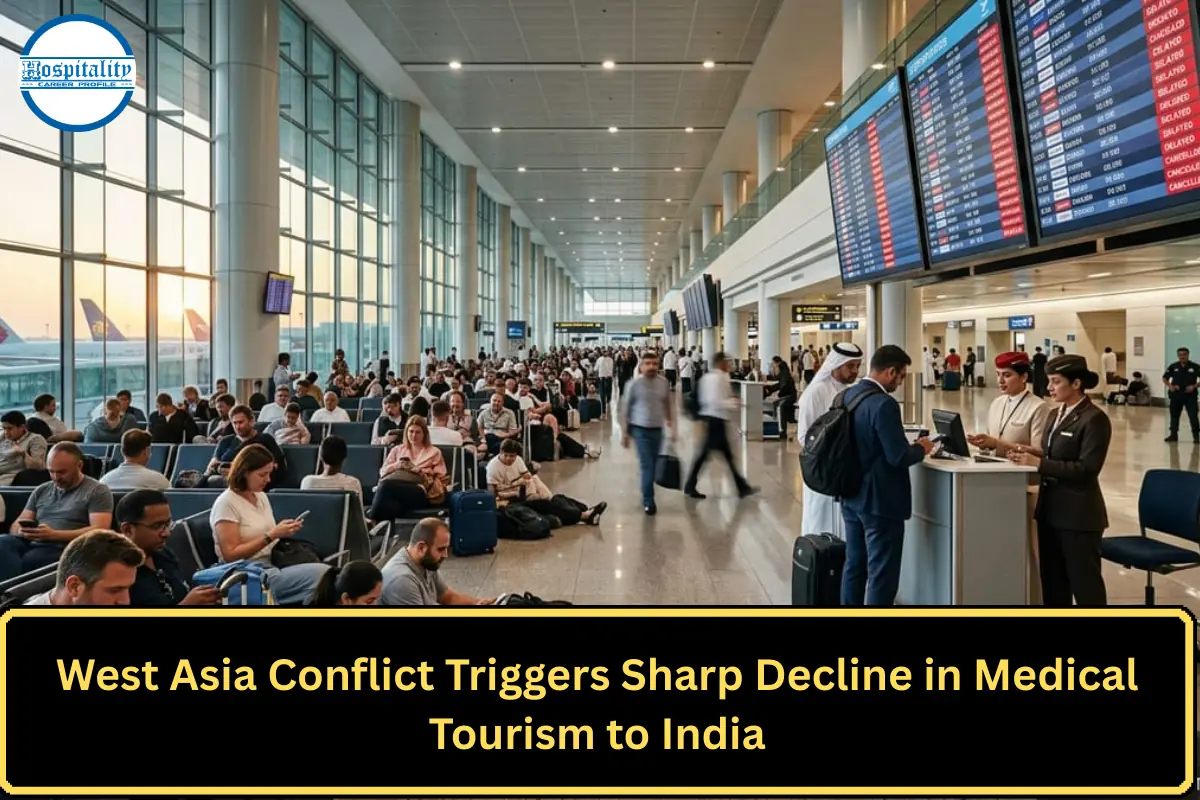
West Asia Conflict Disrupts Medical Tourism Flow to Indian Hospitals
The ongoing conflict in West Asia has significantly disrupted medical tourism to India, with hospitals reporting a sharp decline of up to 75 percent in overseas patient inflow in recent months, according to industry officials in March 2026. The downturn has affected major healthcare providers across the country that traditionally rely on international patients, particularly from countries in the Middle East.
Healthcare executives said the drop in patient numbers has been driven by travel restrictions, safety concerns, and economic uncertainty in conflict-affected regions. Patients from countries such as Iraq, Yemen, Oman, and other parts of West Asia have historically formed a substantial portion of India’s medical tourism market, seeking specialized treatments in fields such as cardiology, oncology, orthopedics, and organ transplants.
Hospitals Report Significant Revenue Impact
Private hospitals in major cities including Delhi, Mumbai, Chennai, and Hyderabad have reported noticeable declines in international patient footfall. For some hospitals, overseas patients contribute between 10 percent and 30 percent of total revenue, making the current drop a significant financial concern.
Hospital administrators indicated that the decline has been particularly severe in elective procedures, which are often planned in advance and require travel arrangements. Many patients have postponed or canceled treatments due to uncertainty surrounding travel safety and geopolitical developments.
Industry representatives noted that certain hospitals with a strong focus on international patients have experienced the most pronounced impact. These institutions have built specialized departments and services tailored to overseas patients, including language support, international patient coordinators, and customized treatment packages.
West Asia a Key Source Market for Medical Tourism
West Asia has long been one of the most important source regions for medical tourists visiting India. Patients from the region are drawn by the availability of advanced medical treatments, relatively lower costs compared to Western countries, and the presence of internationally accredited hospitals.
India’s healthcare sector has invested heavily in infrastructure and service delivery to attract international patients, positioning itself as a global destination for affordable and high-quality medical care. The current disruption has therefore raised concerns about the vulnerability of the sector to geopolitical developments.
Experts say the decline highlights the extent to which medical tourism is influenced by external factors beyond healthcare systems, including political stability, international relations, and travel connectivity.
Travel Disruptions and Patient Hesitation
Air travel disruptions have been a major contributing factor to the decline in patient inflows. Reduced flight connectivity, increased travel costs, and logistical challenges have made it more difficult for patients to plan medical trips to India.
In addition to logistical issues, safety concerns have also played a significant role. Patients and their families are often reluctant to travel during periods of geopolitical instability, even if their destination country remains unaffected.
Healthcare providers noted that medical tourism involves not only treatment but also accommodation, post-operative care, and extended stays, making stability and predictability essential for patient decision-making.
As a result, many patients are choosing to delay treatment or seek alternatives closer to their home countries where feasible.
Efforts to Diversify Patient Sources
In response to the downturn, hospitals and healthcare providers are exploring strategies to diversify their international patient base. Some institutions are increasing outreach efforts in regions such as Africa, Southeast Asia, and neighboring South Asian countries.
Digital platforms and telemedicine services are also being used to maintain engagement with international patients. Hospitals are offering remote consultations, follow-up care, and second opinions to patients who may not be able to travel immediately.
Industry experts suggest that expanding into new markets could help reduce dependence on any single region and improve resilience against geopolitical disruptions.
However, building new patient pipelines typically requires time, investment, and the establishment of trust, making it a longer-term strategy rather than an immediate solution.
Impact on Healthcare Ecosystem
The decline in medical tourism has broader implications for India’s healthcare ecosystem. International patients often contribute to higher-value procedures and advanced treatments, which support investments in technology, infrastructure, and specialized medical expertise.
A sustained reduction in international patient inflow could affect hospital revenues, staffing decisions, and expansion plans. Ancillary sectors such as medical travel facilitators, hospitality services, and local transportation providers are also likely to be impacted.
Industry observers noted that medical tourism is closely linked to multiple sectors beyond healthcare, including aviation, hospitality, and tourism, amplifying the overall economic effect of the downturn.
Government and Industry Response
Stakeholders in the healthcare industry are closely monitoring the situation and engaging with policymakers to assess potential measures that could support the sector. These may include efforts to improve visa processes, enhance international marketing, and strengthen India’s position as a safe and reliable destination for medical care.
Some experts have also suggested that bilateral agreements with specific countries could help facilitate patient movement once conditions stabilize. Such arrangements could include streamlined travel protocols and healthcare partnerships.
Industry bodies are expected to continue advocating for policies that support medical tourism and mitigate the impact of external disruptions.
Outlook for Recovery
While the current decline has raised concerns, healthcare providers remain cautiously optimistic about the long-term prospects of medical tourism in India. The country’s strong clinical capabilities, cost advantages, and established reputation are expected to support recovery once geopolitical conditions improve.
Experts believe that patient inflows could gradually recover as stability returns to affected regions and travel confidence is restored. However, the pace of recovery will depend on the duration and intensity of the ongoing conflict.
In the meantime, hospitals are focusing on operational adjustments and exploring alternative revenue streams to manage the impact of reduced international patient volumes.
The situation remains fluid, with industry stakeholders closely watching developments in West Asia and their implications for India’s medical tourism sector.