9 Million Names Dropped from Bengal Voter Rolls Ahead of Polls
Over 9 million voters removed from West Bengal rolls ahead of April elections, with 2.7 million cases unresolved, sparking political and legal controversy.
 SANJANA DUTTA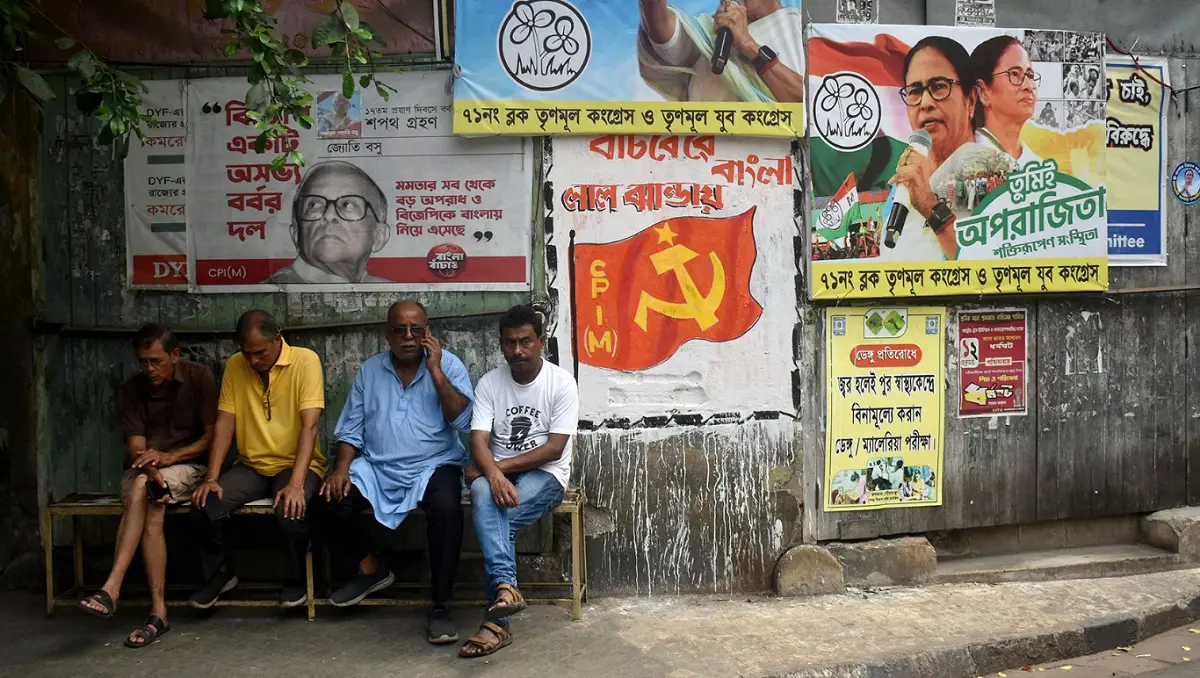
West Bengal Voter Roll Row: 9 Million Names Removed Ahead of Assembly Polls
KOLKATA, April 2026 — More than nine million voters have been removed from West Bengal’s electoral rolls ahead of the Assembly elections later this month, with 2.7 million cases still unresolved, triggering legal challenges and a sharp political confrontation.
The deletions follow a Special Intensive Revision (SIR) conducted by the Election Commission of India to eliminate duplicate, deceased, and ineligible entries. However, the scale of removals—covering nearly 12% of the state’s electorate—has raised serious concerns over voter disenfranchisement and electoral fairness.
Mass Deletions and Pending Cases Raise Alarm
Official data shows that out of West Bengal’s 76 million voters, around nine million names have been deleted. More than six million were categorised as deceased or absentee voters, while 2.7 million cases remain under review by special tribunals.
Many of the disputed cases involve voters who submitted documentation linking them to earlier electoral rolls, including the 2002 list. However, an AI-based verification system flagged “logical discrepancies,” leading to their classification as doubtful voters.
With electoral rolls now frozen and polling scheduled for April 23 and 29, most affected individuals are unlikely to regain voting rights before the election.
Supreme Court Allows Polls Amid Dispute
The matter has reached the Supreme Court, which allowed the Election Commission to proceed with the election process despite pending disputes.
Special tribunals set up to examine the contested cases are expected to deliver decisions only after polling concludes, leaving millions of voters in uncertainty.
Political analyst Sibaji Pratim Basu described the situation as unprecedented, noting that Indian elections have rarely been conducted with such a large number of voters’ eligibility unresolved.
Political Clash Intensifies Over Deletions
The Trinamool Congress (TMC), led by Chief Minister Mamata Banerjee, has alleged that the deletions disproportionately affect minority communities and could influence electoral outcomes.
The Bharatiya Janata Party (BJP), however, has defended the revision exercise. Union minister Sukanta Majumdar said the process was necessary to ensure that only eligible citizens remain on the rolls, rejecting allegations of bias.
The issue has further escalated with political rhetoric around migration and identification of “illegal infiltrators,” adding a sensitive dimension to the debate.
Disproportionate Impact Across Regions
Data indicates uneven impact across districts and communities. Muslims account for approximately 3.11 million of the deleted names—around 34%—compared to their 27% share of the state’s population.
Border districts such as Murshidabad, Malda, Nadia and North 24-Parganas reported significant deletions, particularly under the “discrepancy” category. In other regions, Dalit Hindu communities and migrant populations were also affected.
Urban areas saw notable reductions as well, with parts of Kolkata recording voter list cuts of over 25%, while Paschim Bardhaman district reported a decline of nearly 17%.
Concerns Over Electoral Integrity Grow
Experts have raised concerns over the reliance on automated verification systems in large-scale electoral revisions, warning of potential exclusion errors in demographically complex regions.
Anthropologist Mukulika Banerjee said voting is a fundamental democratic right, particularly for marginalised communities, and its denial carries significant social and political consequences.
With protests emerging and legal challenges ongoing, the controversy over voter rolls is expected to remain a central issue even beyond the election.
The outcome of the polls, in one of India’s most politically significant states, is likely to be closely scrutinised in the context of the ongoing dispute over voter eligibility.