WHO Launches Blended Learning Initiative to Strengthen Global Digital Health Capacities
WHO introduces a blended learning initiative to strengthen digital health capacities, focusing on workforce training and technology adoption worldwide.
 Akanksha jain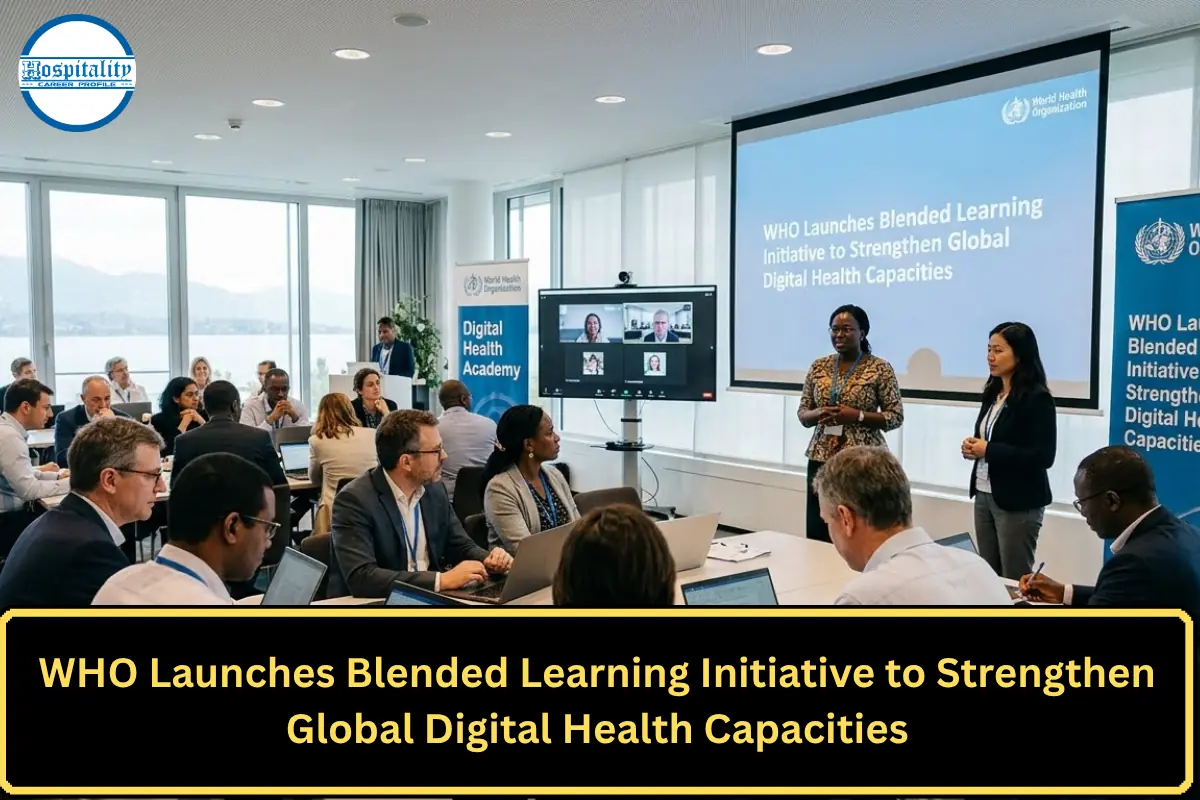
WHO Launches Blended Learning Initiative to Strengthen Global Digital Health Capacities
The World Health Organization (WHO) on March 24, 2026, announced a new blended learning initiative aimed at strengthening digital health capacities worldwide, focusing on equipping healthcare professionals with the skills needed to effectively use emerging technologies in healthcare systems. The program seeks to address gaps in digital health knowledge and improve the integration of technology into public health services across countries.
The initiative combines online and in-person training methods to deliver comprehensive education on digital health tools, data systems, and innovative healthcare solutions. WHO officials said the program is designed to support countries in building a skilled workforce capable of leveraging digital technologies to enhance healthcare delivery and improve patient outcomes.
Addressing Digital Skills Gaps in Healthcare
A key objective of the initiative is to address the growing gap in digital skills among healthcare professionals. As health systems increasingly adopt digital technologies such as electronic health records, telemedicine platforms, and data analytics tools, the need for trained personnel has become more urgent.
WHO officials highlighted that many healthcare workers lack the necessary training to effectively utilize these technologies, which can limit their potential impact. The blended learning approach aims to provide flexible and accessible training opportunities tailored to diverse learning needs and regional contexts.
By strengthening digital competencies, the initiative is expected to enhance the efficiency and effectiveness of healthcare services globally.
Blended Learning Approach
The program adopts a blended learning model that combines virtual learning modules with practical, hands-on training sessions. This approach allows participants to gain theoretical knowledge through online courses while also developing practical skills through in-person workshops and simulations.
Experts say that blended learning offers several advantages, including greater accessibility, scalability, and adaptability. It enables healthcare workers to learn at their own pace while still benefiting from interactive and experiential learning opportunities.
The initiative is designed to be adaptable to different healthcare settings, ensuring that it can be implemented effectively in both high-resource and low-resource environments.
Focus on Digital Health Technologies
The training program covers a wide range of digital health technologies, including electronic health records, telemedicine systems, mobile health applications, and data management platforms. Participants will also receive training in data analysis, cybersecurity, and digital governance.
WHO emphasized the importance of equipping healthcare workers with the skills to manage and analyze health data, which is increasingly critical for decision-making and policy development. The initiative also addresses the ethical and regulatory aspects of digital health, ensuring that participants understand issues related to data privacy and security.
By focusing on practical applications, the program aims to enable participants to implement digital solutions effectively within their healthcare systems.
Strengthening Health Systems Through Technology
Digital health technologies are playing a transformative role in healthcare systems, improving access to services, enhancing efficiency, and enabling better patient care. WHO officials noted that strengthening digital capacities is essential for building resilient health systems capable of responding to current and future challenges.
The initiative supports countries in integrating digital health into their national strategies, aligning with broader goals of universal health coverage and health system strengthening. By improving the use of technology, countries can enhance service delivery and achieve better health outcomes.
Experts believe that digital transformation will be a key driver of healthcare innovation in the coming years.
Global Collaboration and Knowledge Sharing
The initiative emphasizes collaboration and knowledge sharing among countries, institutions, and healthcare professionals. WHO is working with partners, including academic institutions and technology organizations, to develop and deliver the training programs.
Participants will have opportunities to share experiences, best practices, and lessons learned, fostering a collaborative approach to digital health development. This exchange of knowledge is expected to accelerate the adoption of effective solutions and promote innovation.
International cooperation is seen as critical for addressing common challenges and ensuring equitable access to digital health resources.
Challenges in Digital Health Implementation
Despite the potential benefits of digital health, several challenges remain in its implementation. These include limited infrastructure, lack of funding, and varying levels of digital literacy among healthcare workers and patients.
WHO officials acknowledged these challenges and emphasized the need for targeted interventions to address them. The blended learning initiative is designed to complement broader efforts to improve infrastructure and policy frameworks supporting digital health.
Addressing these barriers will be essential for maximizing the impact of digital technologies in healthcare.
Role in Emergency Preparedness and Response
Digital health tools have proven to be critical in managing public health emergencies, enabling real-time data collection, monitoring, and communication. The initiative includes training components focused on using digital technologies for emergency preparedness and response.
By enhancing digital capabilities, healthcare systems can improve their ability to detect and respond to health threats more effectively. This is particularly important in the context of global health challenges such as pandemics and disease outbreaks.
Experts stress that investing in digital health is essential for strengthening overall health security.
Future Outlook
The WHO’s blended learning initiative is expected to play a significant role in advancing digital health capacities globally. As countries continue to adopt digital technologies, the demand for skilled healthcare professionals will increase.
Ongoing investment in education and training will be critical to sustaining this transformation. The initiative provides a scalable model that can be expanded and adapted to meet evolving healthcare needs.
Experts believe that strengthening digital health capacities will contribute to more efficient, accessible, and resilient healthcare systems worldwide.
Conclusion
The WHO’s new blended learning initiative marks a significant step toward building a digitally skilled healthcare workforce, supporting global efforts to integrate technology into healthcare and improve health outcomes.