WHO Urges Stronger Political Commitment and Innovation to End Tuberculosis
The World Health Organization has called for stronger political commitment, increased innovation, and decentralized care to accelerate efforts to end tuberculosis globally.
 SANJANA DUTTA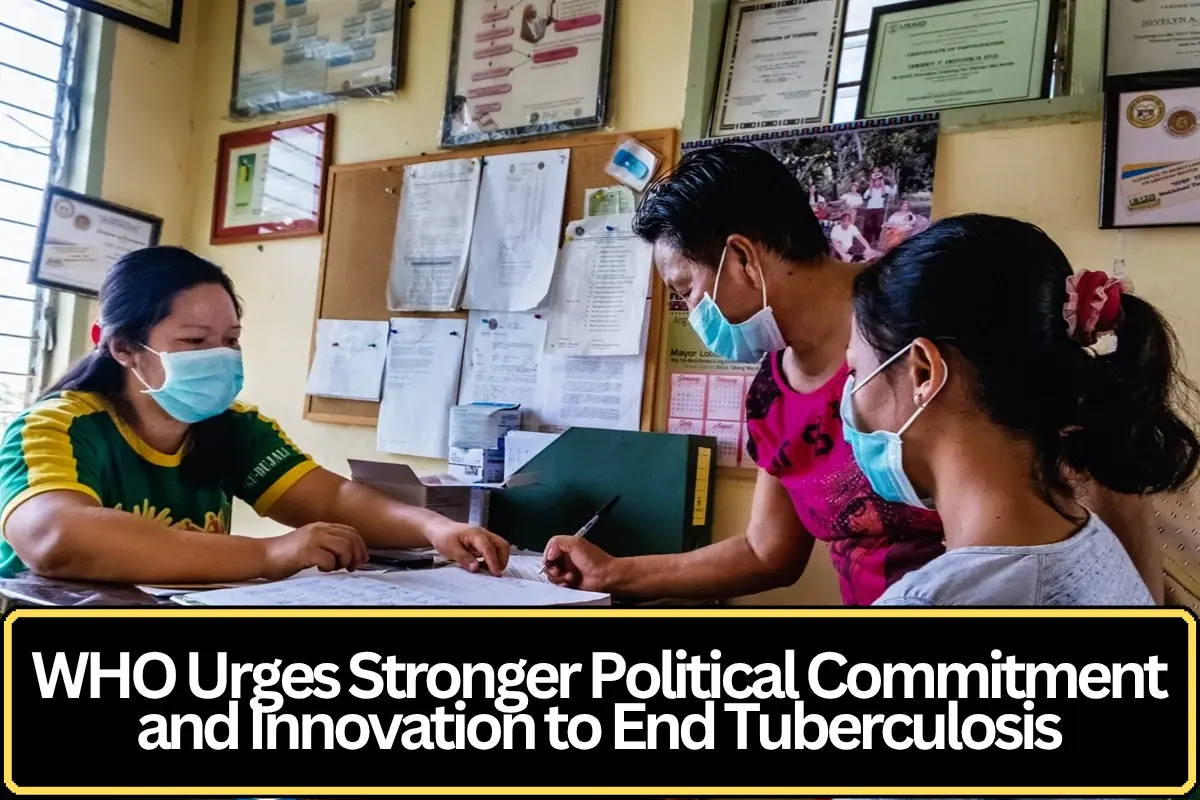
WHO Calls for Renewed Global Push to Eliminate Tuberculosis
The World Health Organization (WHO) on March 23, 2026, called for stronger political commitment, greater innovation, and expanded decentralized healthcare systems to accelerate global efforts to end tuberculosis (TB), one of the world’s deadliest infectious diseases. The appeal was made as part of renewed global health initiatives aimed at reducing TB-related deaths and infections, particularly in high-burden regions.
In its latest statement, WHO emphasized that despite decades of progress, tuberculosis continues to pose a major public health challenge, with millions of new cases reported annually. The organization warned that without intensified action, global targets to eliminate TB may remain out of reach.
Need for Stronger Political Commitment
WHO highlighted the critical role of political leadership in driving progress against tuberculosis. Governments were urged to prioritize TB control in national health agendas, allocate sufficient funding, and implement policies that ensure equitable access to diagnosis and treatment.
The organization stressed that political will is essential to overcoming systemic barriers, including underfunded health systems, lack of infrastructure, and social inequalities that contribute to the spread of the disease. Leaders were encouraged to adopt comprehensive strategies that integrate TB control into broader health and development frameworks.
According to WHO, sustained political commitment can significantly enhance coordination between governments, healthcare providers, and international partners, ultimately leading to more effective interventions.
Call for Innovation in Diagnosis and Treatment
Innovation was identified as a key pillar in the fight against tuberculosis. WHO called for increased investment in research and development to improve diagnostic tools, treatment regimens, and preventive measures.
New technologies, including rapid diagnostic tests and digital health solutions, have the potential to transform TB detection and management. WHO emphasized the importance of scaling up these innovations to ensure timely diagnosis and effective treatment, particularly in resource-limited settings.
The organization also underscored the need for shorter and more effective treatment courses, which can improve patient adherence and reduce the risk of drug resistance. Expanding access to such advancements is seen as crucial to achieving global TB elimination goals.
Decentralized Care as a Game Changer
A major focus of WHO’s call to action is the expansion of decentralized care models. By bringing TB services closer to communities, decentralized systems can improve access to care, especially in rural and underserved areas.
Community-based healthcare approaches enable early detection, reduce delays in treatment, and help prevent transmission. WHO noted that empowering local health workers and integrating TB services into primary healthcare systems are essential steps in this direction.
Decentralized care also allows for more patient-centered approaches, addressing social and economic barriers that often hinder treatment adherence. WHO believes that such models can significantly enhance the effectiveness of TB control programs.
Challenges in the Global Fight Against TB
Despite progress in recent years, the global fight against tuberculosis faces numerous challenges. These include insufficient funding, gaps in healthcare infrastructure, and the emergence of drug-resistant strains of the disease.
The COVID-19 pandemic further disrupted TB services worldwide, leading to delays in diagnosis and treatment. WHO warned that these setbacks have reversed some of the gains made in TB control, making it even more urgent to intensify efforts.
Social determinants such as poverty, malnutrition, and overcrowded living conditions continue to drive the spread of tuberculosis, particularly in low- and middle-income countries. Addressing these underlying factors is essential for long-term success.
Global Targets and Progress
WHO has set ambitious targets to end the global TB epidemic, including significant reductions in incidence and mortality rates by 2030. While progress has been made in some regions, overall advancement has been uneven.
The organization emphasized that achieving these targets will require coordinated action at national and international levels. This includes increased funding, stronger health systems, and enhanced collaboration among stakeholders.
WHO also called for improved data collection and monitoring systems to track progress and identify areas requiring additional focus. Reliable data is crucial for informed decision-making and effective policy implementation.
Role of International Collaboration
International cooperation remains a cornerstone of global TB control efforts. WHO urged countries, development partners, and global health organizations to work together in sharing resources, knowledge, and best practices.
Collaborative initiatives can help bridge gaps in funding and expertise, enabling more comprehensive and effective responses to the disease. WHO highlighted the importance of aligning efforts with global health strategies and ensuring that no region is left behind.
The organization also called for increased support for low-income countries, which often bear the highest burden of tuberculosis but have limited resources to combat it.
Public Awareness and Community Engagement
Raising public awareness about tuberculosis is another critical component of WHO’s strategy. Educating communities about the symptoms, transmission, and treatment of TB can encourage early diagnosis and reduce stigma associated with the disease.
Community engagement initiatives, including outreach programs and awareness campaigns, can play a significant role in improving health outcomes. WHO emphasized the need for culturally sensitive approaches that resonate with local populations.
Empowering individuals with knowledge and resources can help create a more proactive approach to TB prevention and treatment.
Outlook for the Future
WHO’s call for stronger political commitment, innovation, and decentralized care reflects the urgency of accelerating progress in the fight against tuberculosis. While challenges remain, the organization expressed optimism that coordinated efforts can lead to significant improvements.
Advances in technology, increased funding, and strengthened health systems have the potential to transform TB control efforts. However, sustained commitment and collaboration will be essential to achieving lasting results.
Experts believe that with the right strategies in place, it is possible to move closer to the goal of eliminating tuberculosis as a global public health threat.
Conclusion
The WHO’s appeal underscores the need for immediate and sustained action to combat tuberculosis through political leadership, innovation, and accessible healthcare.
Current Status
Global efforts to eliminate tuberculosis are ongoing, with WHO urging governments and stakeholders to intensify actions and implement comprehensive strategies to meet international targets.