WHO Recommends New Diagnostic Tools to Accelerate Global Efforts to End Tuberculosis
WHO recommends new diagnostic tools to improve early detection of tuberculosis and accelerate global efforts to eliminate the disease.
 Akanksha jain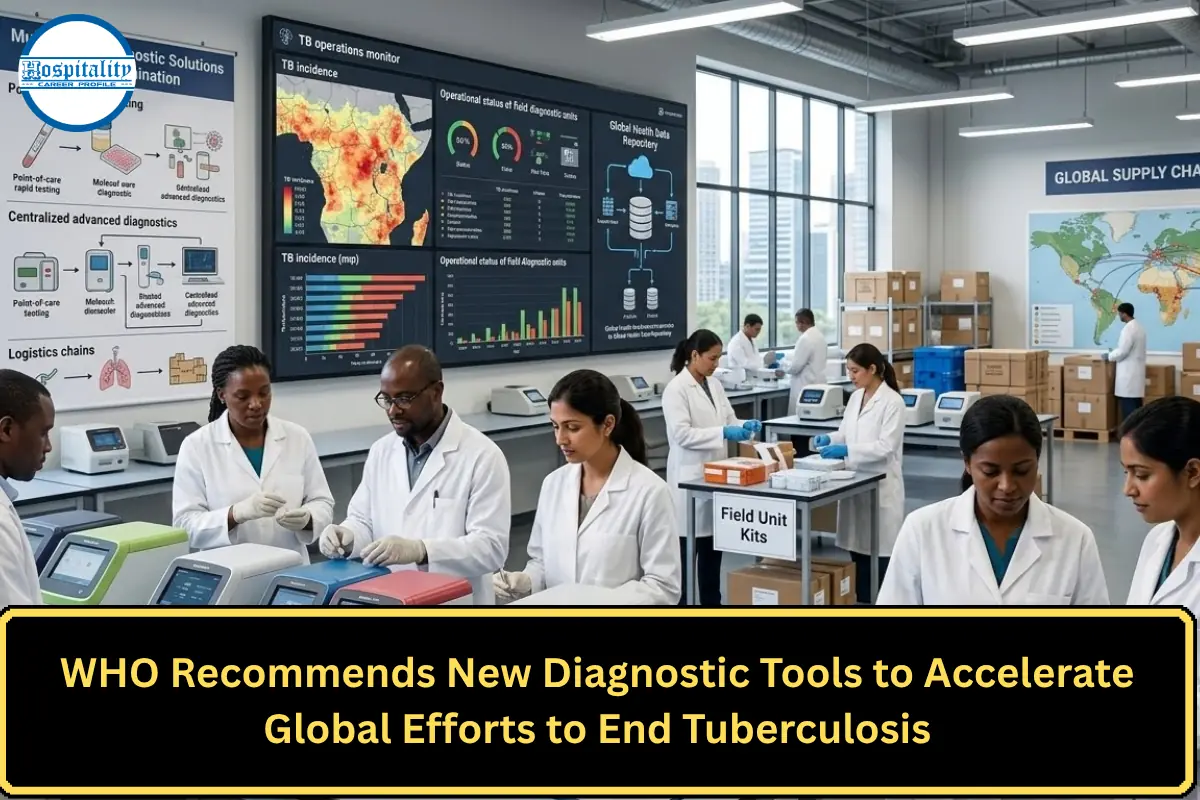
WHO Recommends New Diagnostic Tools to Accelerate Global Efforts to End Tuberculosis
The World Health Organization (WHO) on March 24, 2026, recommended the adoption of new diagnostic tools to improve early detection of tuberculosis (TB), aiming to strengthen global efforts to eliminate one of the world’s deadliest infectious diseases. The guidance targets countries with high TB burdens and emphasizes faster, more accurate, and accessible testing methods to reduce transmission and improve treatment outcomes.
The updated recommendations come as part of WHO’s broader strategy to end TB, a disease that continues to affect millions of people each year despite being preventable and curable. Health officials say that delayed diagnosis remains a major barrier to controlling the spread of TB, particularly in low- and middle-income countries.
Need for Improved TB Detection
Early and accurate diagnosis is critical in controlling tuberculosis, as untreated individuals can continue to spread the infection within communities. WHO officials highlighted that many cases remain undiagnosed or are detected too late, leading to higher mortality rates and ongoing transmission.
The new diagnostic tools are designed to address these challenges by providing faster results and improved sensitivity, particularly in detecting cases that are harder to diagnose using conventional methods.
Experts say that strengthening diagnostic capacity is essential to closing the gap between estimated and reported TB cases worldwide.
Advancements in Diagnostic Technologies
The newly recommended tools include advanced molecular tests and digital diagnostic solutions that can detect TB bacteria more accurately and in shorter timeframes. These technologies are capable of identifying drug-resistant strains, enabling healthcare providers to tailor treatment strategies more effectively.
Unlike traditional methods, which can take days or weeks to confirm a diagnosis, newer tools can deliver results within hours. This rapid turnaround is expected to significantly improve patient management and reduce delays in initiating treatment.
WHO emphasized that integrating these tools into national healthcare systems will be key to maximizing their impact.
Focus on Accessibility and Implementation
Ensuring access to these diagnostic tools remains a major priority, particularly in regions with limited healthcare infrastructure. WHO is urging governments and partners to invest in scaling up diagnostic services and making them available at primary healthcare levels.
Efforts are also being made to reduce costs and improve supply chains to ensure that testing technologies reach underserved populations. Mobile and community-based diagnostic approaches are being explored to expand coverage in remote areas.
Experts note that accessibility will determine the success of these innovations in reducing the global TB burden.
Addressing Drug-Resistant TB
Drug-resistant tuberculosis continues to pose a significant challenge to global health efforts. The new diagnostic tools are equipped to detect resistance patterns, allowing for more effective and targeted treatment regimens.
Early identification of drug resistance can prevent the misuse of standard treatments and reduce the spread of resistant strains. WHO officials stress that integrating drug resistance testing into routine diagnostics is essential for improving treatment success rates.
This approach is expected to enhance the overall effectiveness of TB control programs.
Global Burden of Tuberculosis
Tuberculosis remains one of the leading causes of death from infectious diseases worldwide, with millions of new cases reported annually. The disease disproportionately affects vulnerable populations, including those with limited access to healthcare, malnutrition, and weakened immune systems.
Despite progress in recent years, the global fight against TB has faced setbacks due to healthcare disruptions and resource constraints. WHO’s latest recommendations aim to reinvigorate efforts and accelerate progress toward elimination goals.
Health experts emphasize that sustained commitment and investment are required to address the ongoing challenges.
Integration with Broader Health Systems
WHO is encouraging countries to integrate TB diagnostics into broader health systems to improve efficiency and reach. This includes linking TB testing with other healthcare services such as HIV programs, primary care, and community health initiatives.
Integrated approaches can enhance case detection, streamline patient care, and optimize resource utilization. Digital health technologies are also being leveraged to improve data collection, monitoring, and coordination across healthcare networks.
Such integration is seen as a critical step toward building more resilient healthcare systems.
Role of International Collaboration
Global collaboration is central to the success of TB elimination efforts. WHO is working with governments, international organizations, and private sector partners to support the adoption and implementation of new diagnostic tools.
Funding, technical assistance, and knowledge sharing are key components of these collaborative efforts. Experts highlight that coordinated action can accelerate progress and ensure that innovations reach the populations that need them most.
International partnerships are expected to play a vital role in overcoming resource and capacity constraints.
Challenges in Implementation
While the new diagnostic tools offer significant advantages, challenges remain in their implementation. These include limited infrastructure, shortage of trained personnel, and financial constraints in many high-burden countries.
WHO is calling for increased investment in healthcare systems, including training programs and infrastructure development, to support the effective use of these technologies.
Addressing these challenges will be essential for translating technological advancements into tangible health outcomes.
Future Outlook
The introduction of advanced diagnostic tools marks a significant step forward in the global fight against tuberculosis. Experts believe that widespread adoption of these technologies can dramatically improve early detection rates and reduce transmission.
Continued innovation, combined with strong policy support and investment, is expected to drive progress toward ending TB as a public health threat. WHO’s recommendations provide a roadmap for countries to strengthen their diagnostic capabilities and accelerate elimination efforts.
The focus on early detection and targeted treatment is likely to reshape TB control strategies in the coming years.
Conclusion
WHO’s recommendation of new diagnostic tools underscores the urgent need for faster and more accurate TB detection, with global adoption seen as key to reducing disease burden and advancing efforts to eliminate tuberculosis worldwide.