WHO Welcomes IOM into Global Digital Health Certification Network to Strengthen Cross-Border Health Systems
WHO has welcomed the International Organization for Migration into its Global Digital Health Certification Network to enhance cross-border health data systems and digital health collaboration.
 Akanksha jain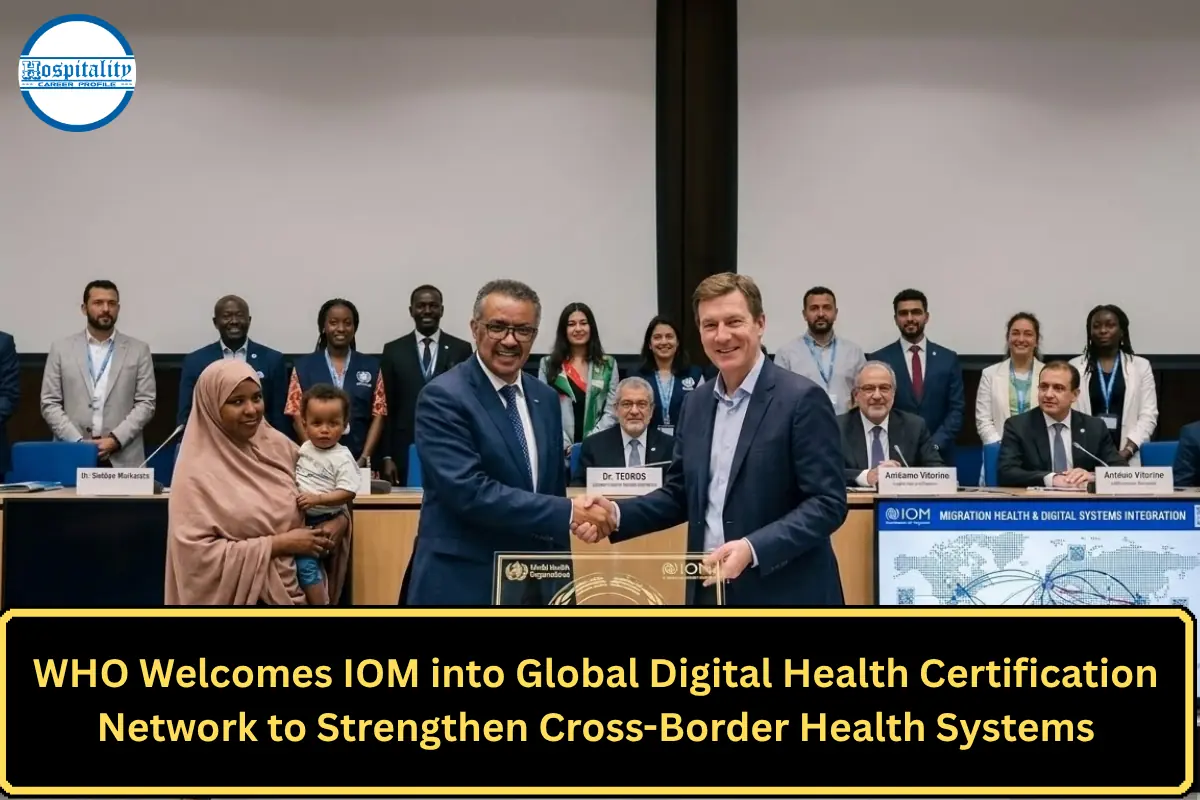
WHO Welcomes IOM into Global Digital Health Certification Network to Strengthen Cross-Border Health Systems
The World Health Organization (WHO) announced on March 26, 2026, that it has welcomed the International Organization for Migration (IOM) into its Global Digital Health Certification Network (GDHCN), a move aimed at enhancing cross-border health data exchange and strengthening digital health systems worldwide. The development reflects growing international collaboration to improve healthcare access, particularly for mobile populations such as migrants and refugees.
The inclusion of IOM into the network is expected to facilitate better coordination of health information systems, enabling countries to securely share verified health data across borders. This initiative is particularly relevant in the context of increasing global mobility and the need for efficient health certification mechanisms in managing public health risks.
Strengthening Global Digital Health Infrastructure
The Global Digital Health Certification Network was established by the WHO to support the interoperability of digital health systems, allowing countries to exchange trusted health information such as vaccination records and test results. By integrating IOM into the network, WHO aims to expand its reach and effectiveness in addressing the healthcare needs of migrants and displaced populations.
Digital health certification systems gained prominence during the COVID-19 pandemic, when countries required reliable mechanisms to verify vaccination and testing status. The network builds on these experiences to create a more resilient and scalable global framework for health data exchange.
Officials noted that the collaboration would enhance the ability of health systems to respond to future public health emergencies by improving the flow of critical information.
Focus on Migrant and Refugee Health
The inclusion of IOM underscores the importance of addressing the unique healthcare challenges faced by migrants and refugees. These populations often encounter barriers to accessing healthcare services, including a lack of documentation, language differences, and limited integration into national health systems.
By participating in the GDHCN, IOM can support the development of standardized digital health records that are portable and recognized across borders. This will enable migrants to carry their health information with them, ensuring continuity of care as they move between countries.
Experts say that improving access to reliable health data for mobile populations can lead to better health outcomes and more efficient use of healthcare resources.
Enhancing Data Security and Trust
A key component of the Global Digital Health Certification Network is ensuring the security and privacy of health data. WHO has emphasized that the network is built on principles of data protection, transparency, and user control, allowing individuals to manage their own health information.
The integration of IOM is expected to strengthen trust in digital health systems by promoting standardized protocols and verification mechanisms. This is particularly important in cross-border contexts, where differences in regulatory frameworks can create challenges for data sharing.
Officials highlighted that maintaining high standards of data security is essential for the success of global digital health initiatives.
Global Collaboration and Policy Alignment
The partnership between WHO and IOM reflects broader efforts to align global health policies and promote international cooperation. By bringing together key stakeholders, the network aims to create a unified approach to digital health certification that can be adopted by countries worldwide.
Collaboration between international organizations is seen as critical in addressing complex health challenges that transcend national boundaries. The integration of IOM into the network is expected to facilitate knowledge sharing and the adoption of best practices in digital health.
Policymakers are increasingly recognizing the need for coordinated approaches to healthcare delivery in an interconnected world.
Implications for Public Health Systems
The expansion of the Global Digital Health Certification Network has significant implications for public health systems. By enabling seamless exchange of health information, the network can improve disease surveillance, support vaccination campaigns, and enhance emergency response capabilities.
Countries participating in the network will benefit from improved access to reliable health data, allowing for more informed decision-making and better resource allocation. This is particularly important in managing outbreaks of infectious diseases and ensuring timely interventions.
The initiative also supports efforts to achieve universal health coverage by making healthcare services more accessible and efficient.
Challenges and Future Development
Despite the progress, challenges remain in implementing global digital health systems. These include differences in technological infrastructure, regulatory environments, and levels of digital literacy across countries. Ensuring equitable access to digital health tools will be critical to the success of the network.
WHO has called for continued investment in digital health infrastructure and capacity building to address these challenges. Training healthcare workers and improving public awareness of digital health systems are also key priorities.
Future developments are expected to focus on expanding the network’s coverage and integrating additional stakeholders, including governments, healthcare providers, and technology partners.
Role of Technology in Healthcare Transformation
The integration of digital technologies into healthcare systems is transforming how services are delivered and managed. Tools such as electronic health records, telemedicine, and mobile health applications are enabling more efficient and patient-centered care.
The Global Digital Health Certification Network represents a step toward creating a more connected and interoperable global health ecosystem. By leveraging technology, countries can improve healthcare delivery and respond more effectively to emerging health challenges.
Experts believe that continued innovation in digital health will play a crucial role in shaping the future of global healthcare.
Conclusion
The WHO’s decision to welcome IOM into the Global Digital Health Certification Network marks a significant step in strengthening international collaboration and enhancing digital health systems, as efforts continue to improve cross-border healthcare access and data exchange.