World Bank Signs €1.67B INRAIL Deal With Türkiye
The World Bank signs a €1.67 billion deal with Türkiye for the INRAIL project, boosting freight capacity and strengthening global trade corridors.
 Tripti Srivastava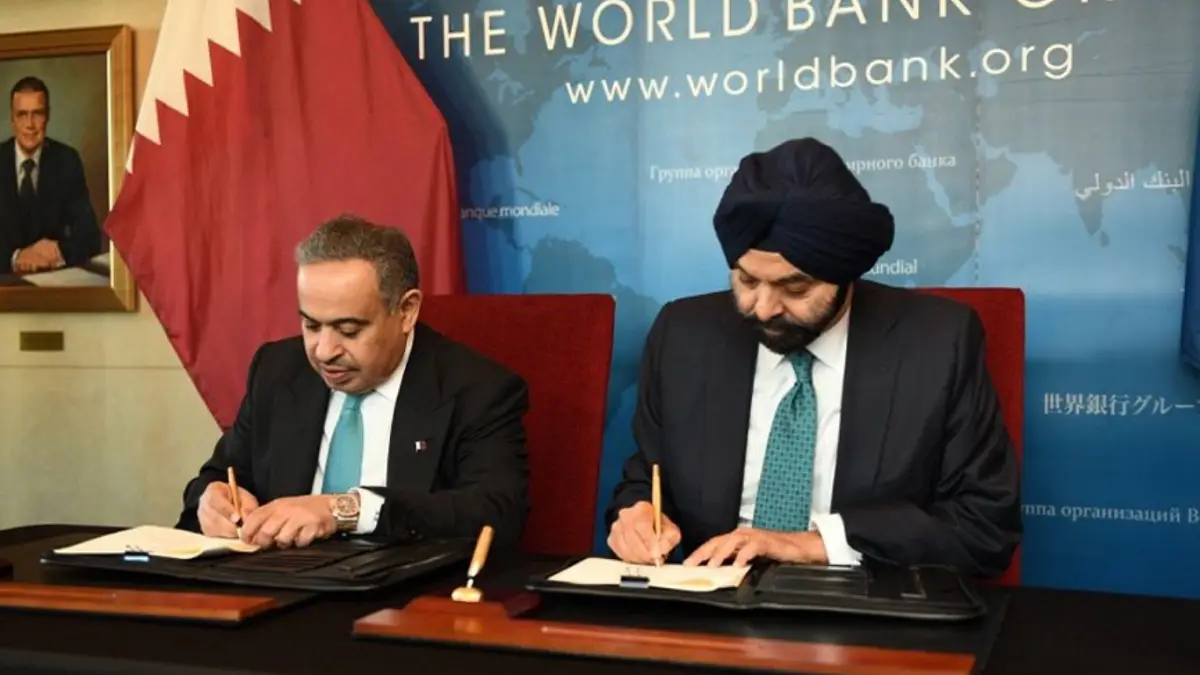
The World Bank has signed a €1.67 billion financing agreement with Türkiye for the Istanbul Northern Railway Crossing Project (INRAIL), marking one of the largest infrastructure approvals in its history, officials said on April 15.
The agreement, described as the third-largest project ever approved by the institution, formally moves the INRAIL initiative into its implementation phase. The deal underscores global investor confidence in Türkiye’s infrastructure strategy and its role in international trade connectivity.
The INRAIL project carries a total estimated cost of $8.1 billion, with approximately 83% of the funding secured from international financial institutions. The €1.67 billion commitment from the World Bank represents a significant portion of this financing structure.
Treasury and Finance Minister Mehmet Şimşek stated during the signing ceremony in Washington, D.C., that the agreement reflects strong international backing for Türkiye’s long-term infrastructure ambitions.
The project is expected to adhere to global environmental and operational standards, aligning with international financing requirements and reinforcing investor trust in large-scale infrastructure developments in the region.
Boosting Freight Capacity Across Strategic Corridor
The INRAIL project involves the construction of a 127-kilometer electrified, high-capacity railway line that will pass through the Yavuz Sultan Selim Bridge, addressing a major logistical bottleneck in transcontinental transport routes.
Once operational, the railway is projected to increase annual freight capacity through the Bosphorus from 3 million tons to 50 million tons. This expansion is expected to significantly enhance the efficiency of goods movement between Asia and Europe.
The project is positioned as a critical component of the Middle Corridor, currently considered one of the fastest trade routes between Beijing and London, with a transit time of approximately 18 days.
Beyond its domestic impact, the INRAIL project is designed to reinforce Türkiye’s position as a key logistics hub linking major global markets. The railway will integrate multiple strategic routes, including the Middle Corridor, the Development Road connecting Iraq to Europe, and the Türkiye-Europe Corridor.
According to the World Bank, the project will improve cross-border connectivity and support more efficient trade flows across Eurasia. The initiative is also expected to enhance supply chain resilience by providing an alternative route to traditional maritime pathways.
The development aligns with broader global efforts to diversify trade corridors and reduce dependency on congested shipping routes, particularly in the context of rising geopolitical and economic uncertainties.
Economic and Employment Impact
The INRAIL project is expected to generate more than 400,000 high-income jobs across various sectors, including construction, logistics, manufacturing, and services. The scale of employment creation reflects the project’s role as a major economic driver within the region.
In addition to job creation, the railway is anticipated to support industrial growth by improving transportation efficiency for key sectors such as agriculture and manufacturing. Enhanced logistics infrastructure is expected to reduce costs and improve market access for businesses.
The project also incorporates a carbon-neutral design for freight transport, aligning with global sustainability goals and reducing the environmental impact of large-scale logistics operations.
The INRAIL initiative represents a broader effort by Türkiye to position itself as a central node in global trade networks. By addressing critical infrastructure gaps, the country aims to strengthen its role in facilitating trade between Asia and Europe.
The project’s scale and international backing highlight Türkiye’s increasing integration into global financial and infrastructure systems. It also reflects a growing trend of multilateral cooperation in funding large-scale development projects.
As implementation begins, the INRAIL project is expected to play a pivotal role in shaping regional trade dynamics and supporting long-term economic development through enhanced connectivity and infrastructure capacity.