Xi Jinping Calls for Stronger Political Loyalty in Chinese Military as Anti-Corruption Purge Expands
Chinese President Xi Jinping has urged stronger political loyalty within the military as China intensifies its anti-corruption campaign, reinforcing party control over the armed forces and advancing defense modernization.
 SANJANA DUTTA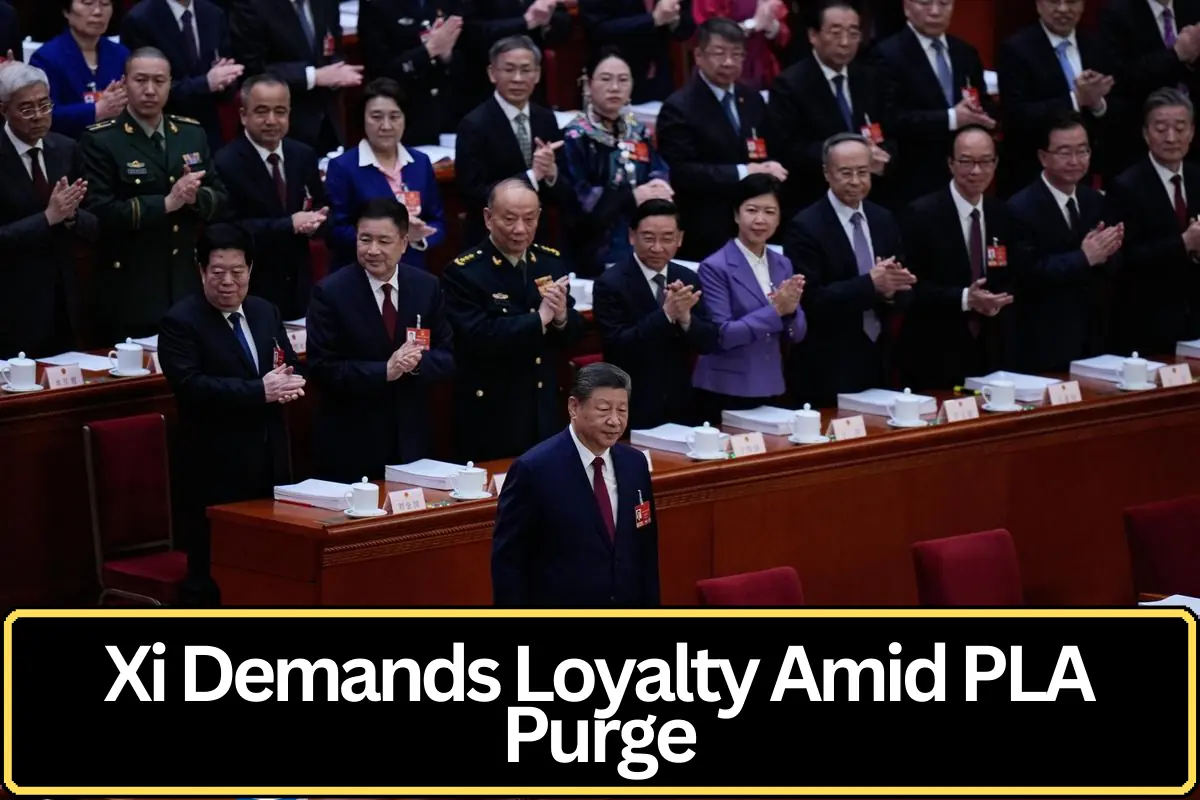
Xi Jinping Emphasizes Political Loyalty in China’s Armed Forces
Chinese President Xi Jinping has called on the country’s armed forces to strengthen their political loyalty to the ruling Communist Party as China continues to expand its anti‑corruption campaign within the military. The message comes at a time when Beijing is intensifying efforts to ensure discipline, transparency, and ideological unity across its defense establishment.
The Chinese leadership has repeatedly stressed that political loyalty is a fundamental requirement for members of the People’s Liberation Army. According to officials, maintaining unwavering commitment to the Communist Party is essential for safeguarding national security and ensuring that the military remains aligned with the country’s strategic priorities.
Xi’s latest remarks highlight the government’s determination to reinforce party authority over the armed forces while pursuing an ambitious agenda of military modernization and institutional reform.
Anti-Corruption Campaign Expands Within the Military
China’s anti‑corruption drive, which has targeted various sectors of government and state institutions, has increasingly focused on the military in recent years. Authorities have launched investigations into several senior officers and defense officials suspected of corruption, misconduct, or abuse of power.
The campaign aims to strengthen accountability within the armed forces and ensure that military resources are managed responsibly. Chinese officials have argued that corruption not only undermines public trust but also weakens operational effectiveness and readiness within the defense system.
By extending anti‑graft investigations to high‑ranking military figures, the leadership seeks to send a clear message that discipline and integrity must be upheld at every level of the military hierarchy.
Impact on Military Leadership
The widening anti‑corruption purge has led to the removal or investigation of several senior commanders, creating significant changes within the leadership structure of the People’s Liberation Army. Analysts say such actions are intended to reinforce the authority of central leadership while ensuring that key positions are held by individuals who demonstrate both professional competence and political reliability.
These developments have reshaped the internal dynamics of the military and reinforced the importance of strict oversight within defense institutions.
Observers note that anti‑corruption campaigns often serve multiple purposes, including strengthening institutional discipline, improving governance, and consolidating leadership authority.
Party Control as a Central Principle of China’s Military System
China’s military operates under a system in which the Communist Party exercises direct leadership over the armed forces. Unlike in many countries where the military reports primarily to state institutions, the People’s Liberation Army is regarded as the military arm of the Communist Party.
This structure places political loyalty at the core of military operations and organizational culture. Xi Jinping has consistently emphasized that the armed forces must remain absolutely loyal to the party and its leadership.
According to Chinese officials, maintaining this relationship ensures that the military operates in accordance with national policy objectives and contributes to long‑term political stability.
Ideological Training and Discipline
In order to strengthen political alignment, the Chinese military has expanded ideological education programs designed to reinforce loyalty and commitment among service members. Training sessions often focus on party history, national development goals, and the strategic vision outlined by the central leadership.
Military academies and training institutions also incorporate political education into their curriculum, emphasizing the role of discipline and unity in maintaining an effective defense system.
Supporters of these programs argue that ideological cohesion helps ensure that the armed forces remain unified and focused on national priorities.
Modernization of the People’s Liberation Army
China has been investing heavily in modernizing its armed forces over the past decade. The government has launched extensive reforms aimed at transforming the People’s Liberation Army into a technologically advanced and highly capable military force.
Modernization efforts include the development of advanced weapons systems, improvements in cyber warfare capabilities, expansion of naval power, and the integration of space‑based technologies into military operations.
These initiatives reflect China’s ambition to strengthen its defense capabilities and prepare for emerging security challenges in an increasingly complex global environment.
Technological Innovation in Defense
One of the key components of China’s military modernization strategy is investment in emerging technologies such as artificial intelligence, hypersonic weapons, and autonomous systems. These technologies are expected to play a major role in future warfare and strategic competition.
Research institutions, defense laboratories, and private technology firms are all contributing to the development of advanced military capabilities.
Chinese leaders believe that technological innovation will enable the armed forces to operate more efficiently while maintaining a strong defensive posture.
Restructuring the Military Command System
In addition to technological upgrades, China has undertaken significant structural reforms within the military command system. The objective is to create a more streamlined and integrated defense organization capable of conducting joint operations across multiple domains.
These reforms have included reorganizing command structures, establishing new theater commands, and enhancing coordination between different branches of the armed forces.
Military planners argue that such changes are necessary to improve operational efficiency and adapt to the evolving nature of modern warfare.
Joint Operations and Strategic Flexibility
The shift toward joint operations represents a major transformation in China’s military doctrine. Under this approach, land, sea, air, cyber, and space forces are expected to work closely together during complex missions.
This integrated strategy is designed to enhance China’s ability to respond quickly to security challenges and conduct coordinated military operations when required.
Analysts believe that these reforms are gradually reshaping the operational capabilities of the People’s Liberation Army.
Regional and Global Implications
China’s ongoing military reforms and anti‑corruption efforts have attracted significant attention from governments and defense experts around the world. As the country continues to expand its military capabilities, international observers are closely monitoring developments within the People’s Liberation Army.
China’s growing naval presence, advancements in missile technology, and expansion of defense infrastructure have all contributed to increased scrutiny of its strategic intentions.
While Chinese officials emphasize that the country’s military development is defensive in nature, the scale of modernization has prompted broader discussions about its potential impact on regional security dynamics.
Strategic Competition and Diplomacy
The modernization of China’s military comes amid a period of evolving geopolitical relationships and strategic competition among major powers. Defense policy decisions in Beijing are therefore often viewed through the lens of broader international developments.
At the same time, China continues to participate in international peacekeeping missions and security dialogues aimed at promoting stability and cooperation.
Balancing military strength with diplomatic engagement remains an important aspect of China’s broader foreign policy strategy.
Strengthening Discipline and Institutional Integrity
The leadership in Beijing has consistently argued that a strong and disciplined military is essential for national security. Anti‑corruption initiatives and political oversight are therefore seen as critical tools for maintaining institutional integrity.
Officials believe that eliminating corruption and ensuring accountability will improve operational efficiency while strengthening public confidence in the armed forces.
These efforts are also intended to foster a professional culture within the military that prioritizes responsibility, transparency, and adherence to regulations.
Long-Term Vision for the Military
China has set ambitious long‑term goals for its armed forces, including the objective of transforming the People’s Liberation Army into a world‑class military by the middle of the 21st century. Achieving this vision will require sustained investment in technology, training, and institutional reforms.
Political loyalty, according to Chinese leaders, will remain a cornerstone of this transformation. By ensuring that the military remains firmly aligned with the Communist Party’s leadership, the government aims to create a stable foundation for future defense development.
As reforms continue and modernization progresses, the relationship between political authority and military power is likely to remain a defining feature of China’s defense strategy.
Future Outlook for China’s Military Reforms
The latest emphasis on political loyalty underscores the broader direction of China’s military reforms. By combining anti‑corruption measures, structural changes, and technological advancements, Beijing is attempting to build a more disciplined and capable defense force.
Observers believe that the success of these reforms will depend on the leadership’s ability to maintain stability within the military while continuing to implement complex institutional changes.
The developments also highlight the significant role that the armed forces play in China’s long‑term national strategy.
As the country continues to expand its global influence and strengthen its defense capabilities, the emphasis on loyalty, discipline, and modernization will likely remain central themes within China’s military policy for years to come.