Xi Meets Taiwan Opposition, Reaffirms Anti-Independence Stance
China’s Xi Jinping meets Taiwan opposition leader, stresses peace amid global conflicts, and reiterates Beijing’s opposition to Taiwan independence.
 mansi labhde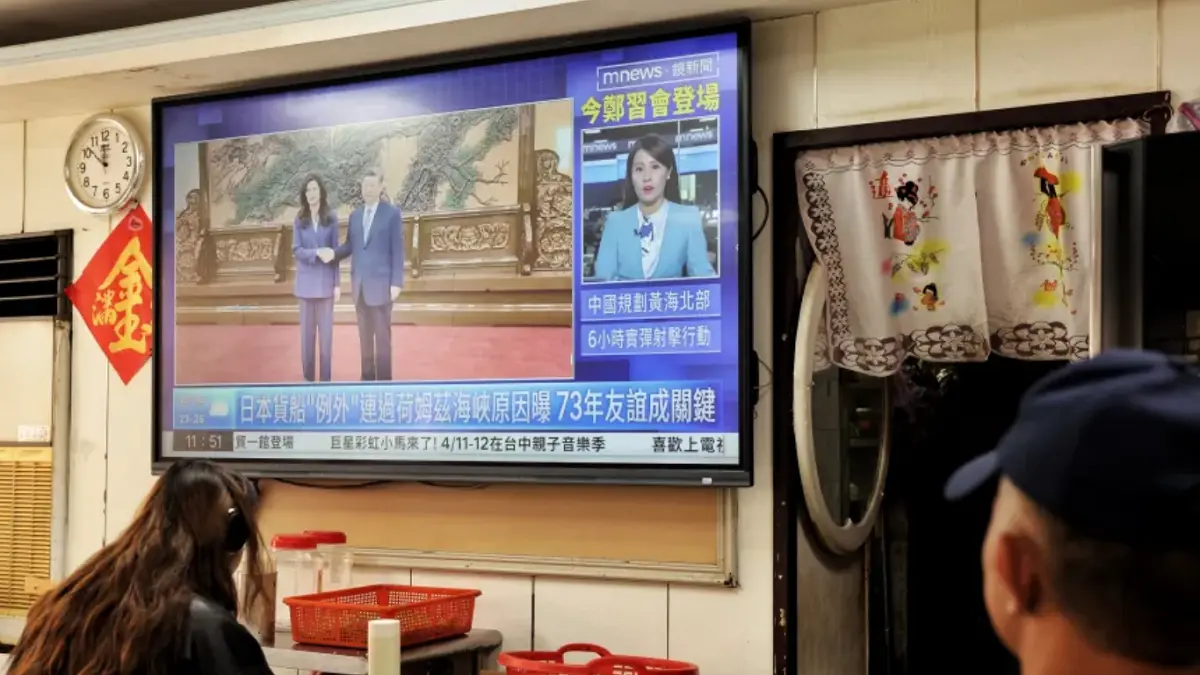
China’s President Xi Jinping held a rare meeting with Taiwan opposition leader Cheng Li-wun, emphasizing the importance of peace amid global conflicts while reiterating Beijing’s firm opposition to Taiwan independence.
Rare High-Level Engagement
The meeting, held at the Great Hall of the People in Beijing, marks the first such engagement between Chinese leadership and Taiwan’s Kuomintang (KMT) in a decade. The visit comes at a critical time, ahead of a planned summit between China and the United States, where Taiwan is expected to be a key issue.
Xi highlighted global instability, stating that “today’s world is far from peaceful,” and underscored the need to preserve peace across the Taiwan Strait.
China’s Position on Taiwan
Reaffirming Beijing’s long-standing stance, Xi stressed that both sides of the Taiwan Strait belong to “one family” and called for cooperation based on opposition to Taiwan independence. China continues to claim Taiwan as its territory and has not ruled out the use of force to achieve reunification.
In recent years, China has intensified military drills and pressure around Taiwan, increasing concerns about potential conflict in the region.
Role of Taiwan’s Political Parties
Cheng Li-wun, representing the Kuomintang (KMT), expressed hope that engagement between the two sides would reduce tensions and prevent the Taiwan Strait from becoming a flashpoint or a platform for external intervention.
The KMT favors closer ties with Beijing and supports the “1992 Consensus,” which acknowledges the concept of “one China” with differing interpretations. In contrast, Taiwan’s ruling Democratic Progressive Party (DPP) rejects Beijing’s sovereignty claims and does not endorse this framework.
Geopolitical Context and US Factor
The meeting comes amid heightened geopolitical tensions involving the United States. Taiwan remains a central issue in US-China relations, particularly ahead of the anticipated meeting between Xi Jinping and US President Donald Trump.
Washington maintains unofficial ties with Taiwan and continues to supply arms for its defense. A recent $11 billion arms deal between the US and Taiwan drew strong criticism from Beijing.
Statements from US leadership suggesting Taiwan should increase payments for its defense and shift semiconductor production to the US have raised concerns within Taiwan about long-term strategic commitments.
Historical and Strategic Significance
The Kuomintang historically governed mainland China before relocating to Taiwan in 1949 after being defeated by Communist forces. Its continued engagement with Beijing reflects a contrasting approach to cross-strait relations compared to the current Taiwanese government.
Analysts suggest China may be leveraging political divisions within Taiwan while also responding to broader global developments, including energy security concerns and shifting alliances.
Outlook
While the meeting has been described as a “historic journey for peace,” underlying tensions remain significant. The Taiwan issue continues to be a sensitive and central element in regional and global geopolitics, with implications for security, trade, and international diplomacy.