North Korea Tests Missiles with Cluster Bomb Warheads
North Korea confirms missile tests with cluster-bomb warheads, raising tensions with South Korea amid ongoing military and nuclear expansion efforts.
 mansi labhde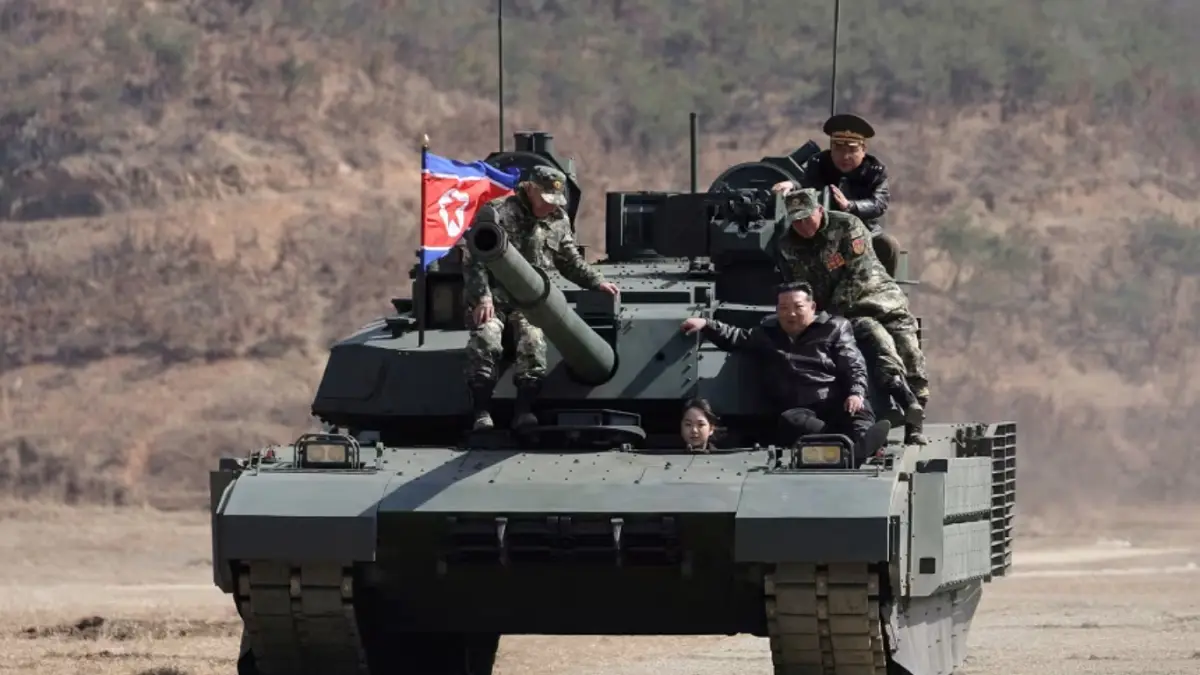
North Korea has confirmed that its recent series of weapons tests included ballistic missiles equipped with cluster-bomb warheads, signaling a continued push to strengthen its nuclear-capable arsenal amid rising tensions with South Korea.
Missile Tests and New Weapon Systems
According to North Korea’s state-run Korean Central News Agency (KCNA), the tests were conducted over three days starting Monday. The demonstrations included multiple advanced weapons systems such as anti-aircraft weapons, electromagnetic systems, and carbon-fiber bombs.
The announcement followed reports from South Korea’s military, which detected multiple missile launches from North Korea’s eastern coastal region. These launches marked the second round of missile activity within two days.
Details of Missile Capabilities
KCNA reported that the tests featured cluster-munition warheads mounted on the nuclear-capable Hwasong-11 ballistic missiles. These missiles are designed for low-altitude, maneuverable flight, making them more difficult to intercept by missile defense systems.
North Korean authorities claimed that the missiles, when equipped with such warheads, could destroy targets covering an area of approximately 6.5 to 7 hectares with high intensity. However, South Korea’s military has not independently verified these claims.
South Korea’s Response
South Korea’s Joint Chiefs of Staff stated that the missiles launched on Wednesday traveled distances ranging from 240 to 700 kilometers before landing in the sea. An additional projectile was detected from an area near Pyongyang on Tuesday.
South Korean officials have yet to comment directly on North Korea’s claims regarding the use of cluster-munition warheads.
Rising Inter-Korean Tensions
The recent tests highlight ongoing tensions between North and South Korea, diminishing prospects for renewed diplomatic engagement. In a statement, North Korea’s Foreign Ministry described South Korea as its “most hostile enemy state” and criticized its efforts to restart dialogue.
Diplomatic and Strategic Context
North Korean leader Kim Jong Un has largely halted diplomatic engagement with both South Korea and the United States since the breakdown of nuclear negotiations in 2019. Since then, the country has accelerated the development of advanced missile systems capable of targeting regional adversaries and potentially the U.S. mainland.
North Korea has also sought to strengthen ties with countries such as Russia and China amid broader geopolitical tensions with the United States. In this context, Chinese Foreign Minister Wang Yi is expected to visit North Korea for a two-day trip, reflecting ongoing diplomatic engagement between the two nations.