Iran Naval Port Request to India Preceded US Strike on IRIS Dena
Iran reportedly requested India to allow naval ship IRIS Lavan to dock before a US submarine torpedoed IRIS Dena near Sri Lanka, escalating regional tensions.
 Hcp News Desk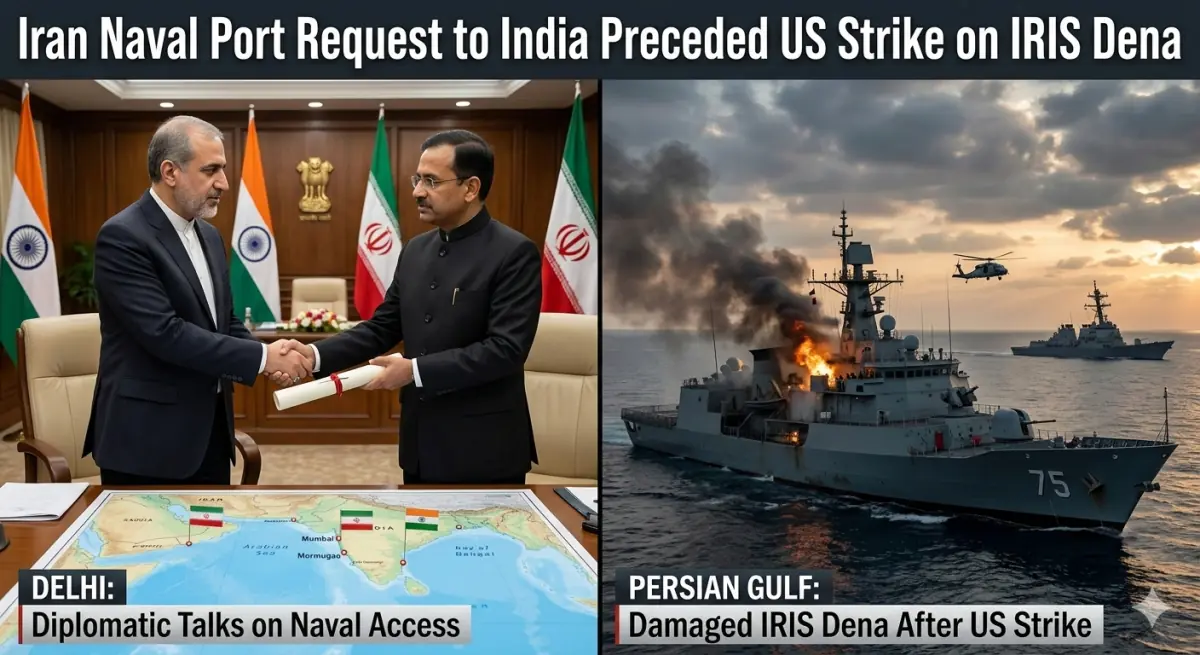
Iran’s Naval Port Request to India Emerges Amid Escalating US–Iran Maritime Conflict
A diplomatic and military development involving Iran, India and the United States has added a new dimension to the rapidly escalating tensions in the Middle East and surrounding waters. According to government sources, Iran had requested permission for one of its naval vessels, IRIS Lavan, to visit an Indian port only days before a major military confrontation occurred in the Indian Ocean. Indian authorities reportedly did not approve the request. Shortly afterward, an Iranian warship, IRIS Dena, was attacked and sunk by a United States submarine near Sri Lanka, significantly intensifying the ongoing military confrontation between Iran, the United States and Israel. The incident highlights how naval movements and strategic partnerships in the Indian Ocean are becoming increasingly sensitive amid the expanding geopolitical crisis.
Iran’s Request for Port Access in India
Sources indicate that Iran had formally approached India to allow its naval ship IRIS Lavan to dock at an Indian port. Such port visits are typically used for logistical support, refueling, crew rest or diplomatic engagement between naval forces. However, Indian authorities did not grant approval for the proposed visit. Officials have not publicly detailed the reasons behind the decision, but the request reportedly came during a period of heightened military tension between Iran and the United States. India has historically maintained a carefully balanced diplomatic position in the region, maintaining relations with both Iran and Western partners. Decisions involving military port access are therefore often assessed within a broader strategic and security context.
US Submarine Attack on IRIS Dena
Shortly after the rejected port request, the Iranian naval warship IRIS Dena was reportedly struck by a torpedo launched from a United States submarine. The attack took place in the Indian Ocean near Sri Lanka. At the time of the incident, IRIS Dena was returning from a naval exercise that had taken place in the region. Reports indicate that dozens of sailors were killed when the vessel was struck. The attack marks one of the most significant naval escalations in the current conflict between Iran and Western-aligned forces. Naval confrontations of this scale remain rare in the region and have heightened concerns about the possibility of further maritime clashes.
Strategic Importance of the Indian Ocean
The location of the attack underscores the growing strategic importance of the Indian Ocean in global geopolitics. The region hosts critical shipping lanes that connect Asia, the Middle East, Europe and Africa. Major powers maintain a strong naval presence in these waters to protect trade routes, energy shipments and strategic interests. Any military confrontation in this region has the potential to disrupt maritime traffic and increase global security concerns. The attack on IRIS Dena demonstrates how regional conflicts can extend beyond their original geographic boundaries and spill into broader international waters.
India’s Delicate Diplomatic Position
India’s reported decision not to allow the Iranian naval ship to dock reflects the complex diplomatic balance the country maintains between global powers. India shares long-standing economic and cultural ties with Iran while also maintaining deep strategic partnerships with the United States and other Western nations. As tensions between these actors increase, New Delhi often faces difficult diplomatic choices. Allowing a foreign naval vessel access to Indian ports during a period of heightened conflict could carry significant geopolitical implications. By declining the request, India appears to have chosen a cautious approach aimed at avoiding involvement in the escalating confrontation.
Rising Maritime Tensions in the Region
The destruction of IRIS Dena has intensified fears that naval warfare could become a larger component of the ongoing Middle East conflict. The use of submarines and long-range weapons in international waters signals a shift toward more sophisticated maritime engagements. Such incidents can rapidly increase tensions between countries and may trigger retaliatory actions or expanded military deployments. Military analysts warn that if maritime confrontations continue to escalate, the risk to commercial shipping, energy routes and regional stability could grow significantly.
Potential Impact on Global Security
Beyond the immediate loss of life and military escalation, the incident raises broader concerns about global security and international maritime law. The Indian Ocean serves as a critical corridor for global trade and energy transport. Any sustained conflict in these waters could affect shipping costs, insurance rates and supply chains. Governments and international organisations are therefore closely monitoring developments as the situation unfolds.
Uncertain Outlook as Regional Conflict Expands
The attack on IRIS Dena illustrates how quickly the conflict between Iran, the United States and Israel can extend beyond land-based operations into maritime environments. While diplomatic channels remain active in many parts of the world, the continuation of military operations suggests that tensions are unlikely to ease in the near term. As naval deployments increase and regional alliances face new pressure, the Indian Ocean may become an increasingly important theatre in the evolving geopolitical crisis.