Iran-Backed Militias Intensify Attacks on US and Israeli Targets
Iran-backed militias in Iraq increase rocket and drone attacks on US bases and Israeli targets, raising fears of wider Middle East conflict.
 Hcp News Desk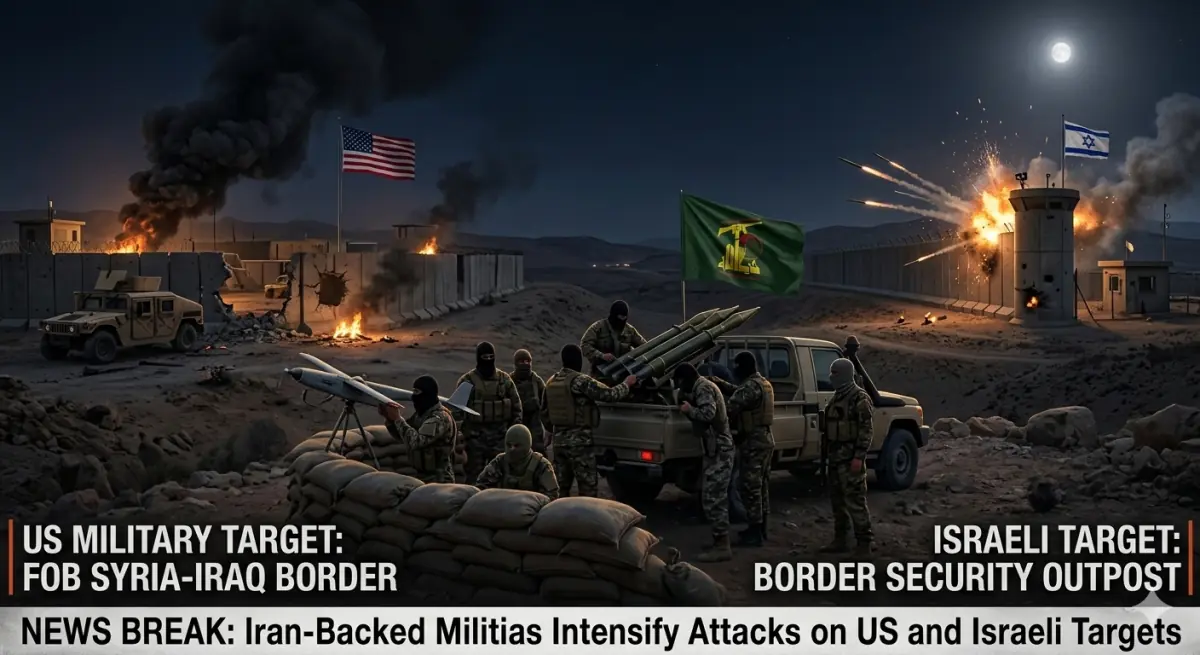
Iran-Linked Militias Escalate Attacks as Regional Conflict Widens
Armed groups in Iraq believed to be aligned with Iran have intensified their military activity, launching a series of rocket and drone attacks against United States military installations and Israeli targets. The surge in attacks comes as tensions across the Middle East continue to escalate following major strikes carried out by the United States and Israel on Iranian military facilities. Security analysts warn that the growing involvement of militia groups could significantly widen the scope of the conflict. While the confrontation initially centered on direct tensions between Iran, Israel and the United States, the participation of regional proxy forces now raises the possibility of a broader multi-front conflict across several Middle Eastern countries.
Rocket and Drone Strikes Target US Bases in Iraq and Jordan
According to regional security reports, dozens of attacks have been launched in recent days against U.S. military bases located in Iraq and neighboring Jordan. The assaults have included rocket barrages as well as drone strikes targeting installations used by American forces. Such attacks are not unprecedented in Iraq, where Iranian-backed militias have periodically targeted U.S. facilities in response to geopolitical tensions. However, the current wave of strikes appears to be more coordinated and frequent, reflecting the heightened regional confrontation. Military analysts say that drone technology has played an increasingly prominent role in these operations. Armed drones allow militia groups to strike targets at longer distances with greater precision, complicating defensive efforts by military forces stationed in the region.
Israeli Targets Also Come Under Fire
In addition to attacks on American positions, several militia groups have also claimed responsibility for strikes targeting Israel. These actions reflect the broader alignment of Iranian-backed groups across the region, many of which have declared support for Iran amid the escalating conflict. By expanding their operations beyond Iraq and Jordan, these militias appear to be signaling their willingness to open additional fronts in support of Tehran. Such developments raise concerns that the conflict could spread further across the Middle East if additional actors become involved.
Proxy Forces Add Complexity to the Conflict
Iran’s regional network of allied militia groups has long been considered a key component of its strategic influence across the Middle East. These groups operate in several countries and maintain varying levels of autonomy while maintaining political and military ties with Tehran. In times of heightened tension, these militias can act as indirect military extensions of Iranian strategy. Their involvement allows Iran to exert pressure on adversaries without necessarily engaging in direct state-to-state confrontation. However, the use of proxy forces also adds complexity to regional conflicts. Actions by militias can escalate tensions quickly and make diplomatic resolution more difficult, as multiple actors operate with different objectives and levels of control.
Not All Militias Appear Ready for Full-Scale War
Despite the surge in attacks, not all militia factions appear eager to become fully involved in the broader conflict. Some groups have reportedly adopted a more cautious stance, limiting their participation or avoiding direct escalation against major military targets. This hesitation may reflect concerns about the potential consequences of a prolonged regional war. Full-scale confrontation involving major powers could result in devastating military retaliation and destabilize already fragile political environments within countries like Iraq. The differing responses among militia groups highlight the complex internal dynamics within these networks, where political considerations and strategic calculations often shape decisions about military engagement.
US Forces Face Growing Security Challenges
The increase in attacks has placed additional pressure on U.S. forces stationed across the region. American troops maintain several bases in Iraq and Jordan as part of ongoing counterterrorism operations and regional security partnerships. As militia attacks intensify, these bases face heightened security risks. Defensive systems have been activated in multiple locations to intercept incoming rockets and drones, but repeated assaults increase the likelihood of casualties or infrastructure damage. U.S. officials have warned that continued attacks on American forces could prompt retaliatory action, further raising the stakes in an already volatile situation.
Risk of Wider Regional Conflict
Analysts caution that the expanding role of militias could transform the conflict into a broader regional confrontation involving multiple countries. If attacks continue to spread geographically, neighboring states could be drawn into the crisis either directly or indirectly. The Middle East already faces several interconnected security challenges, including ongoing conflicts, political instability and competing regional alliances. Escalation across multiple fronts could further strain these fragile dynamics.
International Community Urges Restraint
As violence escalates, international observers and diplomatic actors have called for restraint from all sides. Governments and international organizations are increasingly concerned that continued military exchanges could spiral into a wider war with global consequences. Efforts to de-escalate the situation remain ongoing, though progress has been limited as military actions continue. The coming weeks may prove critical in determining whether the conflict stabilizes or expands further across the region.
A Region on Edge
The intensifying attacks by Iranian-backed militias illustrate how rapidly regional conflicts can evolve once proxy forces become involved. While the current confrontation remains fluid, the increasing number of actors participating in the fighting has made the situation significantly more unpredictable. For now, the Middle East remains on high alert as governments, military forces and global observers watch closely for signs of either escalation or diplomatic breakthrough.