Xi Hosts Taiwan Opposition Leader in Beijing Amid Efforts to Strengthen Cross-Strait Engagement
China’s Xi Jinping meets a Taiwan opposition leader in Beijing, signaling renewed efforts to deepen cross-strait ties amid ongoing political tensions.
 mansi labhde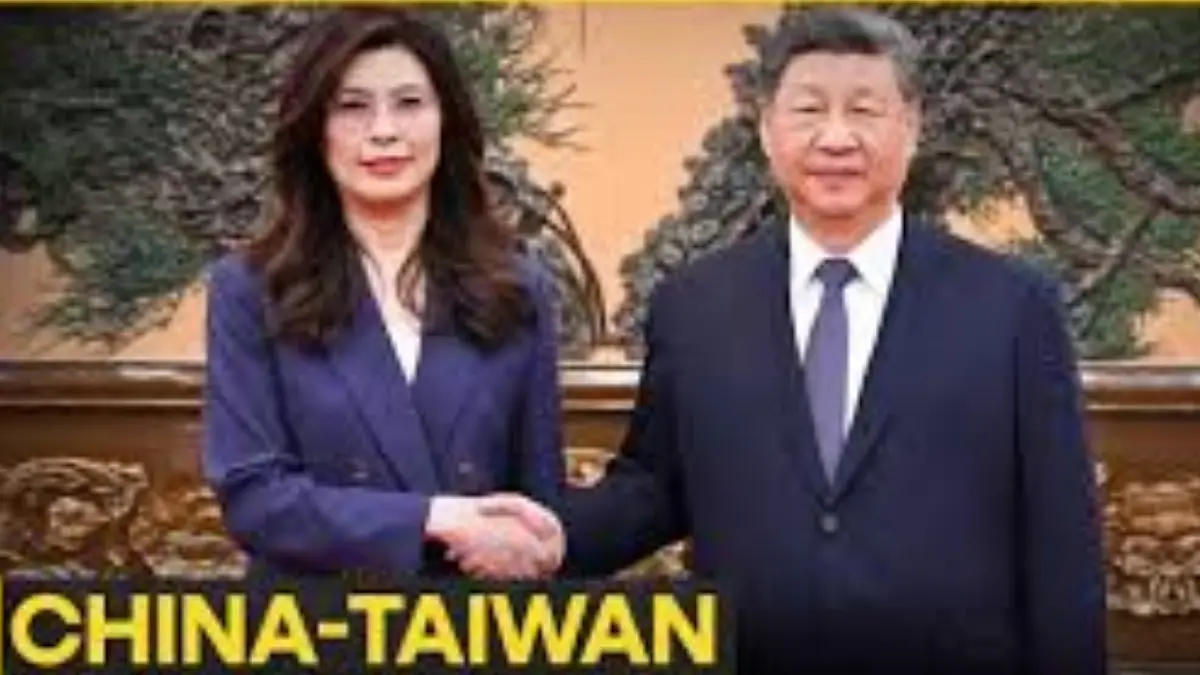
BEIJING, April 2026 — Chinese President Xi Jinping hosted a senior opposition leader from Taiwan in Beijing, marking a significant political engagement aimed at strengthening cross-strait relations and influencing the island’s political direction amid ongoing tensions between China and Taiwan.
High-Level Meeting Signals Renewed Outreach
The meeting between Xi and the visiting Taiwanese opposition figure represents one of the most prominent cross-strait political interactions in recent months. The engagement comes at a time when official communication between Beijing and Taiwan’s current administration remains limited.
Chinese authorities framed the meeting as part of ongoing efforts to promote dialogue and cooperation across the Taiwan Strait. The visit was positioned as an opportunity to reinforce cultural, economic, and political ties between the mainland and Taiwan.
The opposition leader’s presence in Beijing highlights China’s strategy of engaging with political actors in Taiwan who are seen as more open to closer relations with the mainland.
Focus on Cross-Strait Stability and Cooperation
During the discussions, emphasis was placed on maintaining stability in cross-strait relations and expanding cooperation in key areas. Chinese officials reiterated their stance on peaceful development while underscoring the importance of shared cultural and historical connections.
The meeting also addressed economic collaboration, with both sides exploring avenues to enhance trade, investment, and people-to-people exchanges. Beijing has consistently promoted such engagements as a means to build long-term integration.
Statements from the Chinese side stressed the need to oppose actions perceived as promoting Taiwan independence, aligning with Beijing’s longstanding position on the issue.
Political Context in Taiwan Shapes Engagement
The visit takes place against the backdrop of Taiwan’s evolving political landscape, where different parties hold varying positions on relations with China. Opposition figures engaging with Beijing often advocate for more pragmatic or cooperative approaches compared to the ruling administration.
China’s outreach to opposition leaders is widely viewed as part of a broader effort to influence public opinion and political discourse within Taiwan. By strengthening ties with certain political groups, Beijing aims to shape the trajectory of cross-strait relations.
The meeting is also significant in the context of upcoming political developments in Taiwan, where cross-strait policy remains a central electoral issue.
Strategic Messaging from Beijing
Analysts note that hosting the Taiwanese opposition leader allows China to project an image of openness to dialogue while reinforcing its preferred framework for engagement. The move sends a signal that Beijing is willing to work with political actors who align more closely with its approach.
At the same time, the meeting underscores the continued absence of direct communication between Beijing and Taiwan’s current leadership, reflecting ongoing political differences.
China has repeatedly emphasized its preference for peaceful unification while maintaining pressure against moves it views as separatist. Engagements such as this are part of a broader diplomatic and political strategy.
Broader Implications for Cross-Strait Relations
The interaction between Xi and the Taiwanese opposition leader is expected to influence perceptions on both sides of the Taiwan Strait. For Beijing, it reinforces efforts to expand channels of communication beyond official government structures.
For Taiwan, the visit highlights internal political divisions over how to manage relations with China. It also raises questions about the role of opposition parties in shaping cross-strait policy.
While the immediate outcomes of the meeting remain limited to dialogue and signaling, the engagement reflects ongoing attempts by China to deepen its influence in Taiwan’s political sphere.
The development comes amid continued geopolitical attention on the region, with cross-strait relations remaining a focal point in broader international dynamics.